
Celebrating the Cards the Helped Make the Modern Hobby
For 75 years, Topps Baseball has defined the look, feel, and history of the game through cards that captured legends, rookie moments, and images that generations of collectors know by heart. To mark this milestone, Topps presents 75 iconic baseball cards by bringing select originals back to packs as Iconic Topps Buybacks.*
Curated by a panel of industry experts to represent the designs, players, and moments that shaped Topps’ history and built The Hobby, these authentic cards are presented without a buyback stamp, professionally graded and slabbed, and available via redemption across all three flagship releases—Series 1, Series 2, and Update Series—celebrating 75 years of Topps Baseball.
*The 1/1 cards on the 75 Iconic Topps Baseball Cards of All Time list are not a part of the Iconic Topps Buybacks program.
See All 75 Iconic Topps Baseball Cards
The Top 10
1950s
1960s
1970s
1980s
1990s
2000s
2010s
2020s
The Top 10
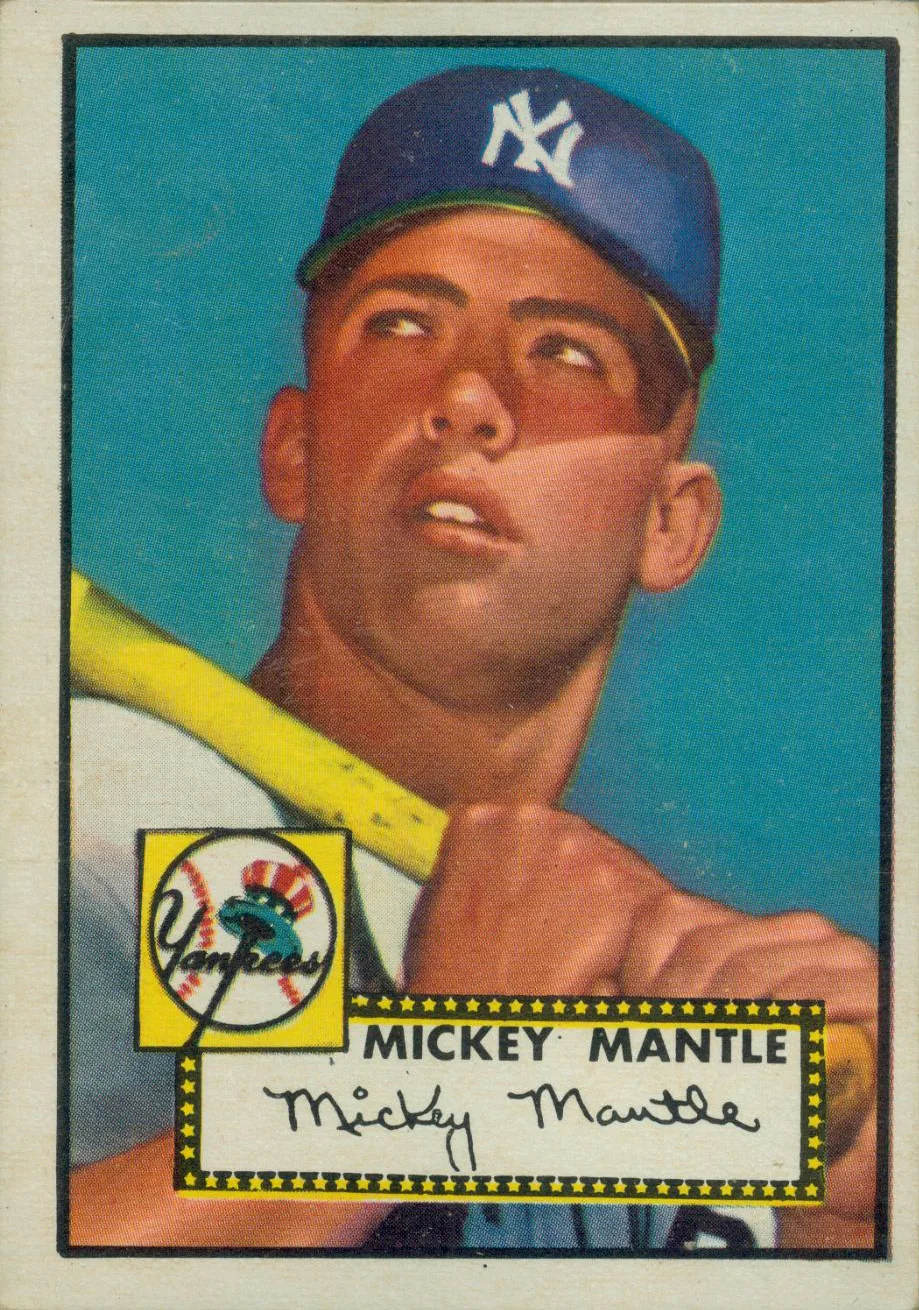
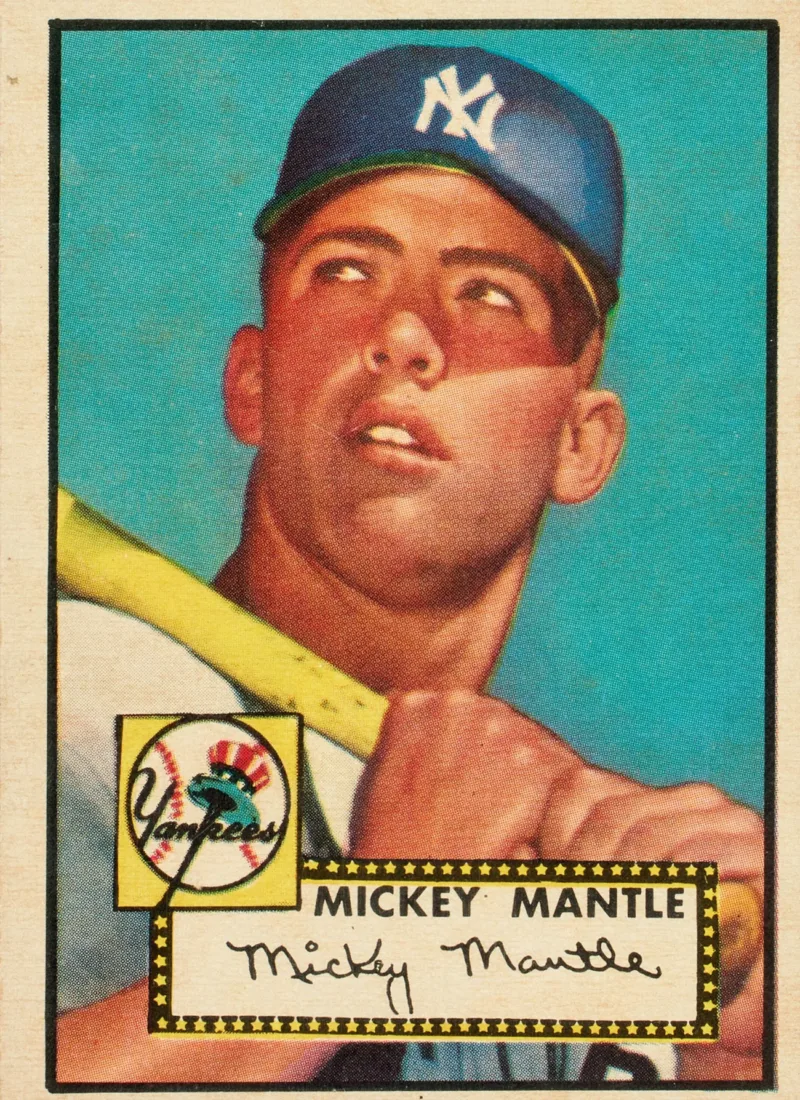
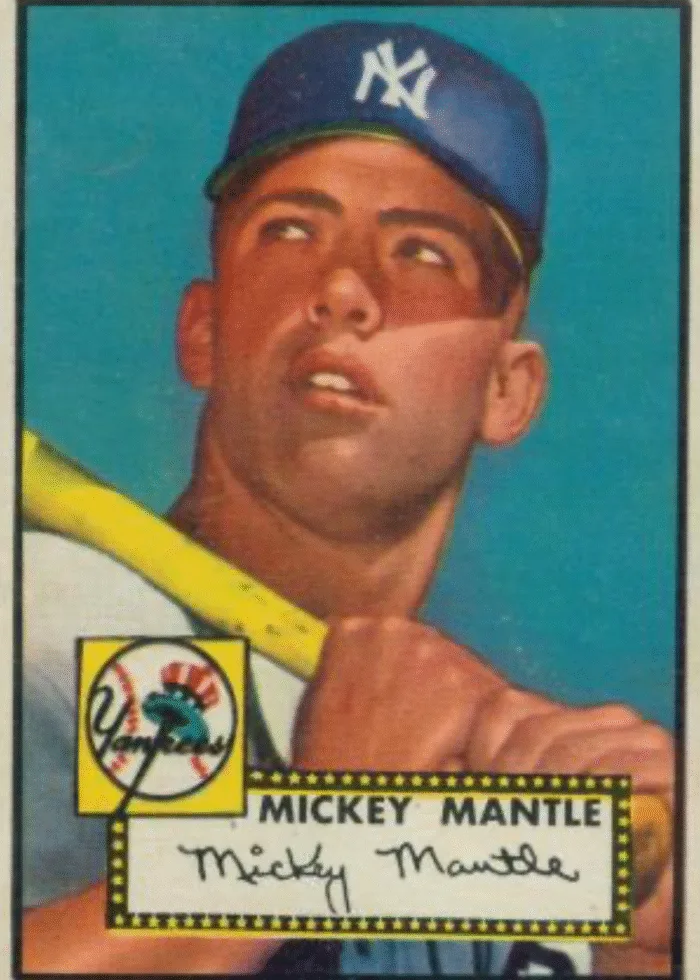
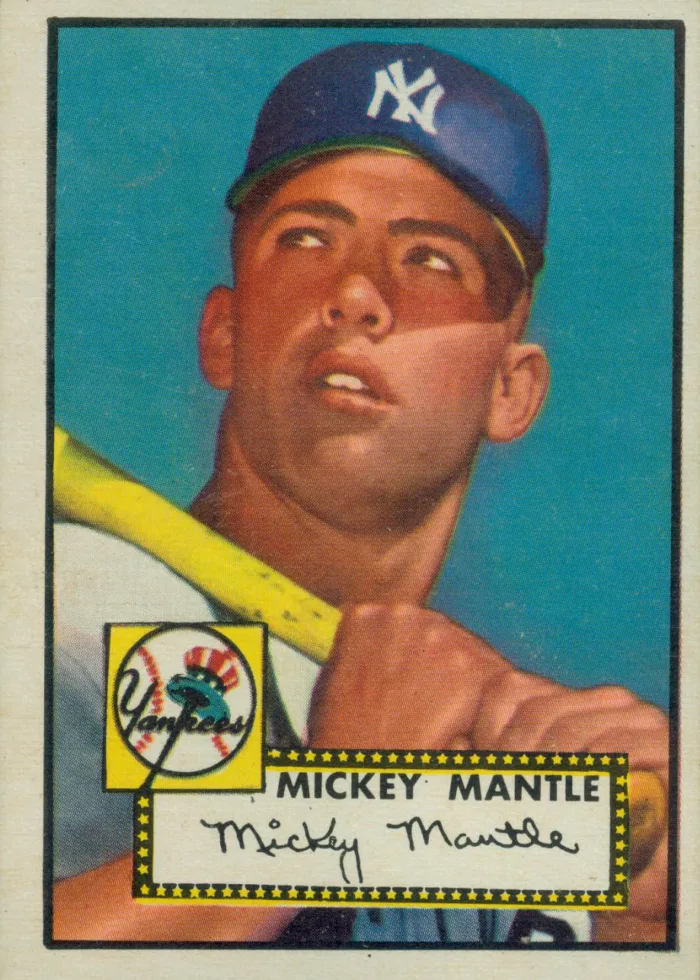
1. 1952 Topps Baseball Mickey Mantle #311
The 1952 Topps Mickey Mantle #311 is important because it represents the intersection of history, scarcity, player legacy, and cultural importance. It’s a symbol of the modern Hobby itself. Without Mantle’s card, the sports collectibles market might not have achieved the same stature or mainstream recognition. The modern Hobby is the house that the ’52 Mantle built.
- More Mickey Mantle
- Find this Iconic Topps Buyback in 2026 Topps Series 1 Baseball
- Find the 1952 Mantle on Fanatics Collect
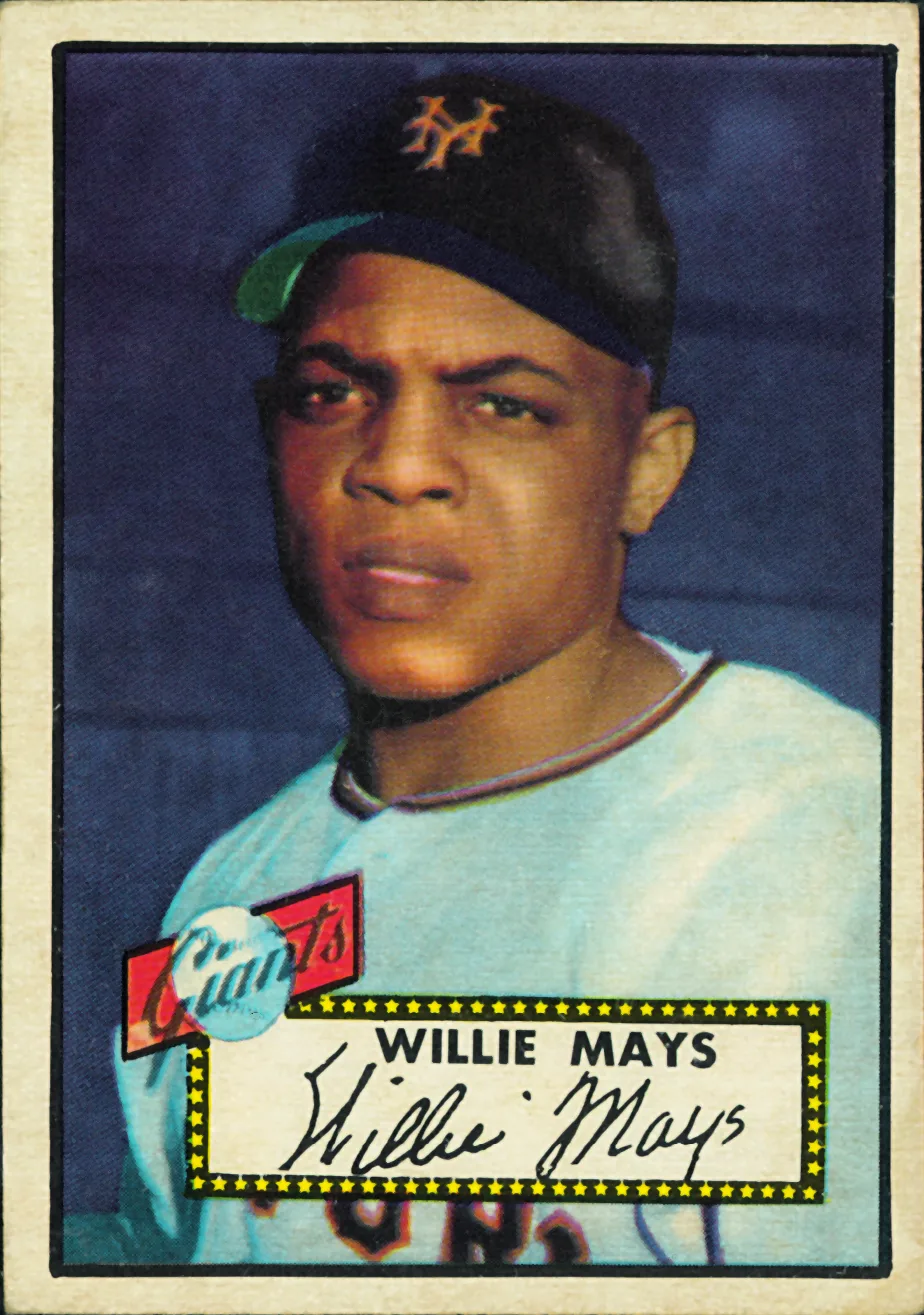
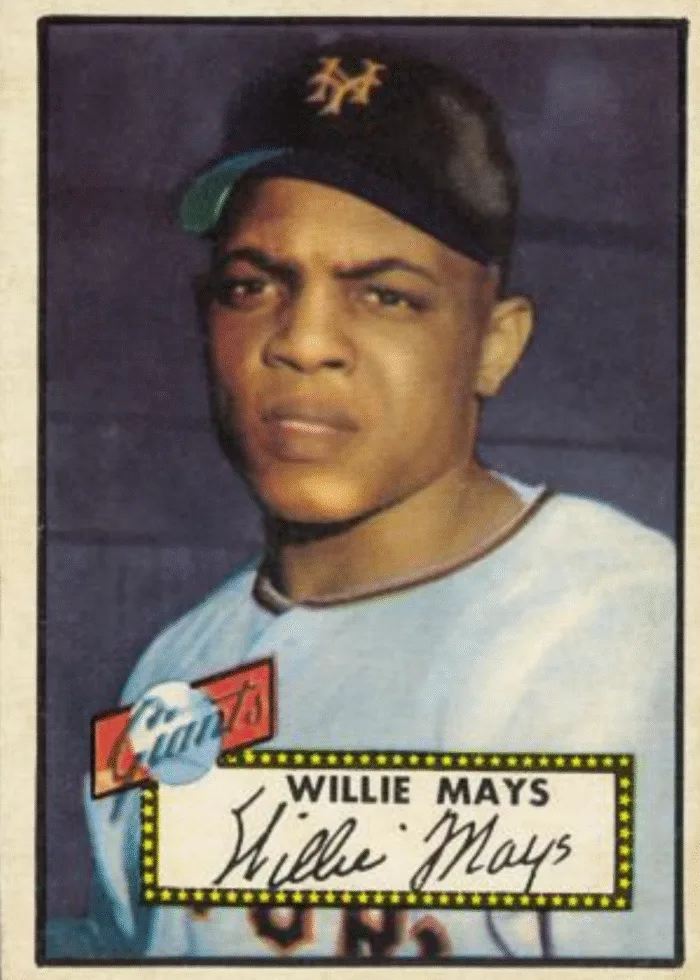
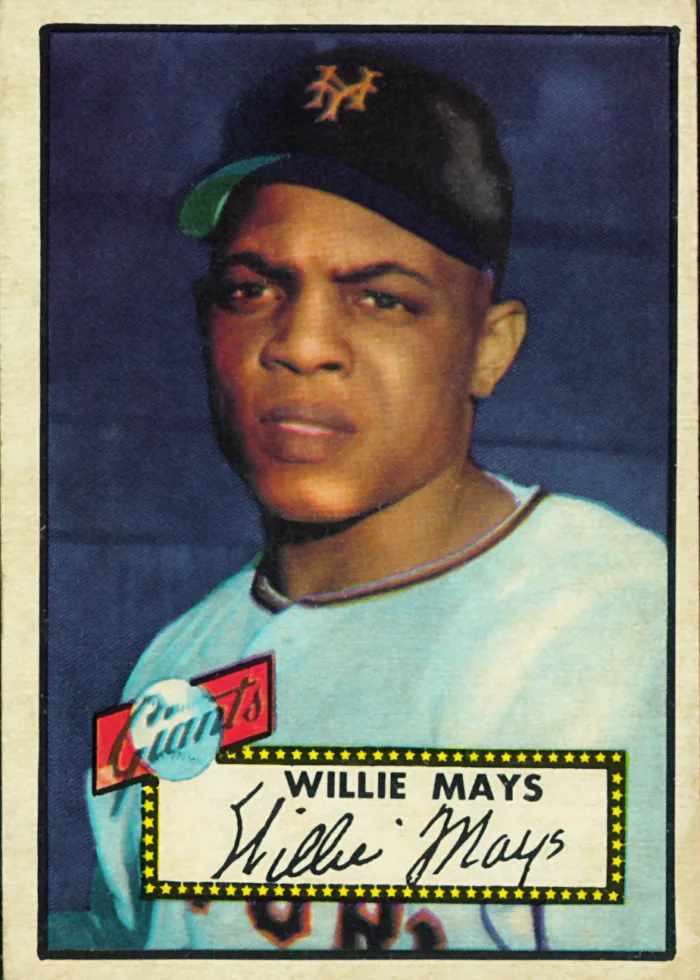
2. 1952 Topps Baseball Willie Mays #261
Willie Mays’ 1952 Topps card arrived late in the season, filling a void for fans during a year when military service limited his time on the field. Issued in the fifth series of Topps’ landmark 407-card set, the card became one of the most celebrated pieces in Hobby history and later ranked No. 2 on Topps’ 75th anniversary list. Mays’ elite blend of power, speed, defense, and arm strength defined the five-tool standard, while collector demand has pushed the card’s value +1,700 percent% since 2004, cementing its place as a cornerstone of postwar baseball collecting.
- Learn More about the eternal Willie Mays
- Find this Iconic Topps Buyback in 2026 Topps Series 1 Baseball
- Find the 1952 Mays on Fanatics Collect
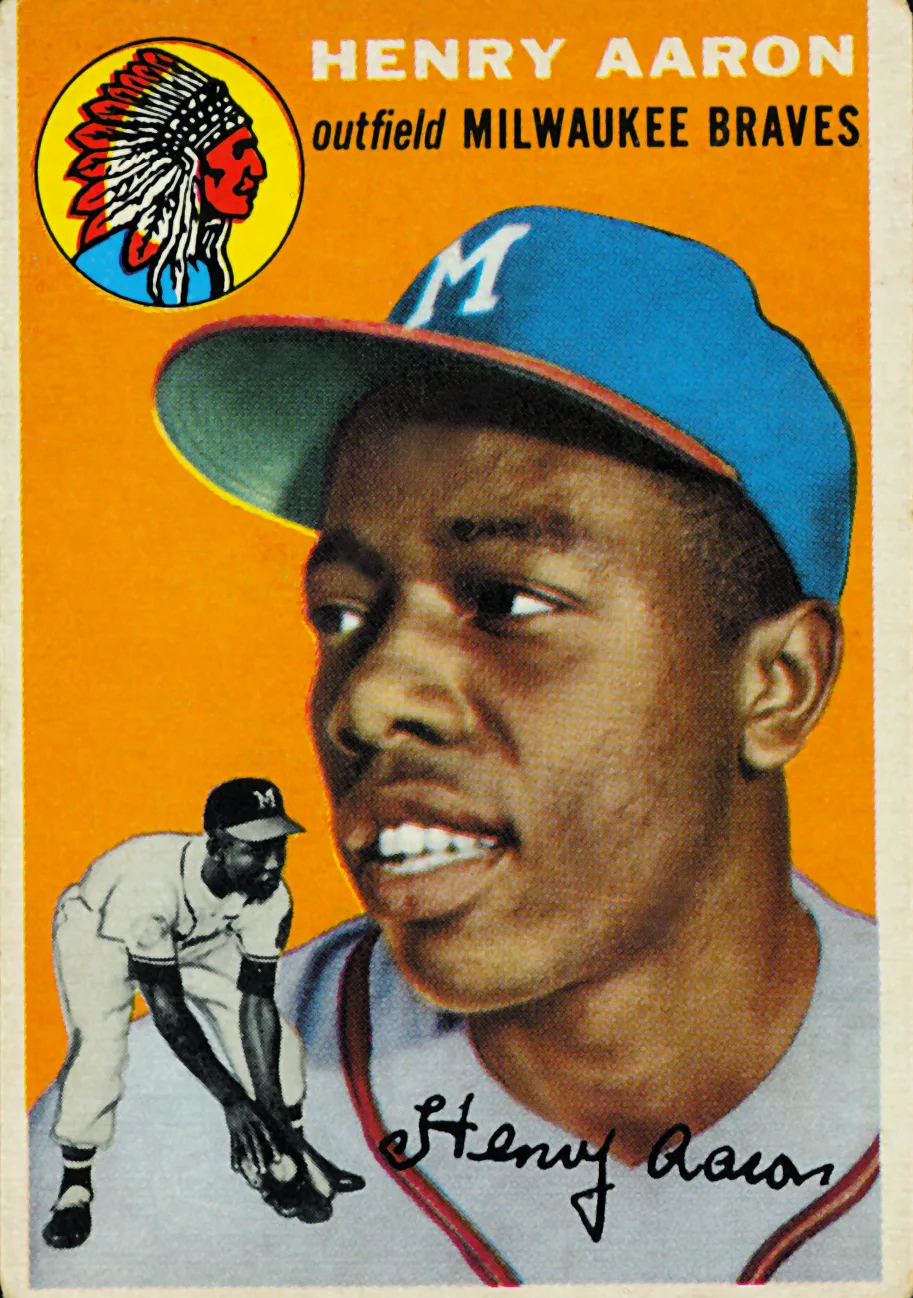
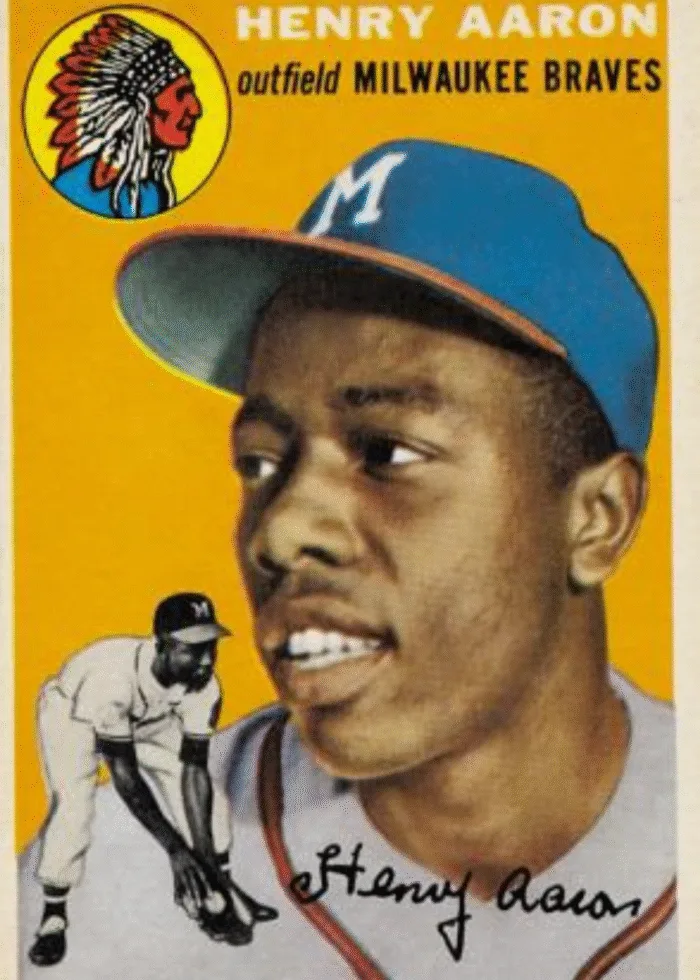
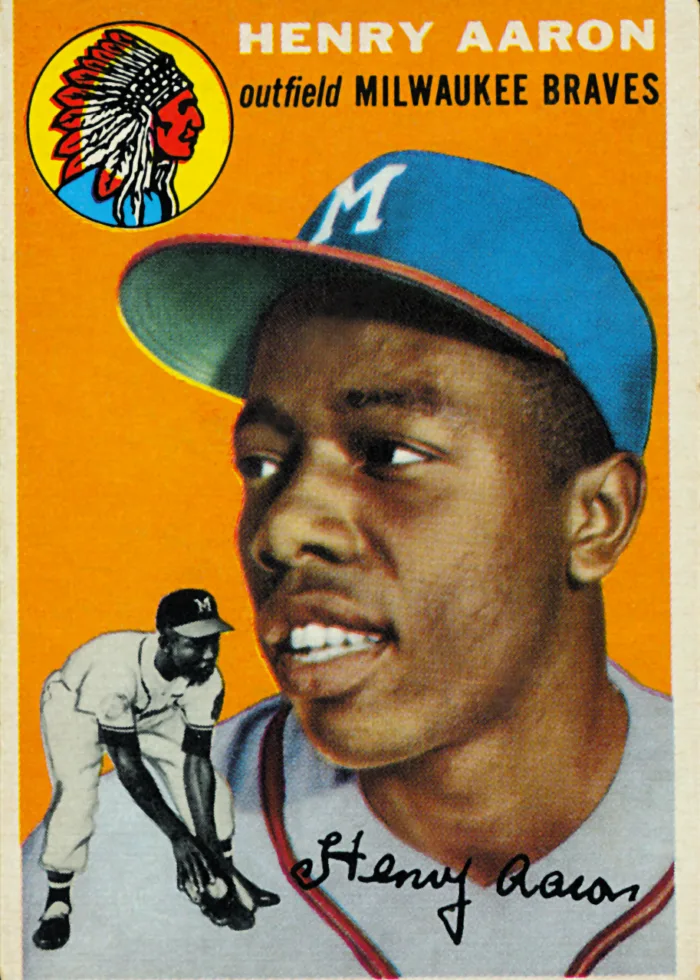
3. 1954 Topps Baseball Hank Aaron #128
Hank Aaron’s arrival in the majors is forever captured on one of the most celebrated cards in The Hobby. Issued in 1954, this Topps rookie marks the beginning of a 23-year career that redefined power and consistency, eventually producing 755 home runs and 3,771 hits. The bold orange background and dual image layout make it one of the defining designs of the 1950s. Condition challenges tied to centering and surface quality have made high-graded examples exceptionally scarce, elevating its status as one of the most coveted postwar rookie cards ever produced.
- Find this Iconic Topps Buyback in 2026 Topps Series 1 Baseball
- Find the 1954 Aaron on Fanatics Collect
- More Hank Aaron Cards to Collect
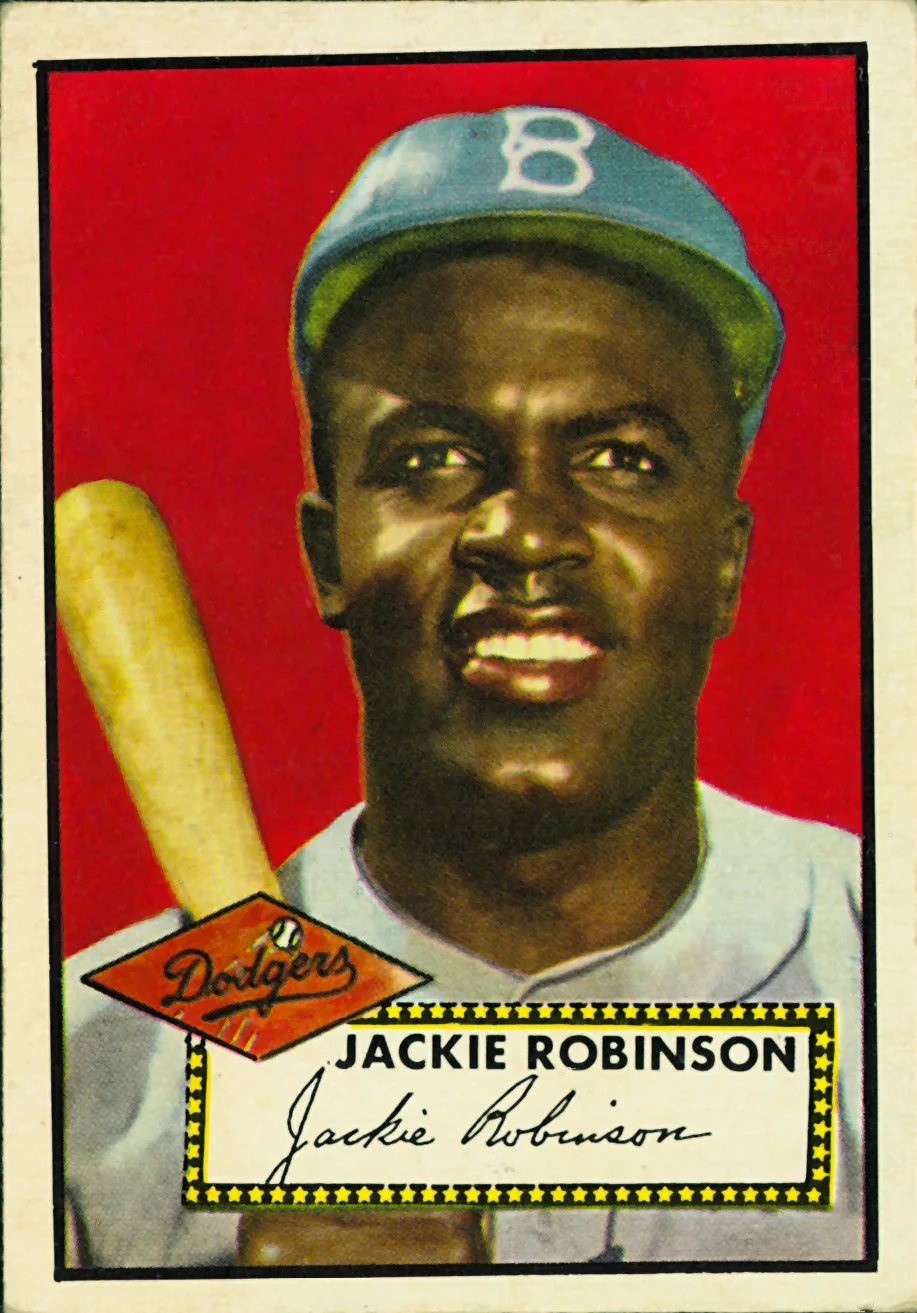
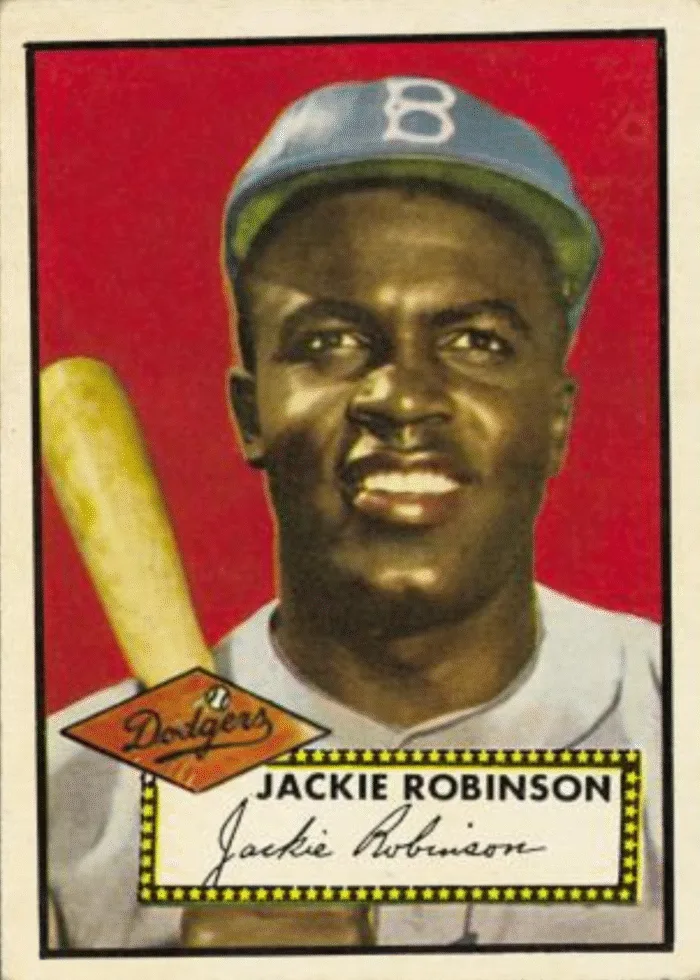
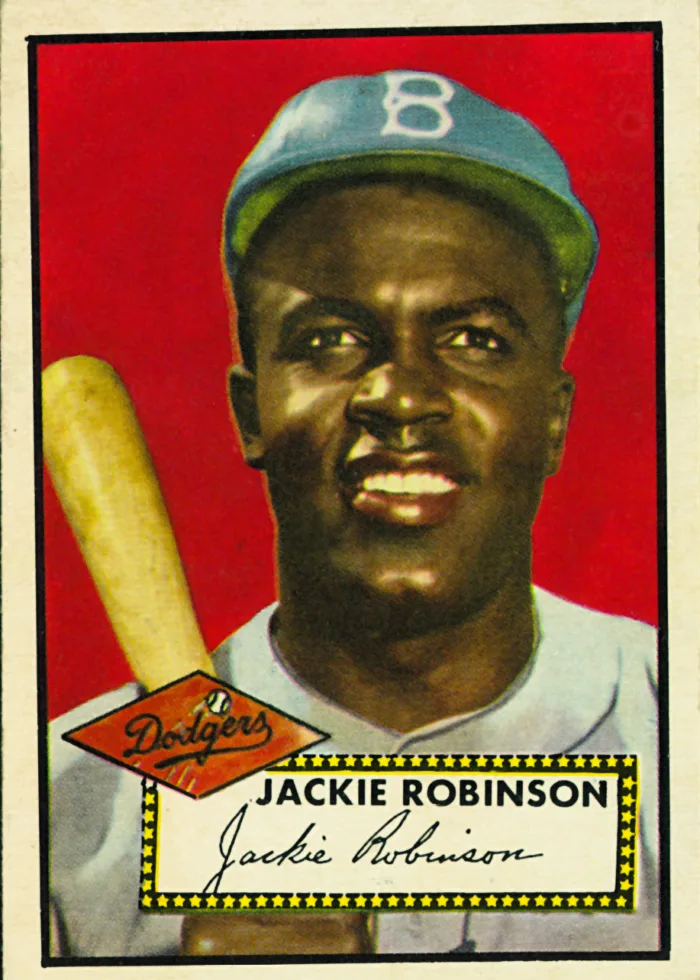
4. 1952 Topps Baseball Jackie Robinson #312
The 1952 Topps Jackie Robinson is one of The Hobby’s true holy grails, uniting the most revolutionary player in baseball history with the set that forever changed baseball cards. Robinson’s first Topps card was printed in the rare final series alongside Mickey Mantle, which has driven its lasting value and mystique. Its bold red background, GIANT SIZE format, vivid Flexichrome photography, detailed statistics, and front-facing team logo captured Topps’ era-defining innovation. Ranked No. 4 on Topps’ 75th anniversary list, the card celebrates Robinson as both a cultural icon and an elite performer. A graded 1952 Robinson will be available via redemption in 2026 Topps Series 1, reinforcing its status as one of The Hobby’s most important and rarer icons.
- Find this Topps Iconic Buyback in 2026 Topps Series 1 Baseball
- Find the 1952 Robinson on Fanatics Collect
- More Jackie Robinson Cards
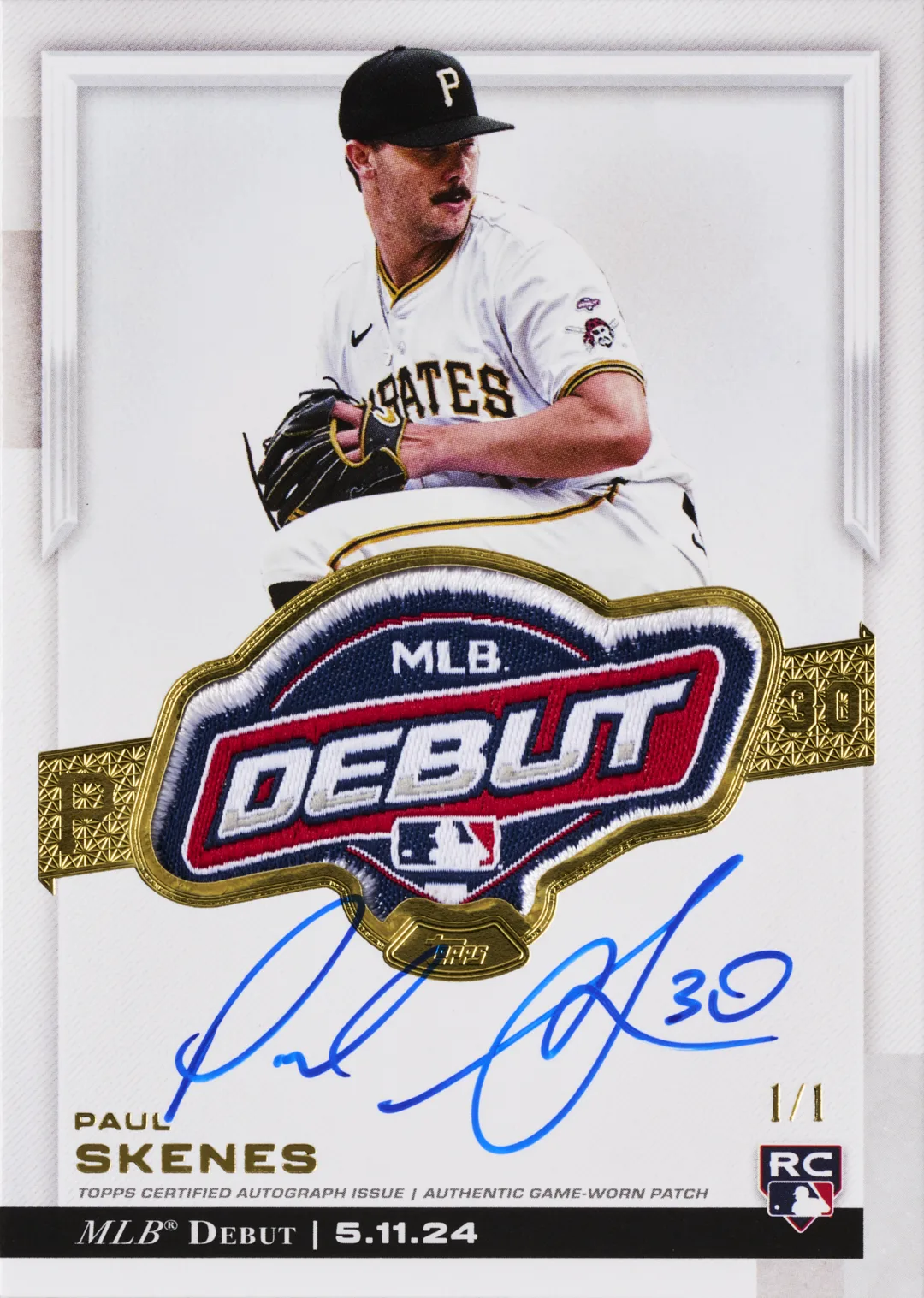
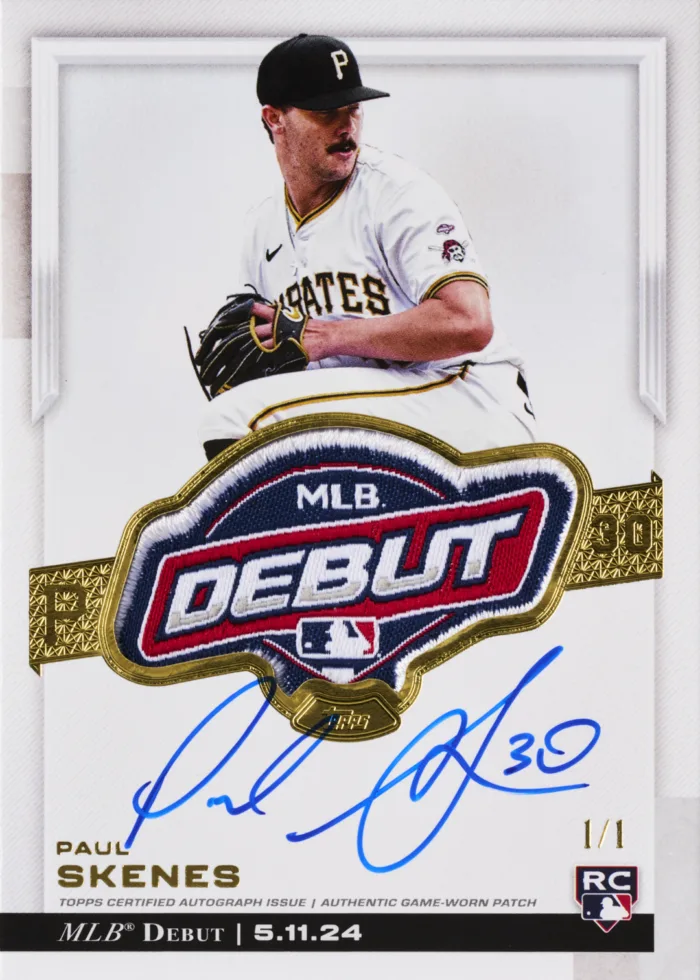
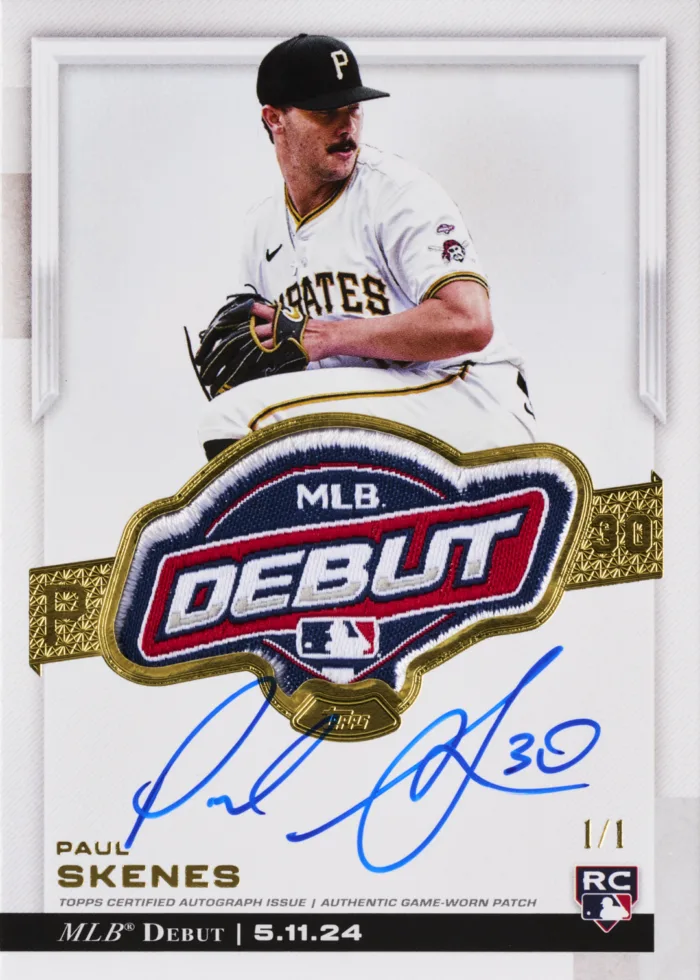
5. 2024 Topps Chrome Update Series Baseball Paul Skenes Rookie Debut Patch Autograph #RDPA-PS
Paul Skenes reset The Hobby’s modern ceiling when his 2024 Rookie Debut Patch Auto (RDPA) became the fastest debut card to reach $1 million, underscoring the central importance of the RDPA to today’s collectors. Pulled by an 11-year-old on Christmas morning, the card paired true one-of-one scarcity with Skenes’ historic rookie dominance and earned a No. 5 ranking on Topps’ 75th anniversary list. After declining an extraordinary Pirates offer, the card went to auction, where Dick’s Sporting Goods won it for $1.1 million, making it the most valuable rookie card of an active player outside of Mike Trout. Skenes matched the moment with a National League Rookie of the Year campaign and another sub-2.00 ERA in 2025, while Card Ladder data shows overall Skenes card values up 491% since January 2024, placing the RDPA at an estimated $1.628 million as of January 2026.
- Find more Paul Skenes cards on Fanatics Collect
- Pulling a Paul Skenes 1st Bowman at a Convenience Store
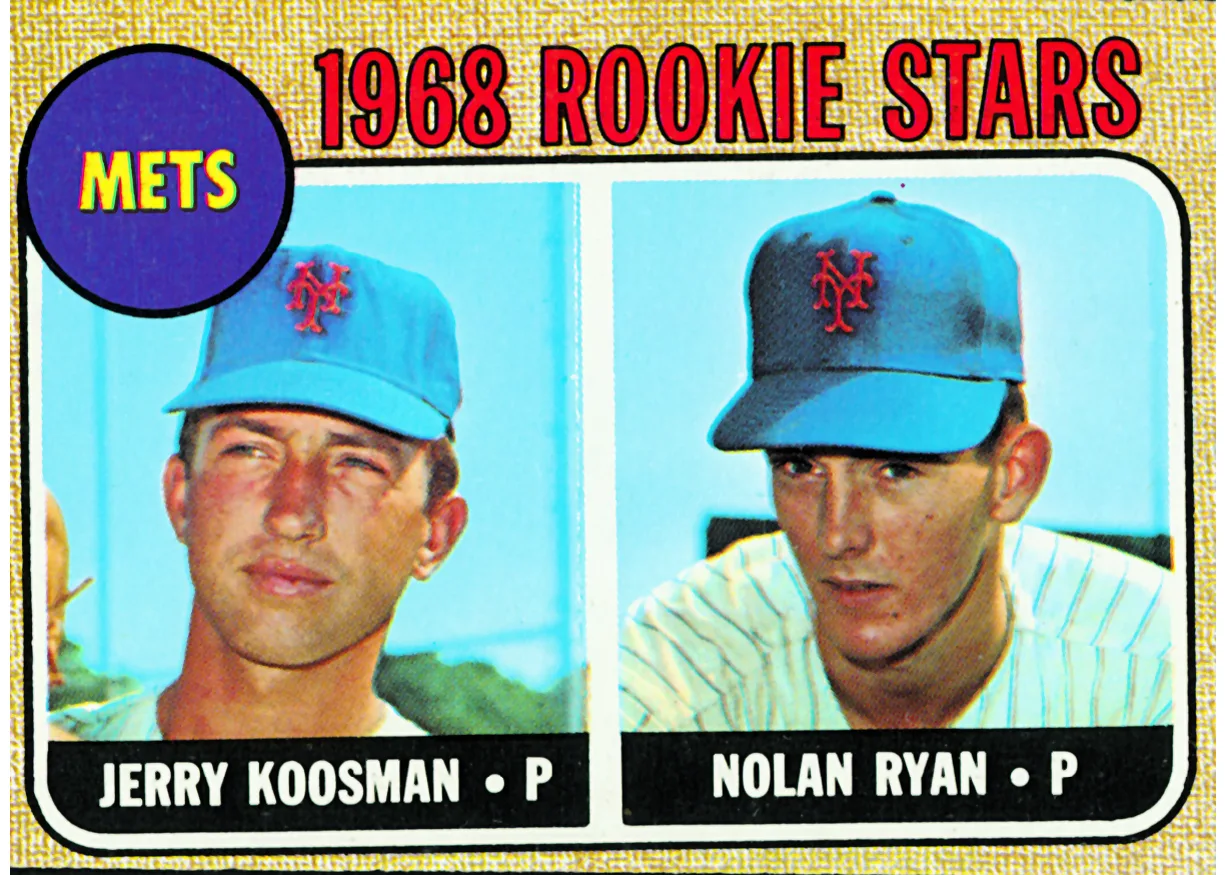
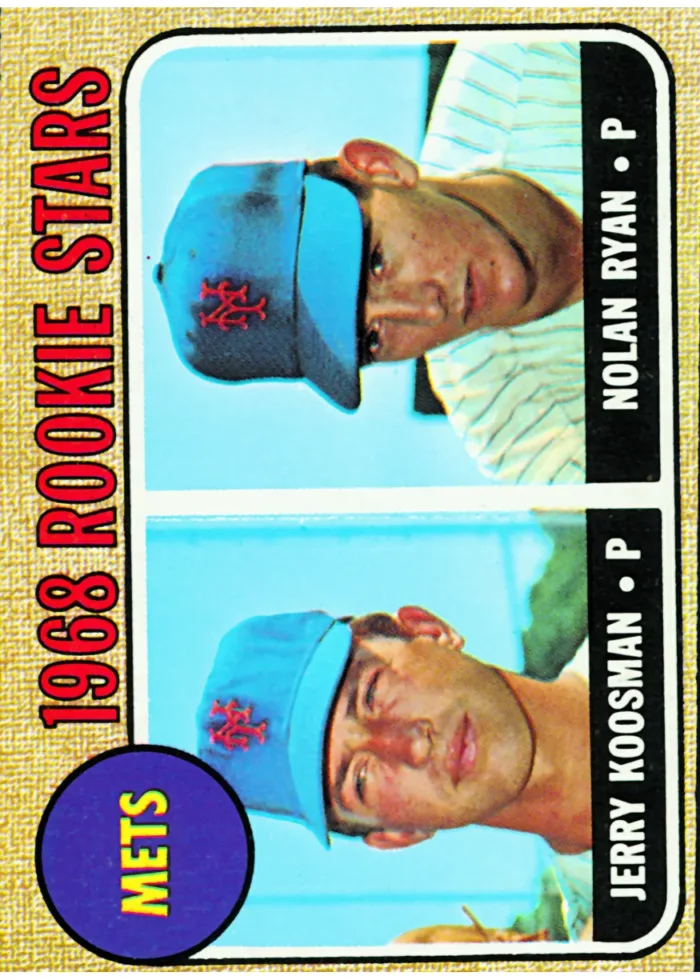
6. 1968 Topps Baseball Jerry Koosman/Nolan Ryan Rookie Stars #177
Issued in 1968 as a shared prospect card with Jerry Koosman, Nolan Ryan’s rookie card was an afterthought at the time but has since become one of the most iconic cards in The Hobby. As Ryan rose to become the all-time strikeout leader, the card’s identity and value followed, becoming one of the most iconic Topps Cards of the last 75 years. With demand still outpacing supply, an original 1968 Nolan Ryan rookie will return via redemption in 2026 Topps Baseball as one of the set’s premier chase cards.
- Find this Topps Iconic Buyback in 2026 Topps Series 1 Baseball
- Find the 1968 Koosman/Ryan on Fanatics Collect
- More Nolan Ryan Cards to Collect
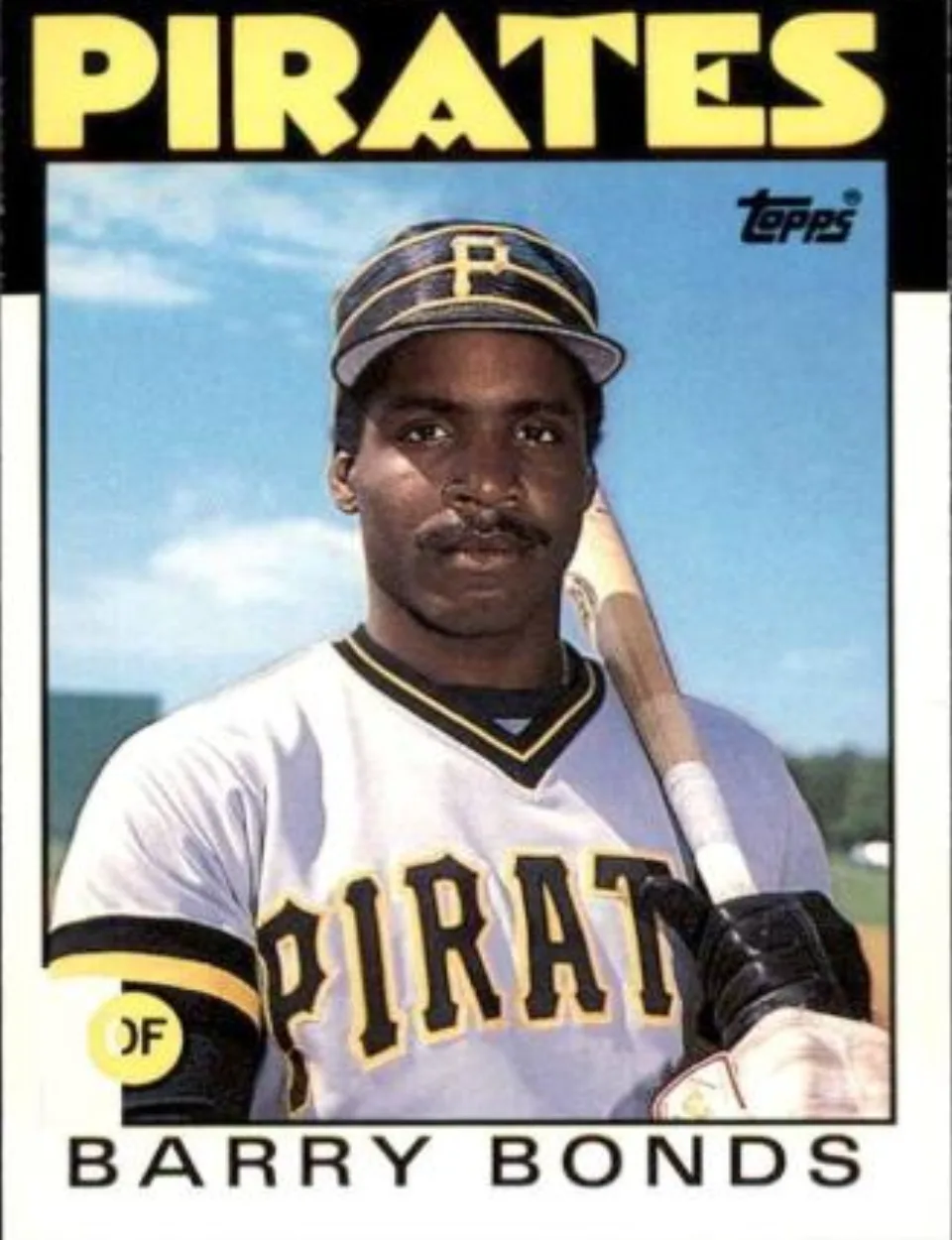
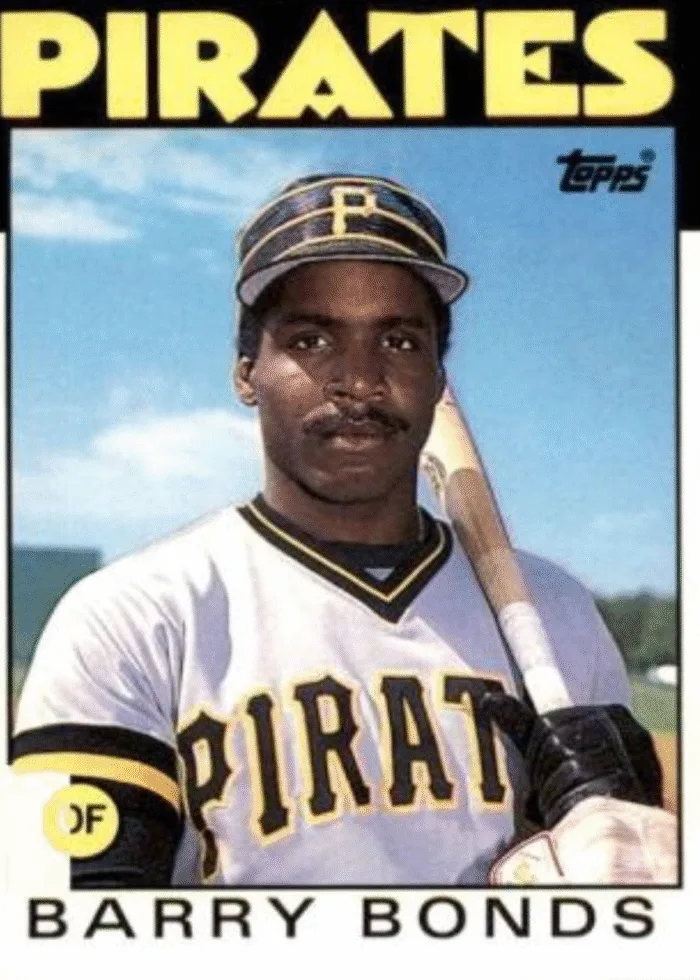
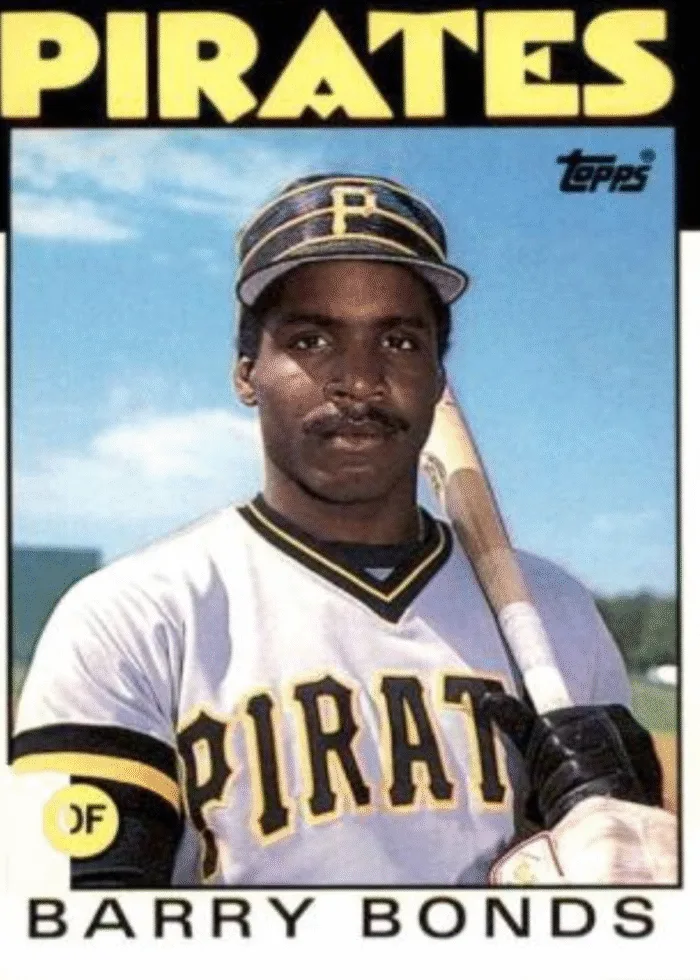
7. 1986 Topps Traded Baseball Barry Bonds #11T
Barry Bonds made his MLB debut on May 30, 1986, delivering a strong rookie season with 16 home runs, 48 RBIs, 36 stolen bases, and 65 walks, finishing sixth in National League Rookie of the Year voting and offering an early glimpse of his all-around impact. That same year, collectors in The Hobby were introduced to his first-ever Topps card, marking the beginning of a cardboard legacy that would grow alongside one of baseball’s most dominant careers.
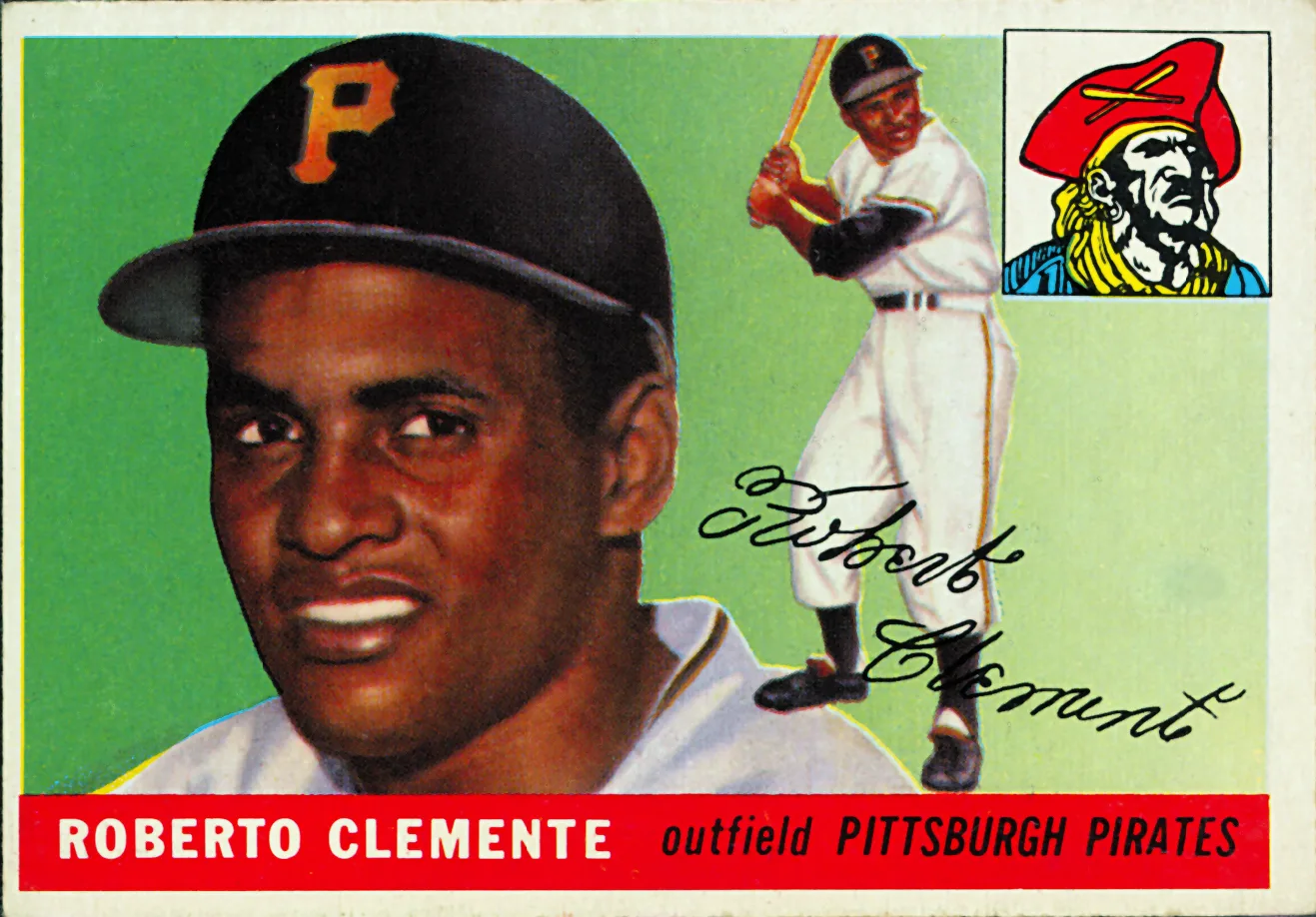
8. 1955 Topps Baseball Roberto Clemente #164
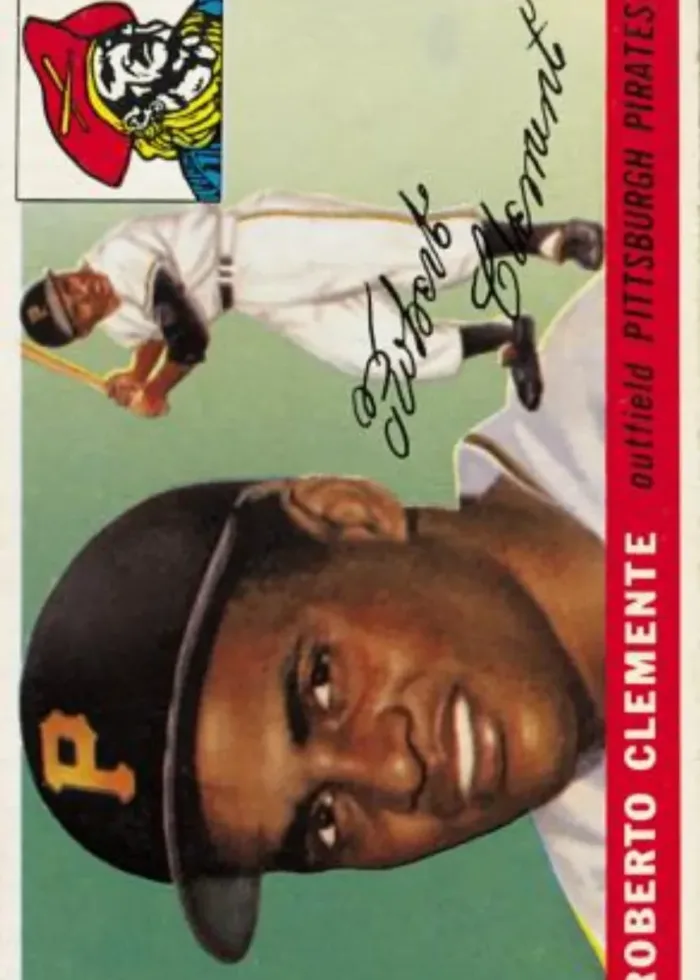
The 1955 Topps Roberto Clemente card No. 164 stands as one of the most iconic rookie cards in The Hobby, marking the beginning of a Hall of Fame career with the Pittsburgh Pirates. The card’s bold design pairs a vibrant close-up portrait with a secondary batting pose set against a bright background, creating a timeless visual that has captivated collectors for decades. Issued during Clemente’s Major League debut season after the Pirates selected him from the Brooklyn Dodgers organization, the card’s importance is matched by its scarcity in elite condition. That combination of historical significance, visual appeal, and limited high-grade supply has driven record results, cementing its status as one of the most coveted post-war baseball cards.
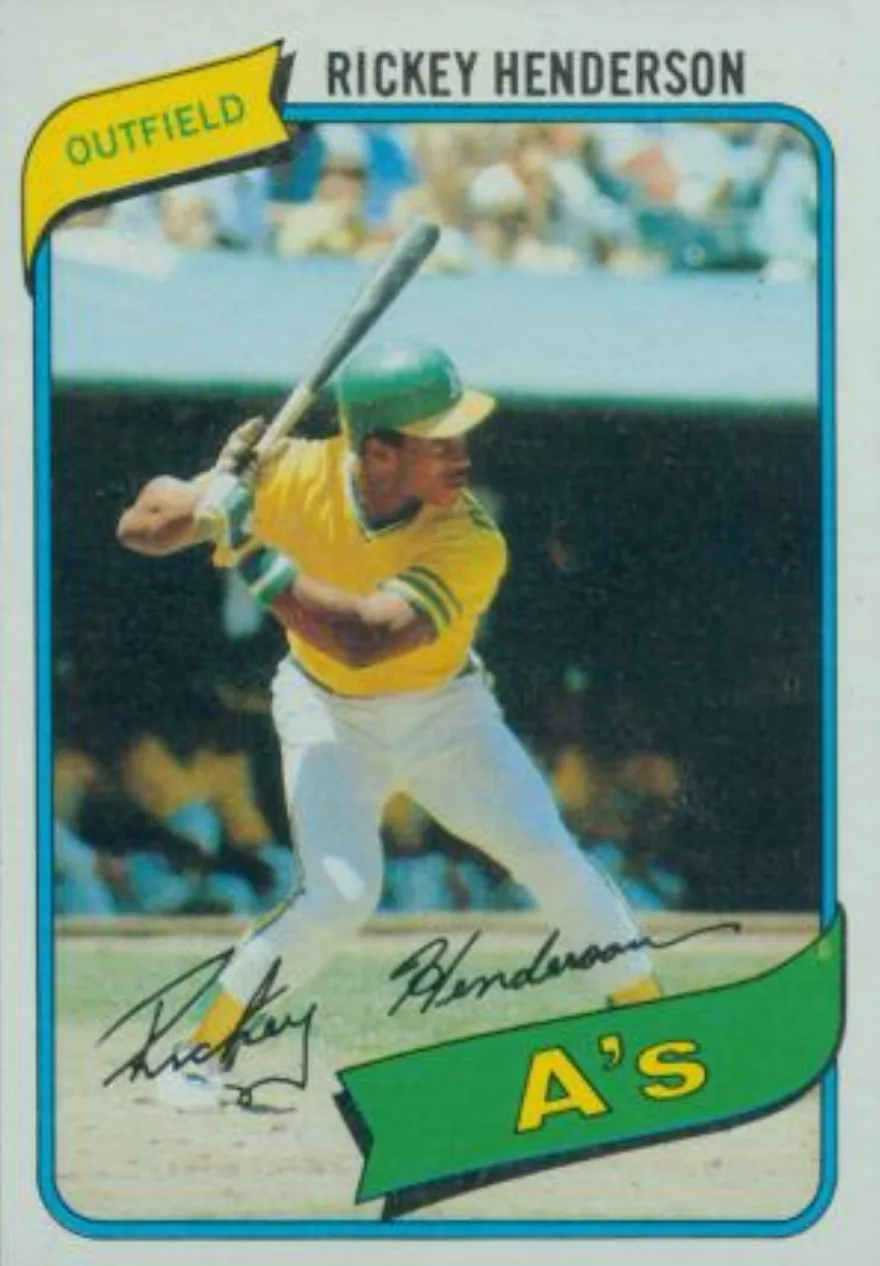
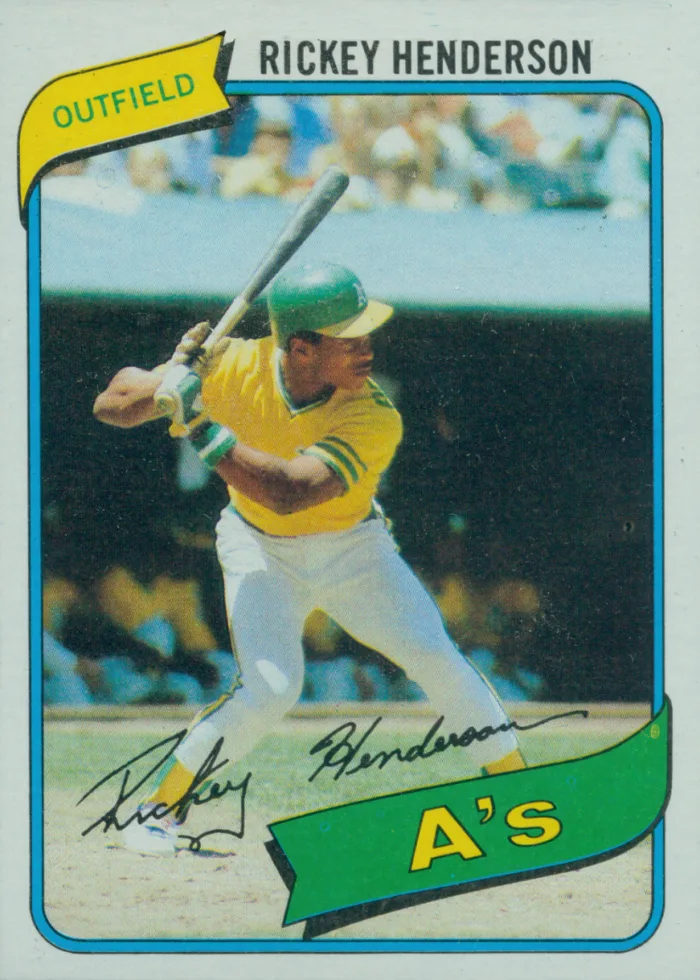
9. 1980 Topps Baseball Rickey Henderson #482
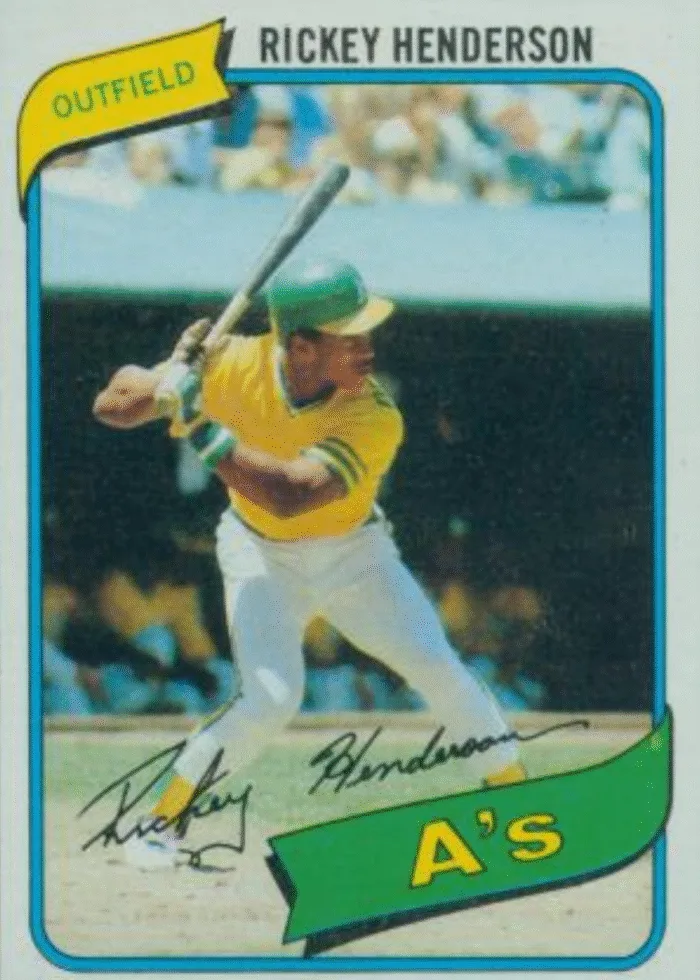
The 1980 Topps Rickey Henderson Rookie Card No. 482 is widely regarded as vintage baseball’s final card, driven by demand rather than manufactured scarcity. Mint examples have reached $4,000, while Gem Mint copies have reached $180,000. Henderson’s career gives the card its weight, as his 1,406 stolen bases remain one of the most unbreakable records in sports. A panel of experts ranked the card #9 among the Top 75 Topps cards, and it will be included in 2026 Topps Series 1 Baseball, reinforcing its lasting importance in The Hobby.
- Find this Iconic Topps Buyback in 2026 Topps Series 1 Baseball
- Find the 1980 Henderson on Fanatics Collect
- More Rickey Henderson Cards to Collect
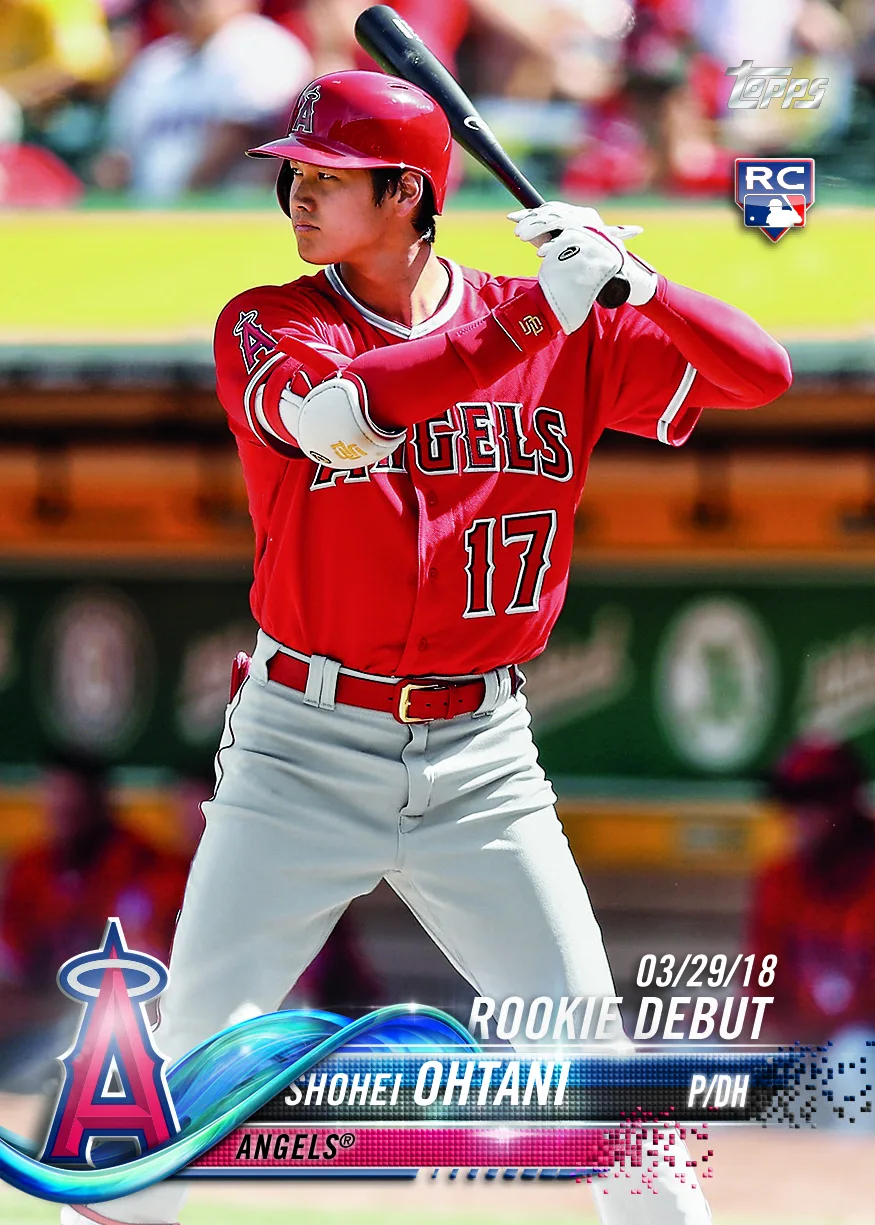
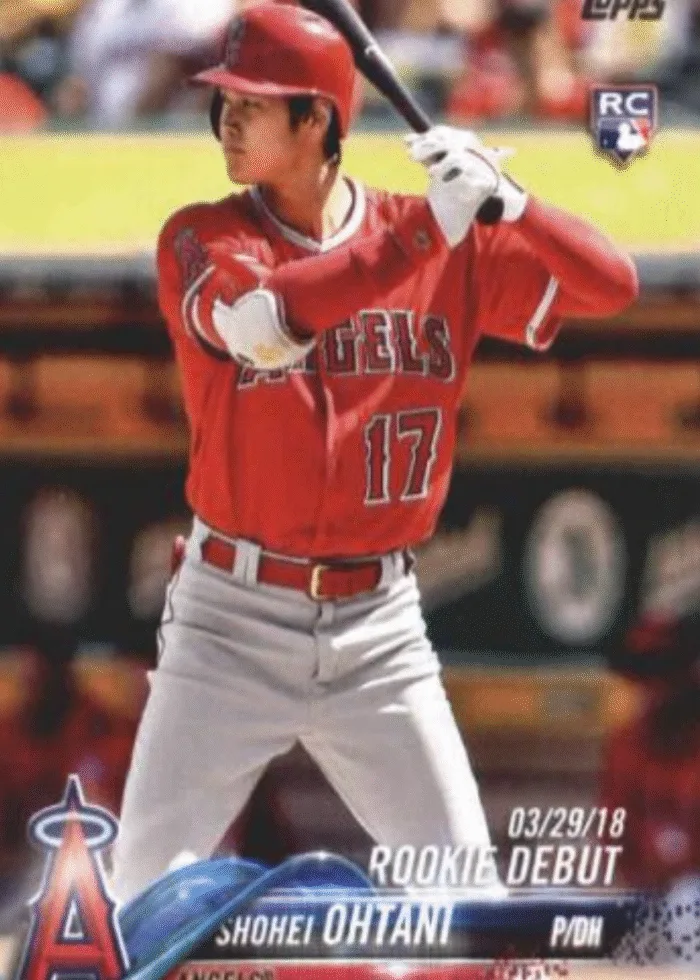
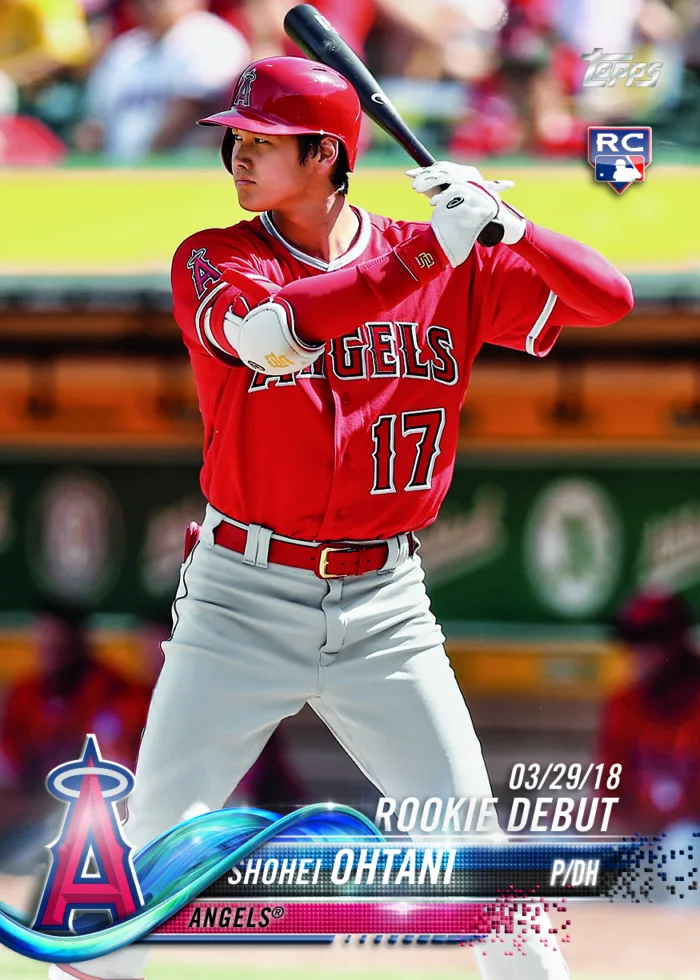
10. 2018 Topps Baseball Update Shohei Ohtani #US285
The 2018 Topps Baseball Update Shohei Ohtani Rookie Card No. US285 stands as a defining modern rookie, capturing his debut season with the Los Angeles Angels and his emergence as a true two-way star. Widely viewed as a grail-level rookie, demand for high-grade copies continues to reflect Ohtani’s historic impact on the game. Gem Mint examples command a premium, reinforcing the card’s status as a key symbol of modern greatness and a touchstone in The Hobby.
- Find this Iconic Topps Buyback in 2026 Topps Series 1 Baseball
- Find the 2018 Ohtani on Fanatics Collect
- Nate Thompson’s Ohtani Rookie Card Journey
The 1950s
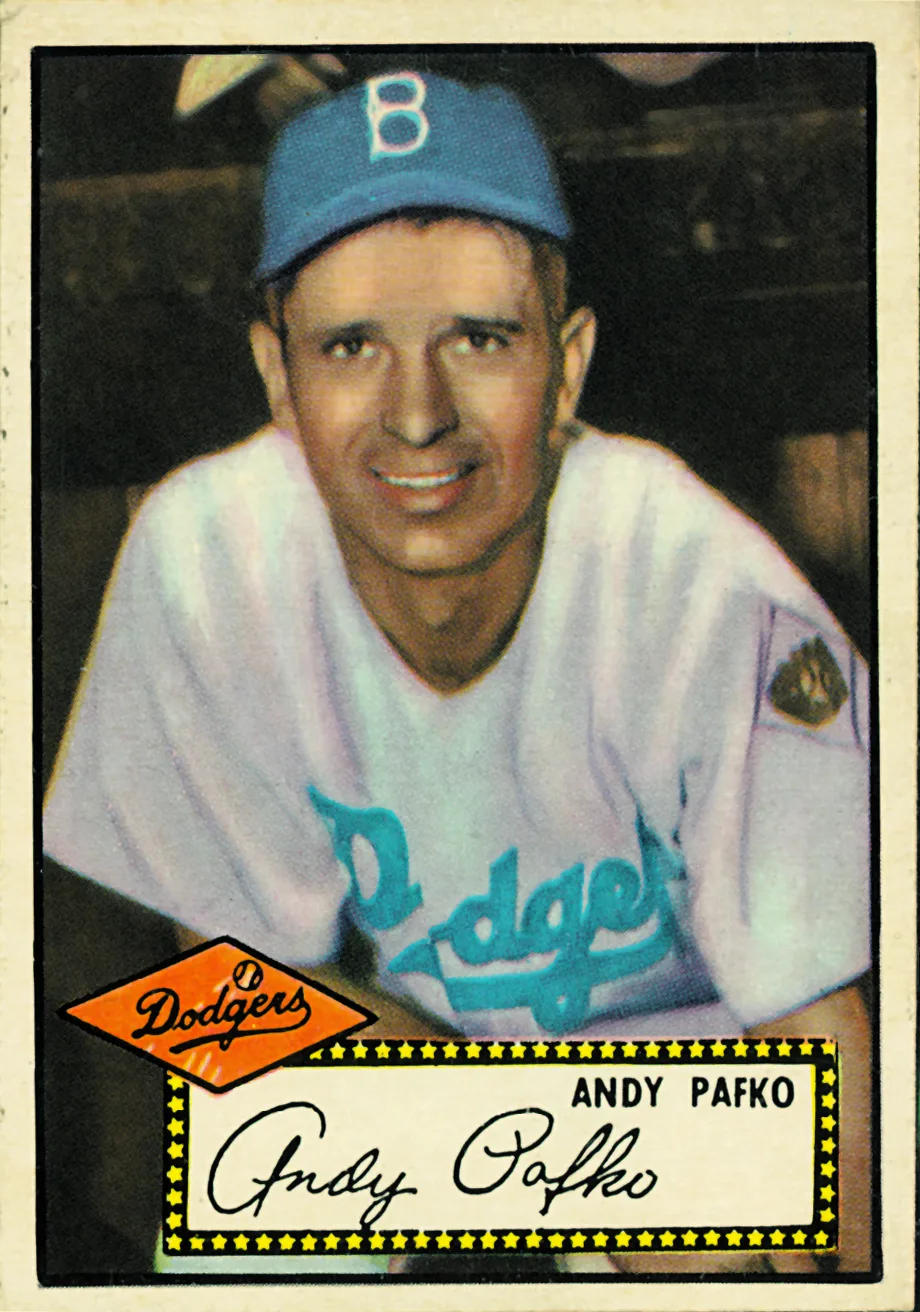
1952 Topps Baseball Andy Pafko #1
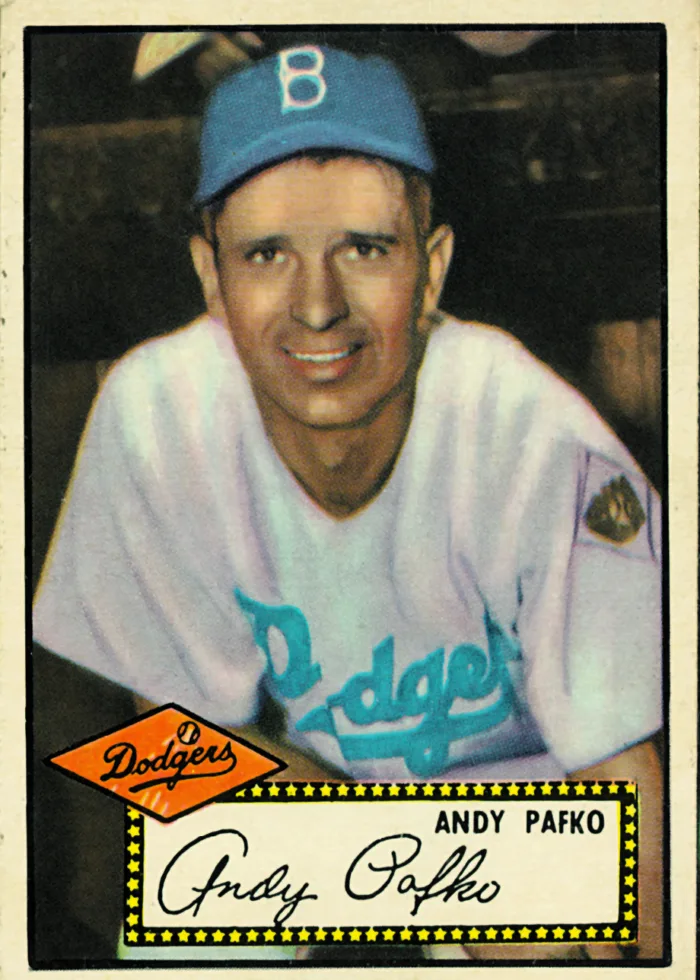
The 1952 Topps Andy Pafko stands as the most important No. 1 card of the postwar era. While Pafko is not a household name, his place in The Hobby is outsized as the leadoff card for the iconic 1952 Topps set. A steady major leaguer who hit .285 with 213 home runs, Pafko anchors one of the most influential issues in card history. As one of the few non-star cards recognized for its significance, its importance is rooted in position and legacy rather than on-field accolades. Measuring approximately 2 5/8 by 3 3/4 inches, the card is notoriously difficult to find well-centered and in high grade.
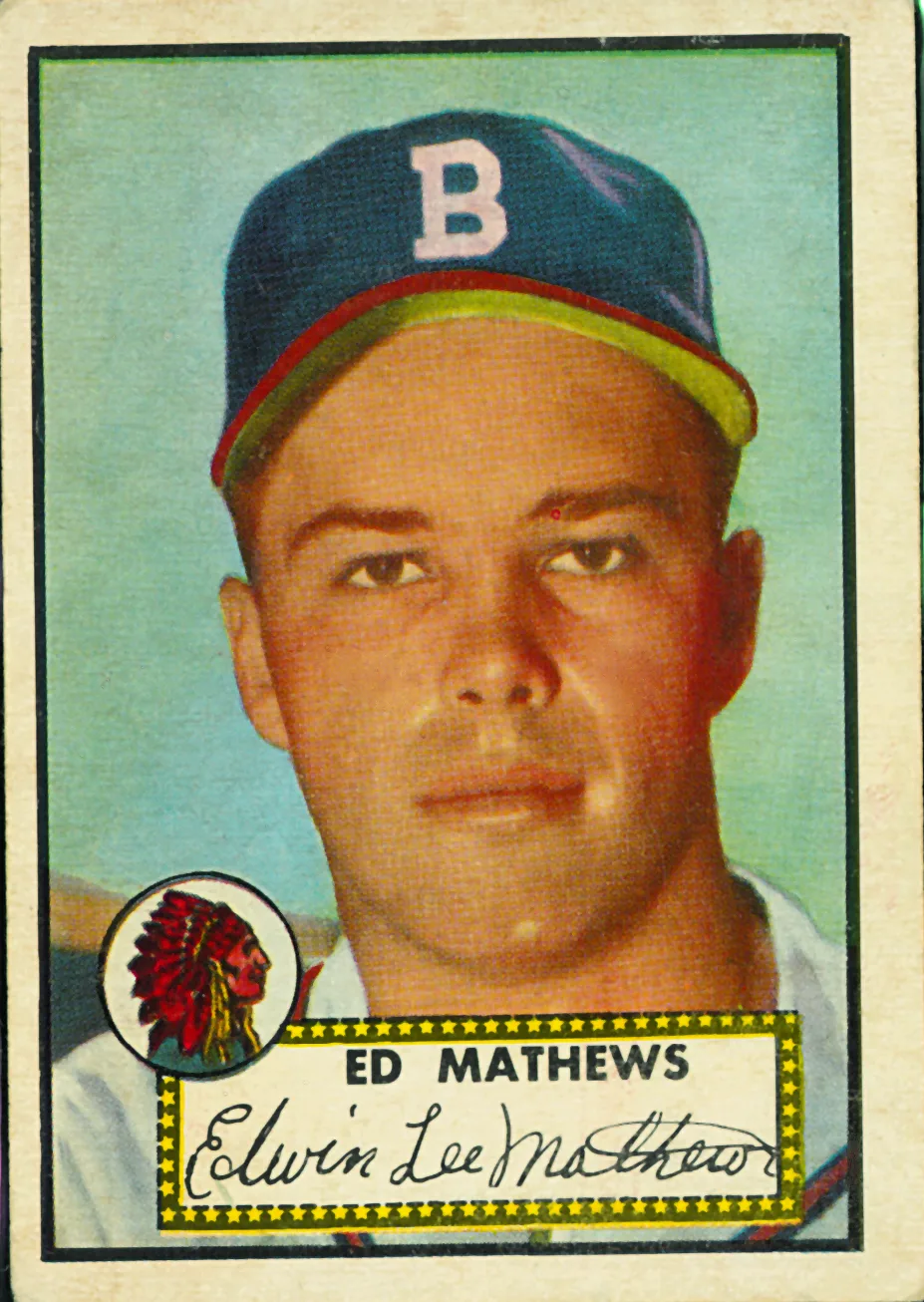
1952 Topps Baseball Ed Mathews #407
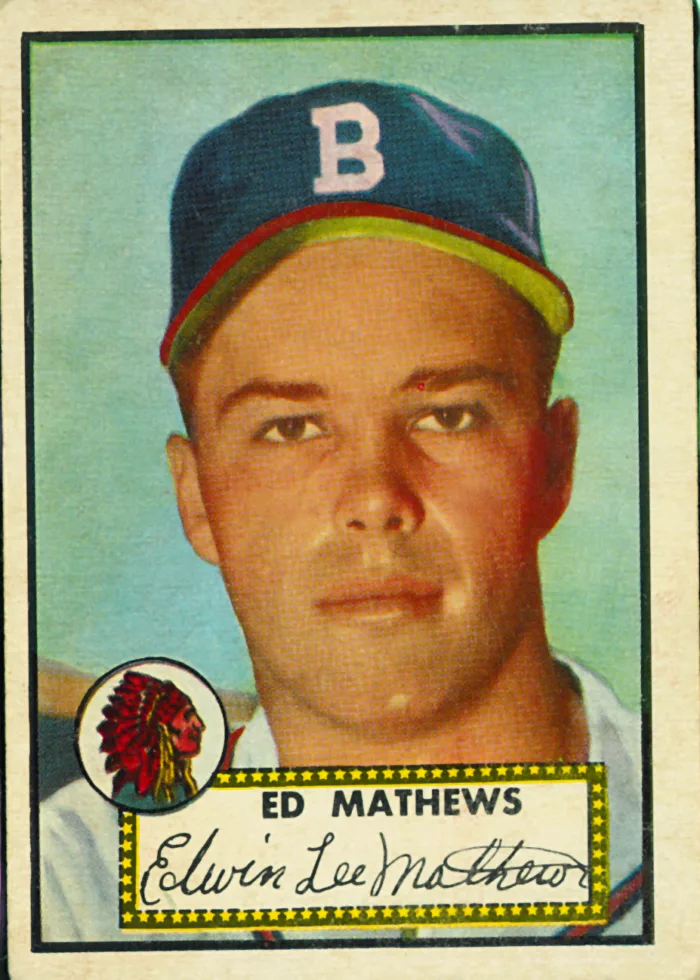
Often regarded as the defining card of Eddie Mathews’ career, this issue closed out the iconic 1952 Topps set and suffered from heavy handling as the final card in the checklist. That placement left high-grade examples especially scarce. Persistent centering problems further limit the availability of pristine copies. It remains the most valuable Ed Mathews card in The Hobby, and one of the most valuable cards from the legendary 1952 set.
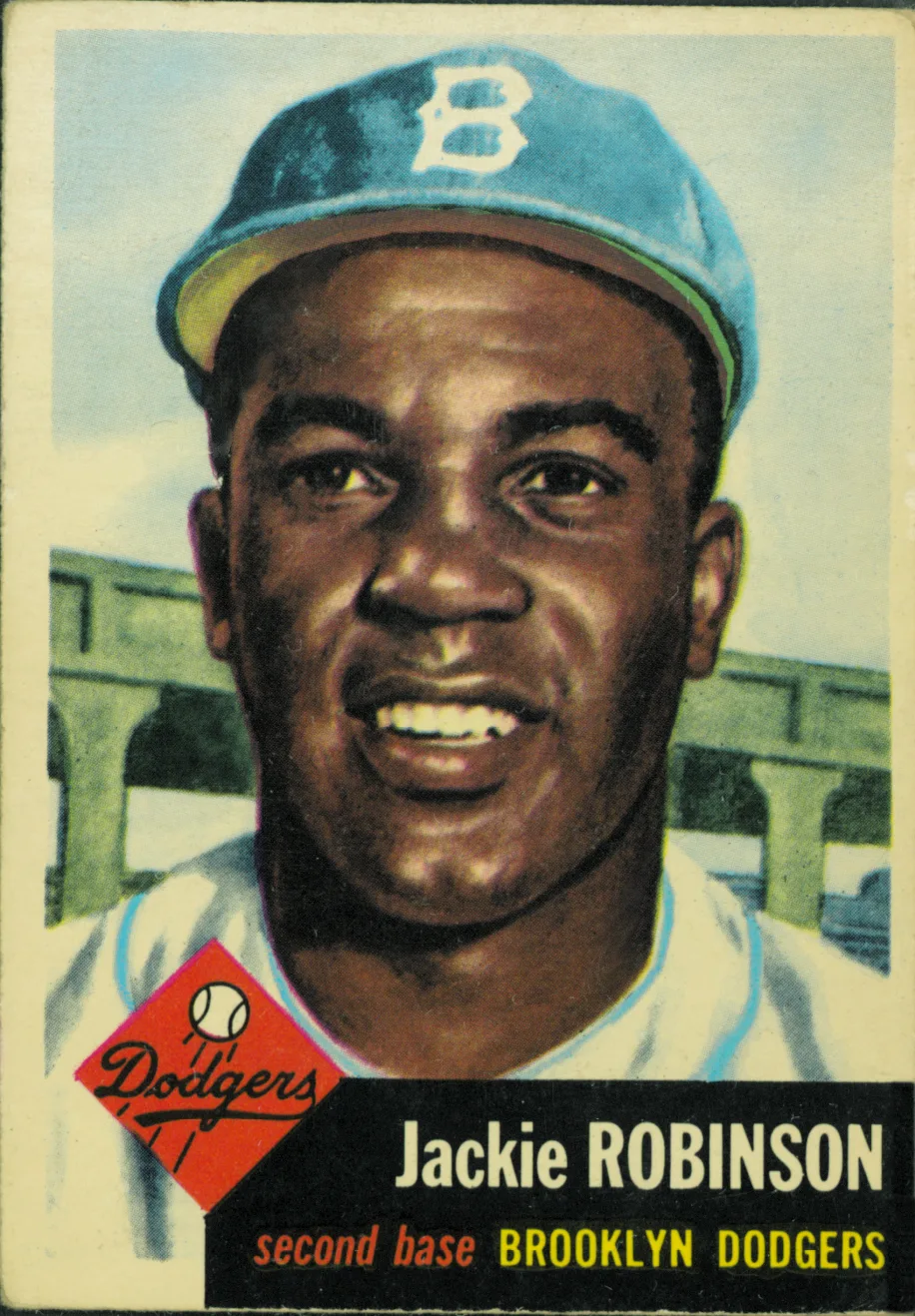
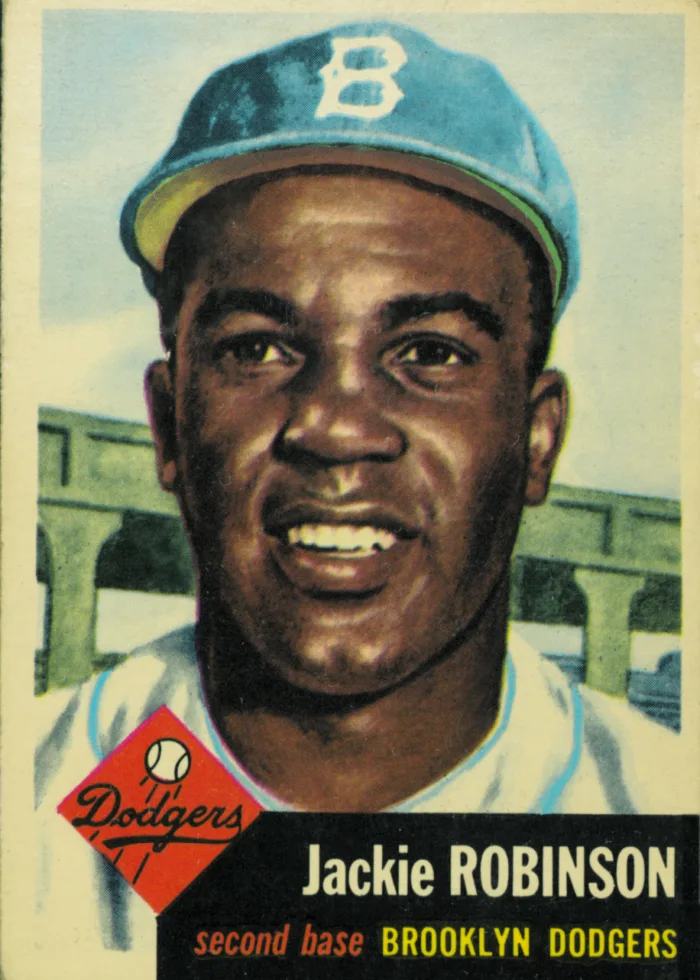
1953 Topps Baseball Jackie Robinson #1
Few postwar cards carry the cultural and historical weight of Jackie Robinson’s 1953 Topps issue. Positioned as the first card in the set, it serves as a powerful entry point for collectors and features a striking colorized portrait against the backdrop of the Brooklyn Bridge. Condition sensitivity, especially centering and chipping along the black bottom border, makes high-grade examples scarce. The card remains a lasting tribute to one of the most influential figures in the game’s history.
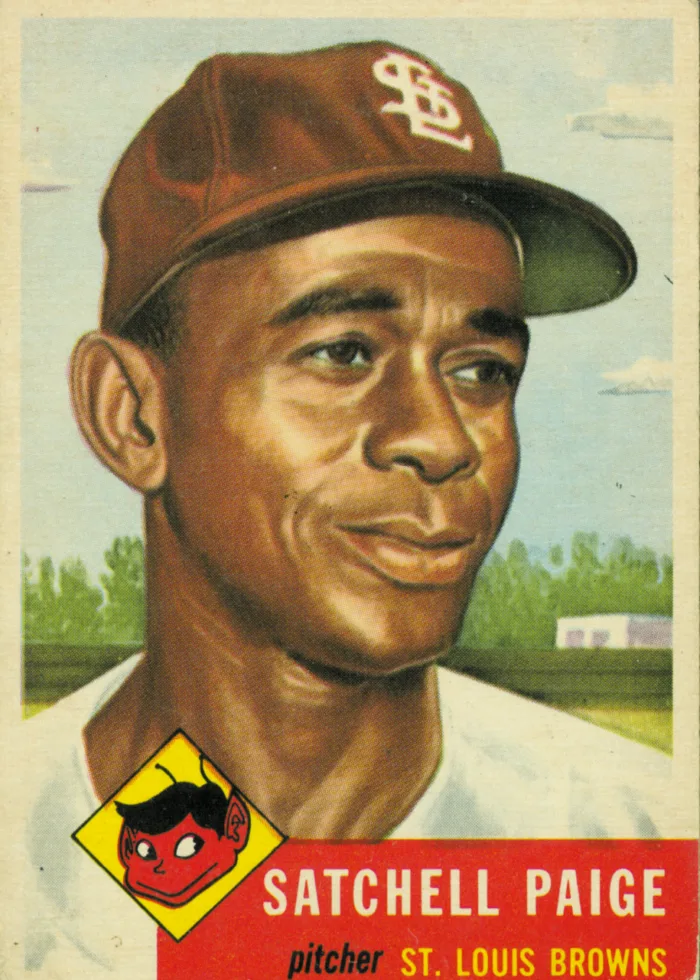
1953 Topps Baseball “Satchell” Paige #220
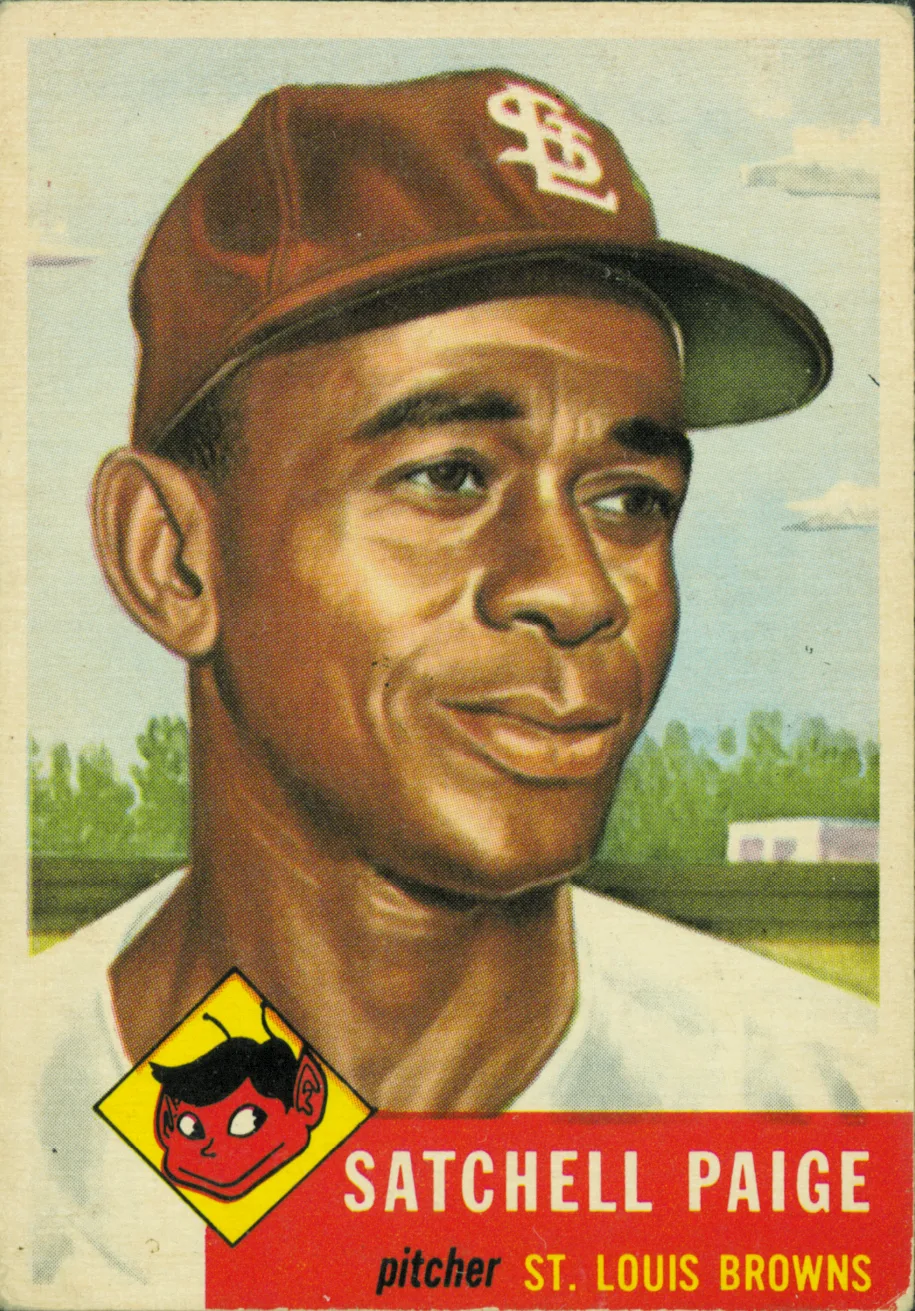
Satchel Paige was already a living legend when Topps released his first and only card as an active player in the 1953 set, a card that has become one of the most iconic in The Hobby. The card reflects a long-delayed MLB career by baseball’s color barrier, with a back that famously describes his Major League career as “long deferred.” Collectors prize the issue for its painted photograph aesthetic, unique facsimile autograph placement, and unmistakable old-school design, even down to the misspelling of Paige’s first name. Issued late in the season, it was not easy to pull at the time, adding to its lasting mystique. An original 1953 Satchel Paige card will be available via redemption in 2026 Topps Series 1, giving collectors a chance to own a cornerstone piece of baseball history.
- Find this Iconic Topps Buyback in 2026 Topps Series 1 Baseball
- Find the 1953 Paige on Fanatics Collect
- Satchel Paige Couldn’t Be Hit
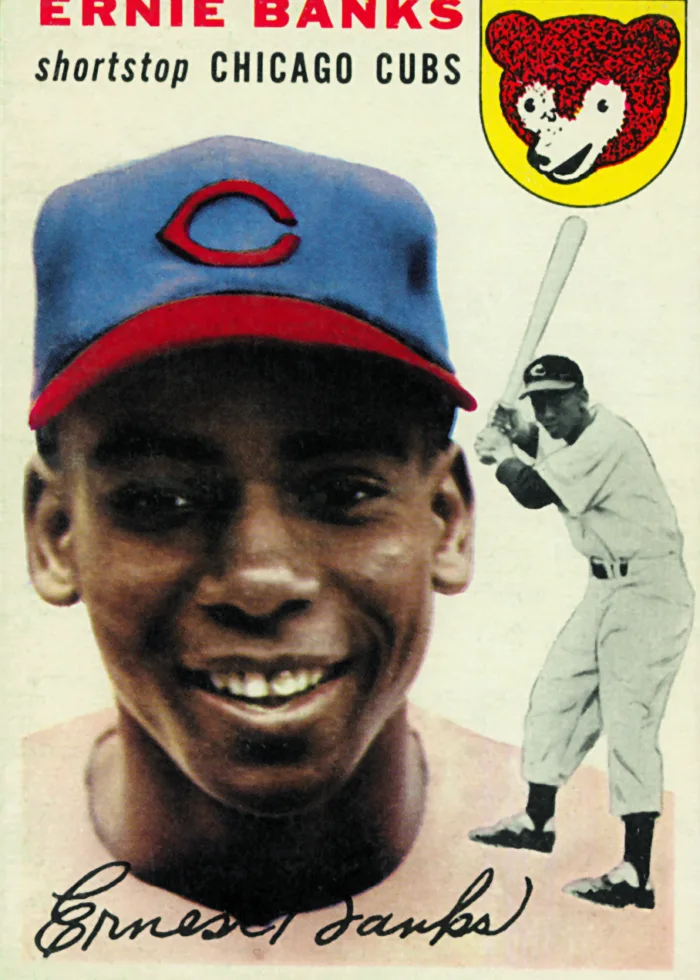
1954 Topps Baseball Ernie Banks #94
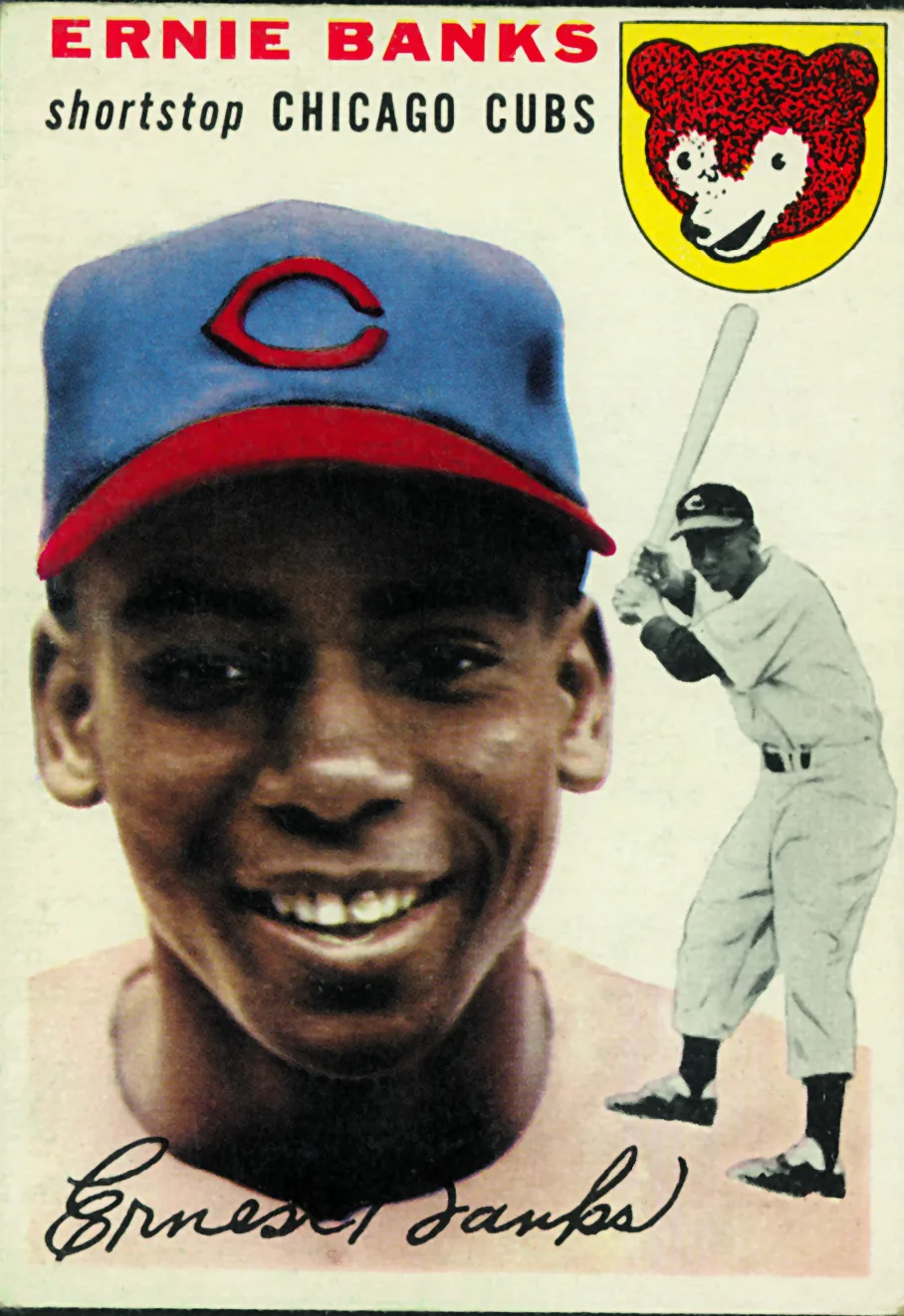
Ernie Banks broke barriers in 1953 as the first African American player in Chicago Cubs history, leading to his rookie card in the third series of the 1954 Topps set. The card is one of the most important issues in The Hobby, appearing in Topps’ first true color photography release and introducing a dual-image design that changed card aesthetics. Its borderless top makes centering a constant challenge, elevating the value of well-centered examples. Banks’ immediate impact after coming over from the Kansas City Monarchs foreshadowed a Hall of Fame career built on uncommon power for a shortstop and enduring star appeal. A graded copy of the 1954 Topps Ernie Banks rookie card No. 94 will be available via redemption in 2026 Topps Series 1.
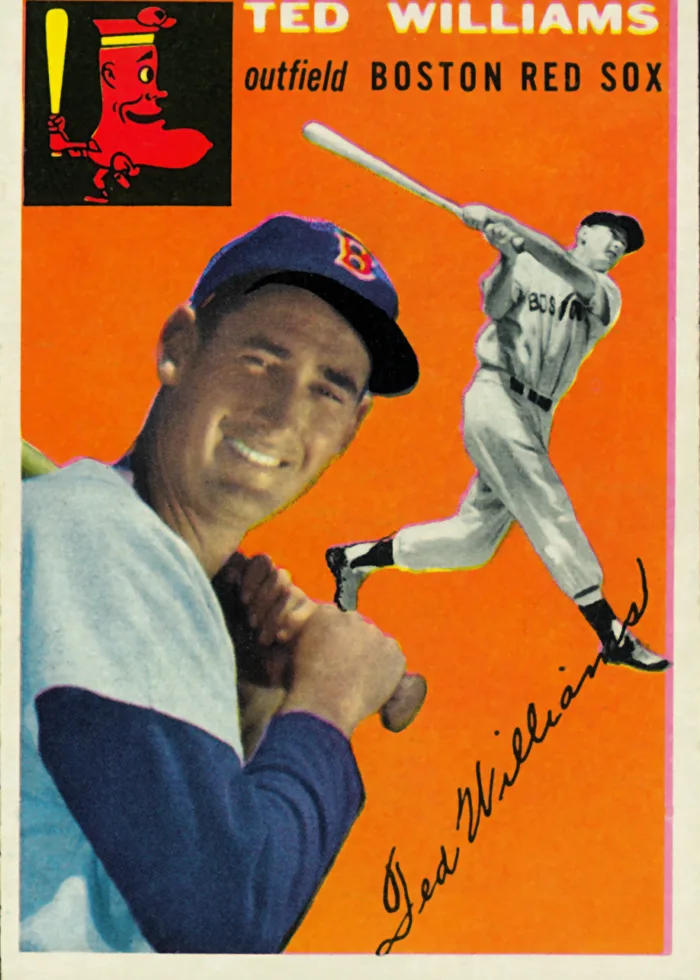
1954 Topps Baseball Ted Williams #1
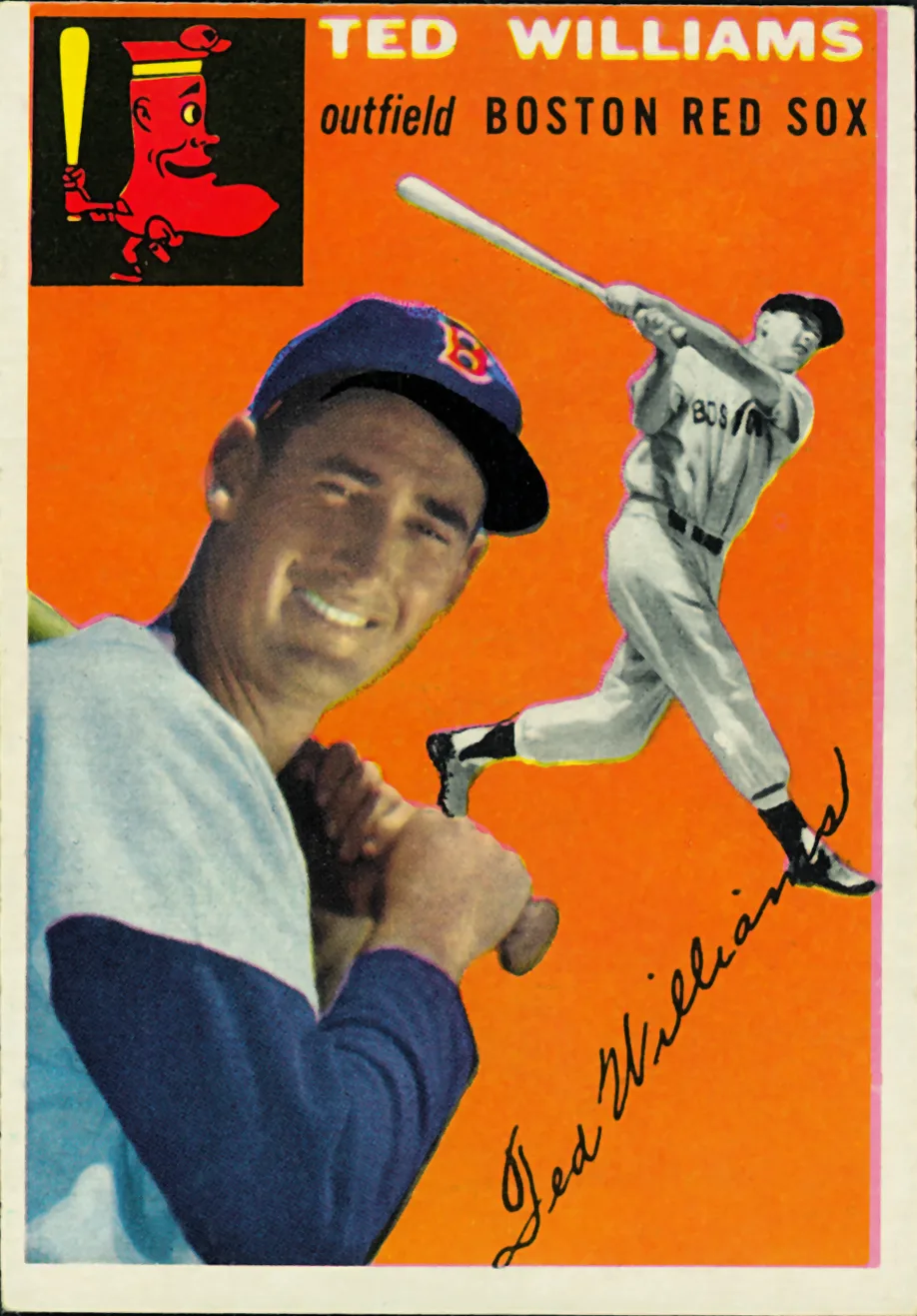
Ted Williams’ return from military service made the 1954 Topps set a defining moment in The Hobby. After missing the 1952 and 1953 seasons while flying combat missions in the Korean War, Williams became the focal point of the release, appearing on pack boxes and receiving multiple cards. His No. 1 card features a bold color portrait and a back that highlights both his historic .400 season and his service record. Issued during another dominant year at the plate, it became the premier chase card of the set. A graded original 1954 Topps Ted Williams No. 1 will be available via redemption in 2026 Topps Series 1.
- Find this Iconic Topps Buyback in 2026 Topps Series 1 Baseball
- Find the 1954 Williams on Fanatics Collect
- More Ted Williams Cards to Collect
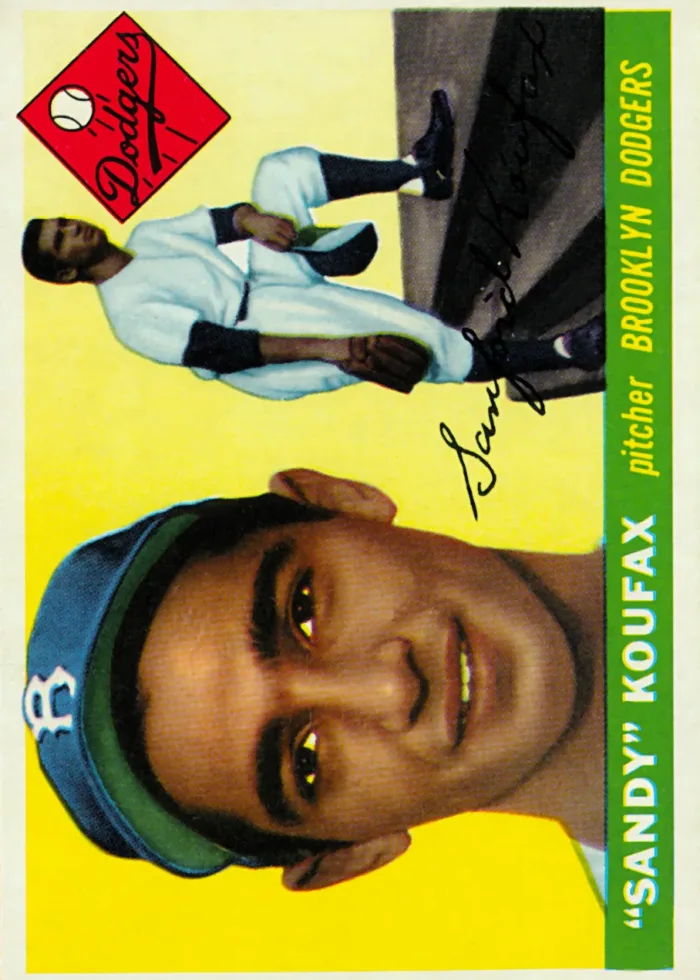
1955 Topps Baseball Sandy Koufax #123
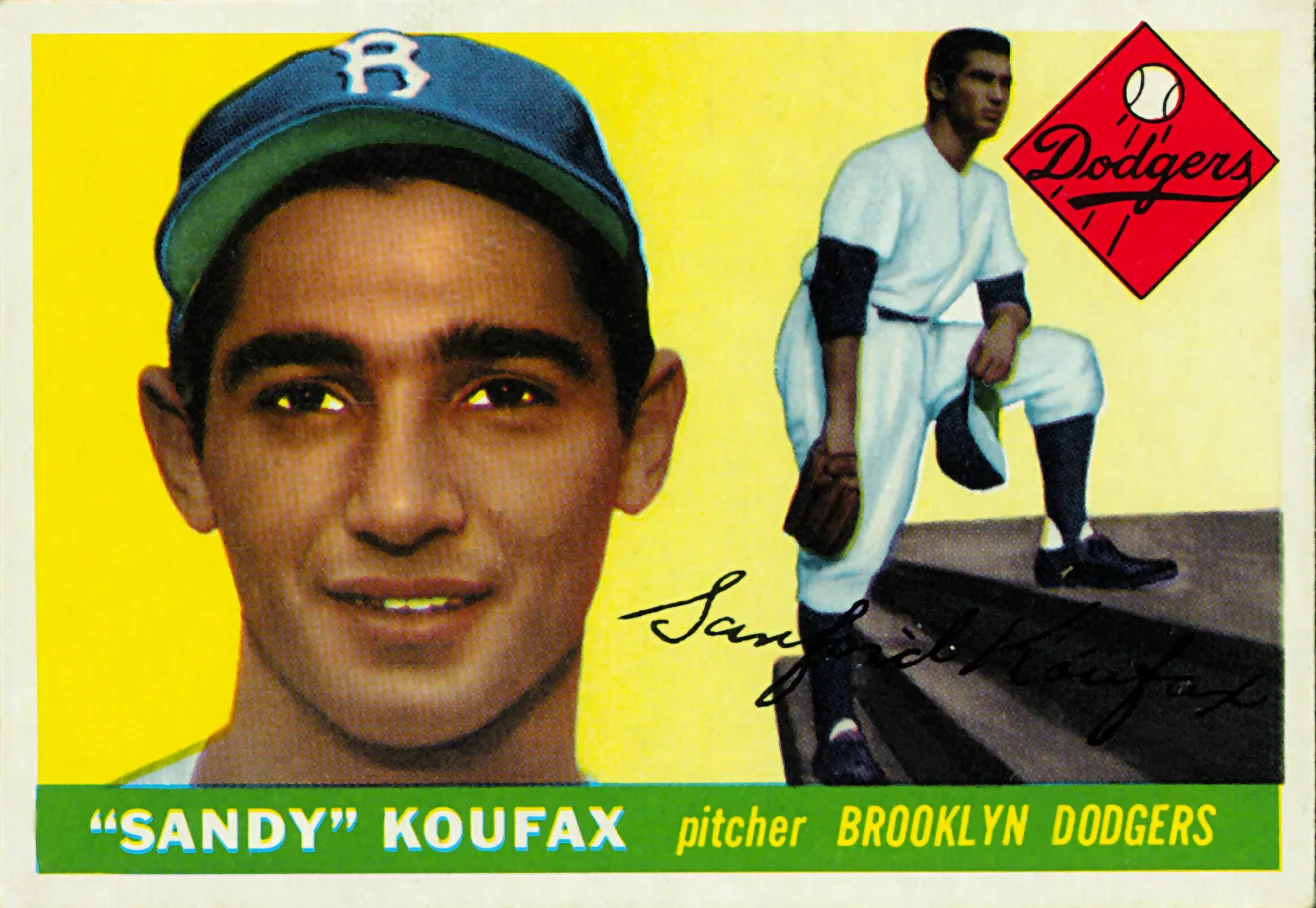
Sandy Koufax was one of two defining rookie cards of the 1955 Topps set (Roberto Clemente #164 was the other), a Brooklyn bonus baby whose card became the early chase in The Hobby—issued before he had any real Major League track record and featuring a blank stat line, the card captured pure potential during Topps’ battle with Bowman. The bold horizontal design helped cement the 1955 set as a vintage classic, while Koufax’s local roots and early flashes of dominance fueled demand. As his career later evolved into legend, the card skyrocketed in importance. A graded original 1955 Topps Sandy Koufax No. 123 will be available via redemption in 2026 Topps Series 1.
- Find this Iconic Topps Buyback in 2026 Topps Series 1 Baseball
- Find the 1955 Koufax on Fanatics Collect
- More Koufax Cards to Collect
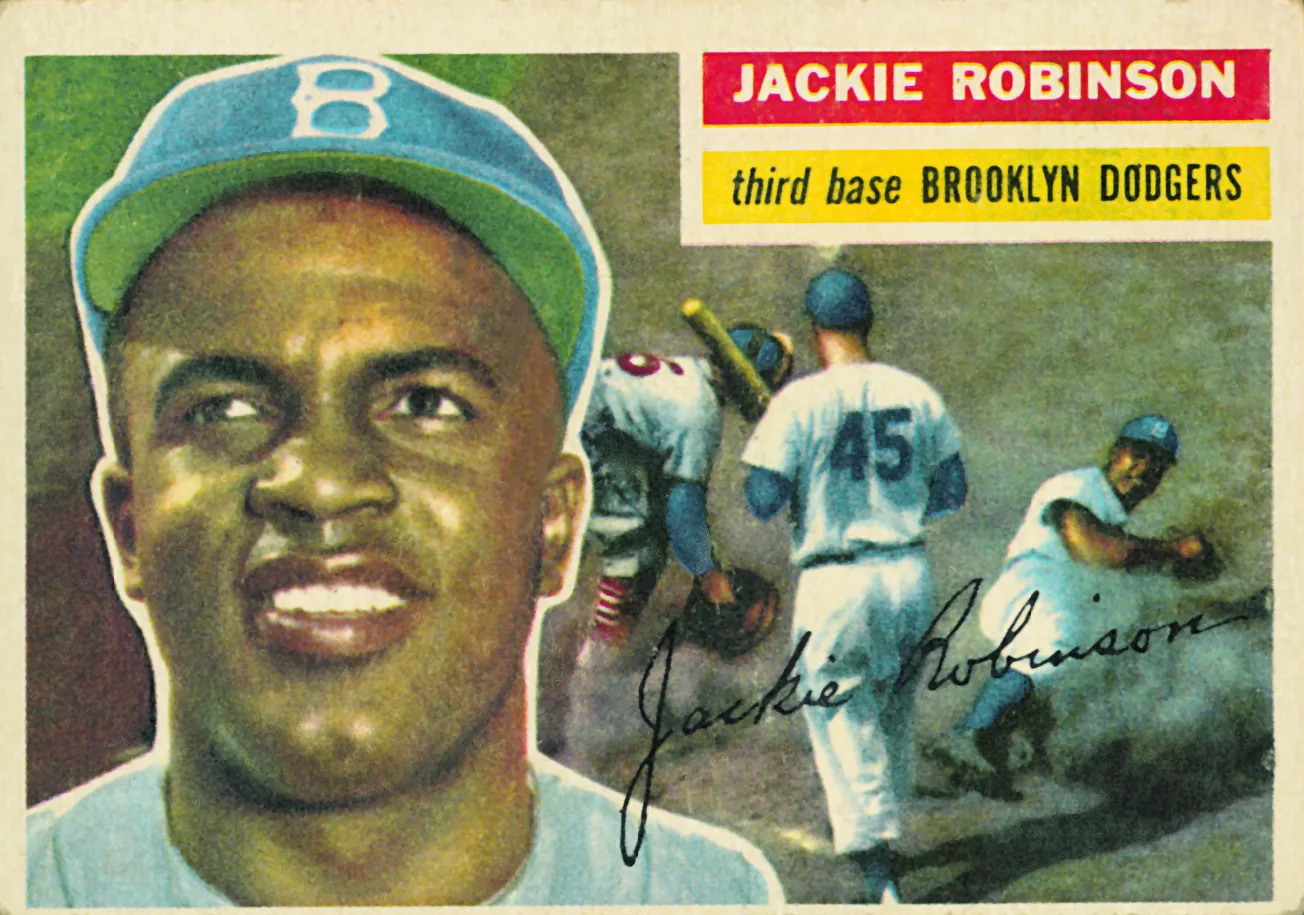
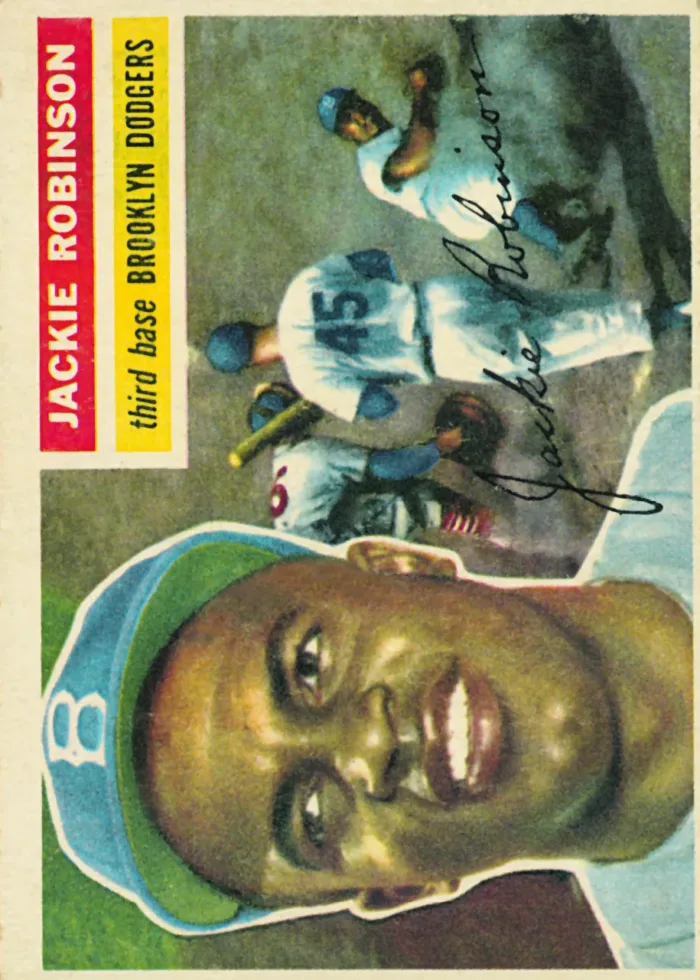
1956 Topps Baseball Jackie Robinson #30
Issued during the final season of Jackie Robinson’s playing career, this Topps card stands among the most important vintage issues in The Hobby. Its iconic horizontal layout combines a portrait with a dramatic action image of Robinson stealing home, creating one of the era’s most visually celebrated designs. The card was produced with both white and gray backs, with the scarcer gray back carrying a meaningful premium. As a true career capper for the player who broke baseball’s color barrier, it remains a lasting symbol of Robinson’s impact on the game.
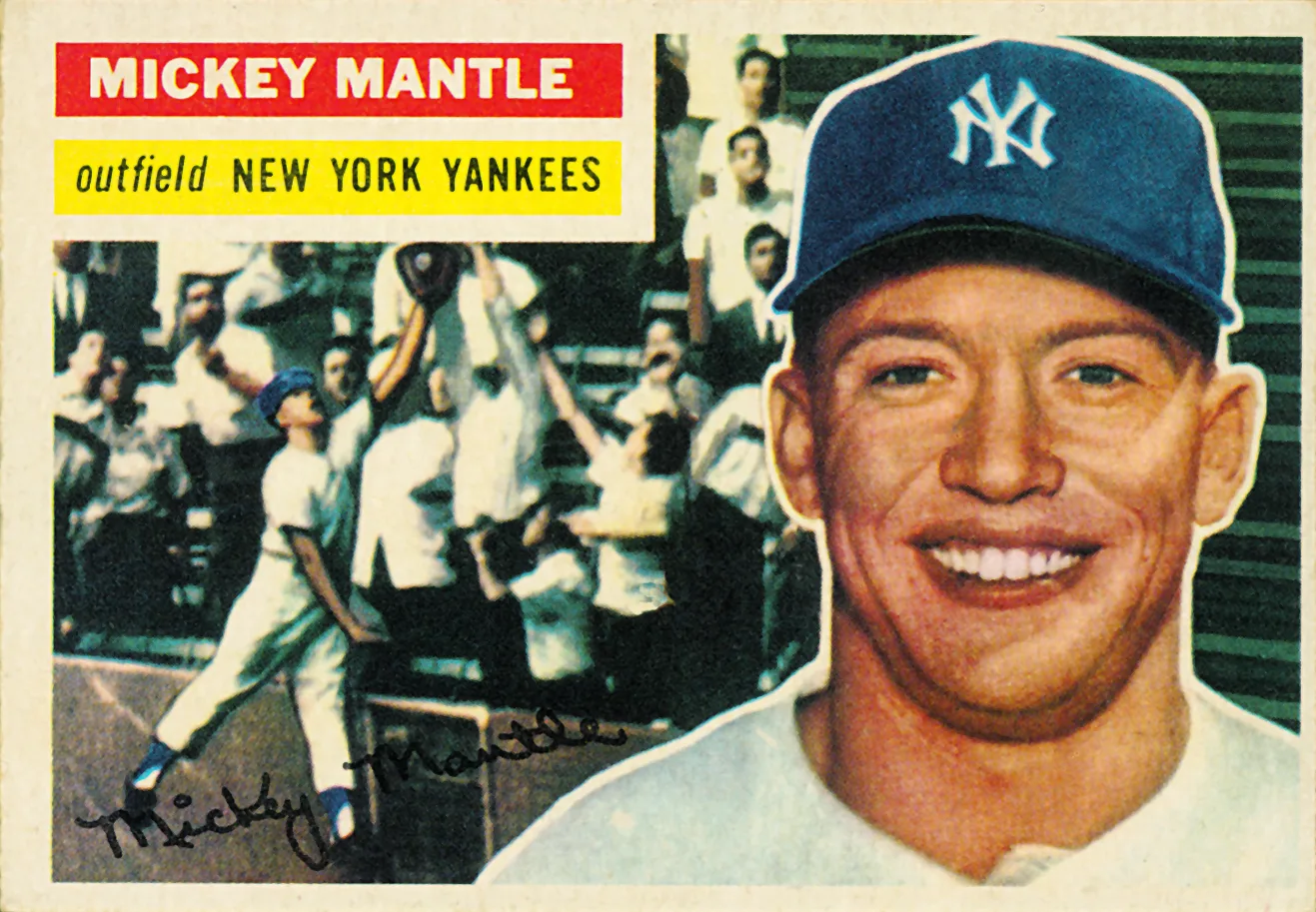
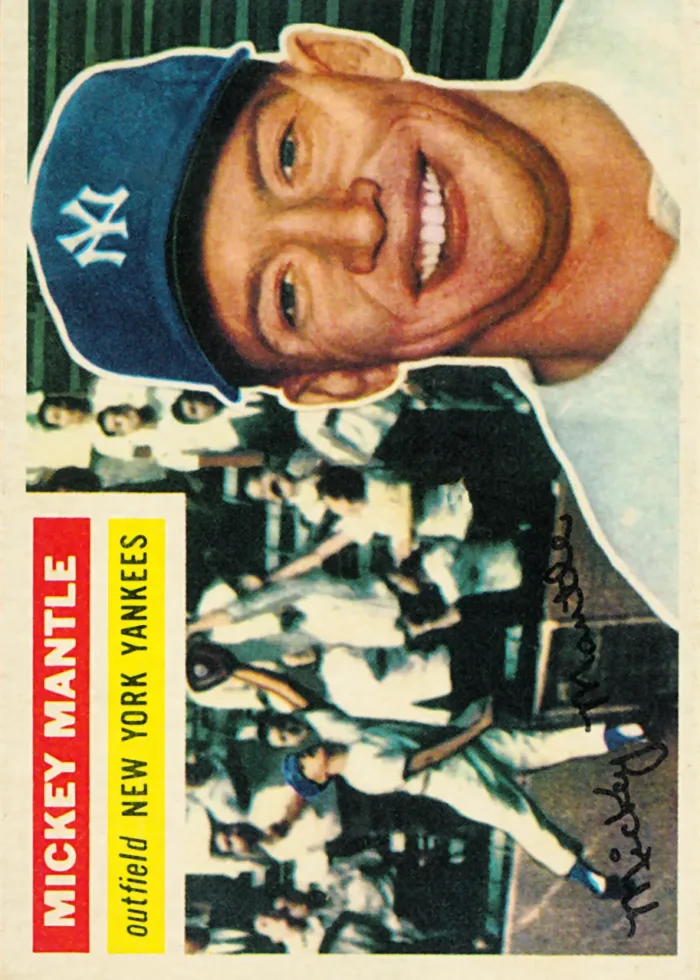
1956 Topps Baseball Mickey Mantle #135
Captured at the height of Mickey Mantle’s powers, this Topps issue documents his historic Triple Crown season when he hit .353 with 52 home runs and 130 RBI. It also marked his return to Topps after a two-year absence, which immediately elevated its importance within the set. The design pairs a smiling close-up portrait with a batting action image released with both white and scarcer gray backs. While more attainable than his 1952 debut, high-grade examples remain difficult to find due to centering and factory cut issues, securing its place among the most desirable Mantle cards in The Hobby.
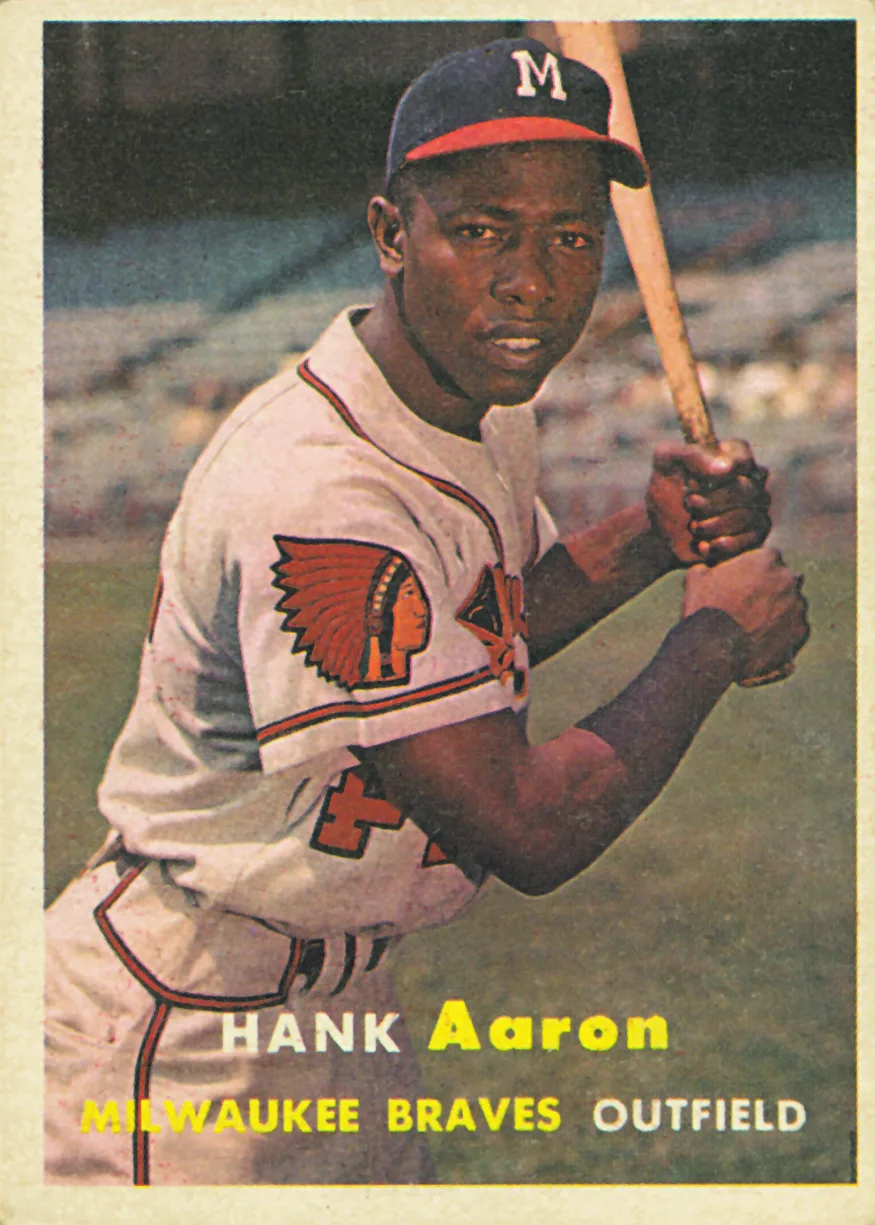
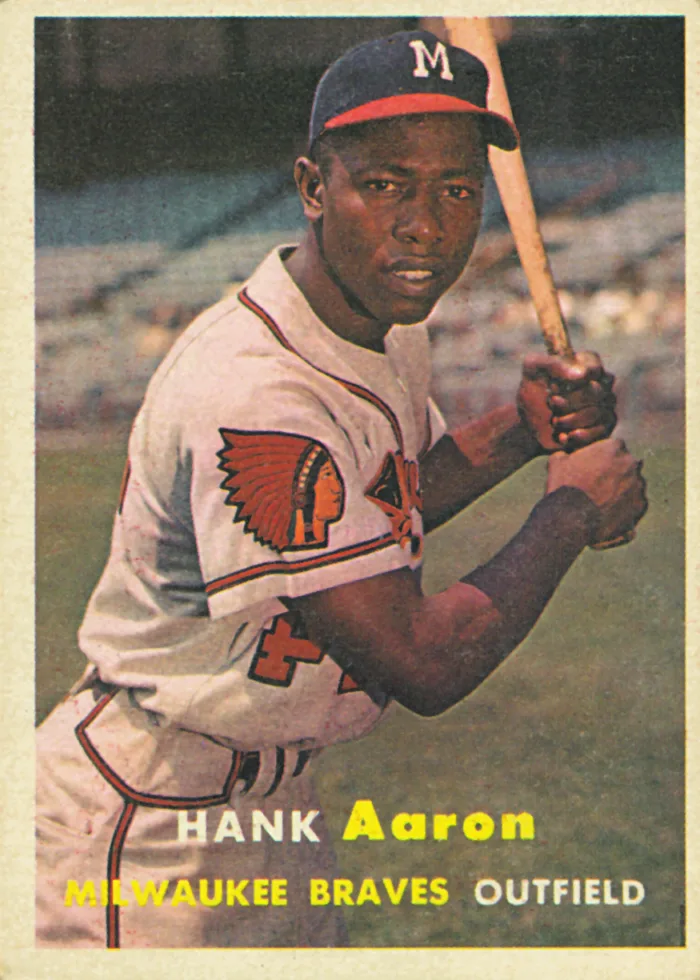
1957 Topps Baseball Hank Aaron #20
Issued during Hank Aaron’s National League MVP season, this Topps card captures the Hall of Famer at the height of his early dominance. It is best known for its famous reversed negative, which shows the right-handed Aaron batting left-handed with the number 4 on his jersey appearing backward. The card also comes from the first Topps set produced in the modern standard size, adding to its historical importance. Scarcity in high grade has only heightened its appeal, making it one of the most iconic images of Hammerin’ Hank in The Hobby.
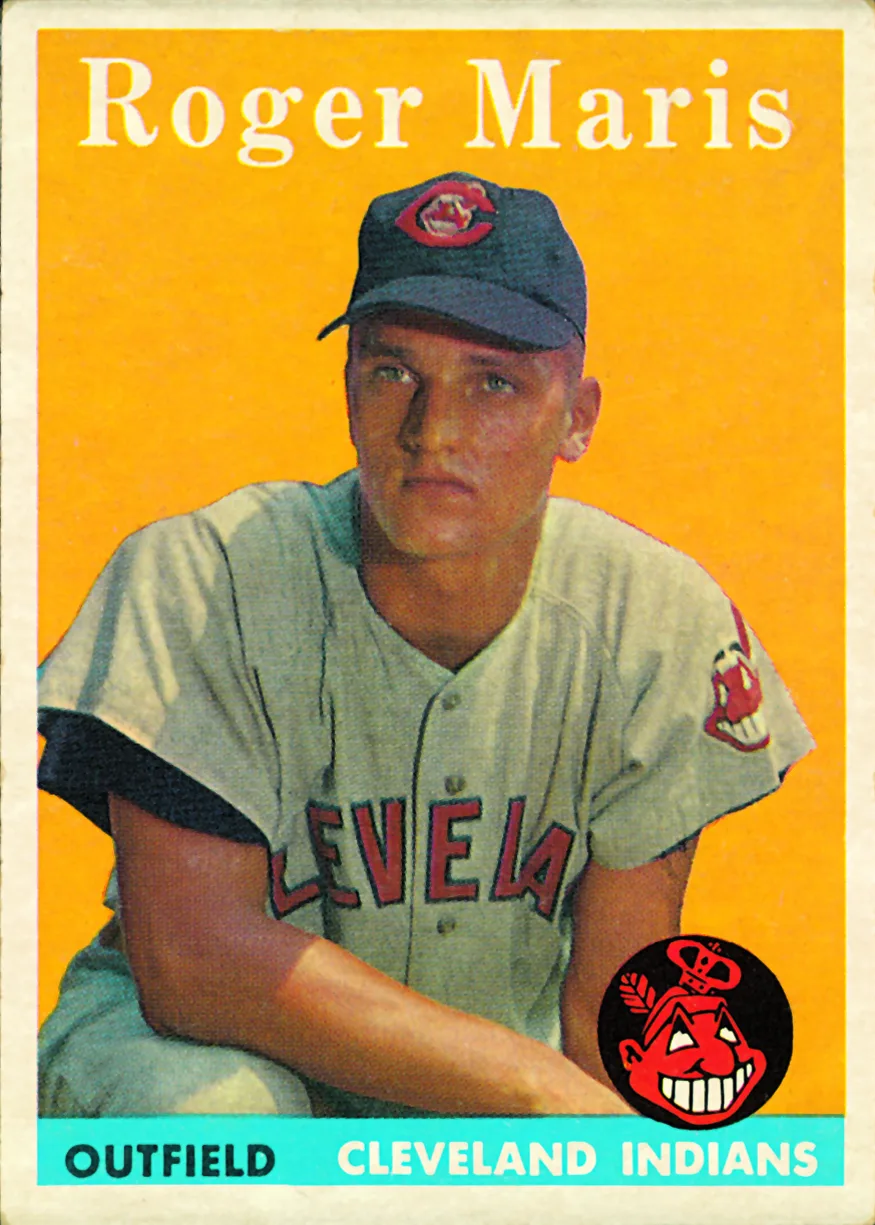
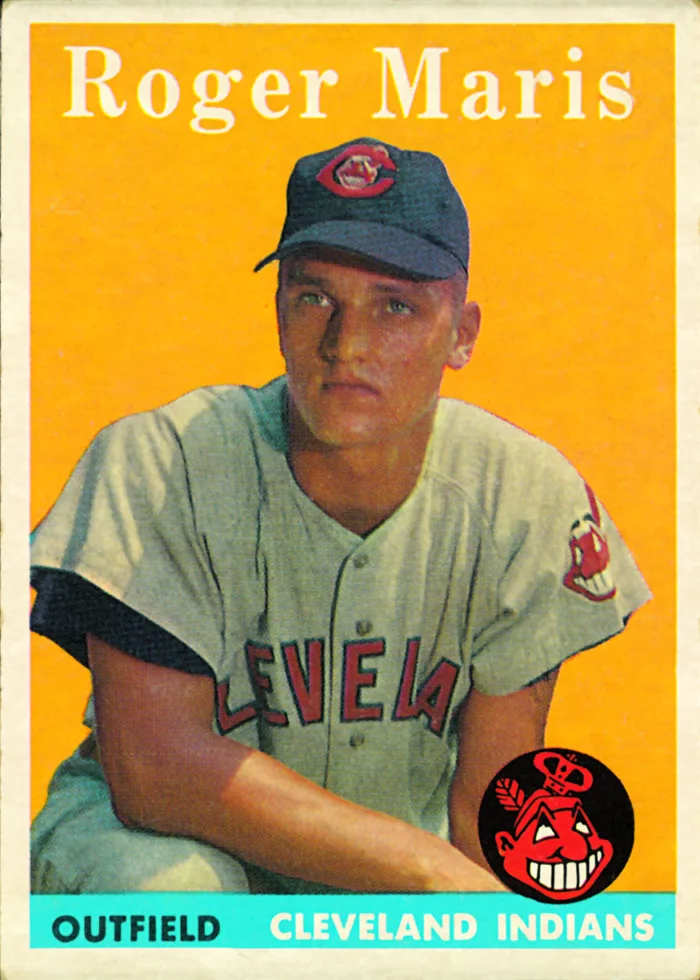
1958 Topps Baseball Roger Maris #47
Before he became synonymous with one of the most famous records in sports, Roger Maris appeared at the very beginning of his Major League career in Topps’ 1958 baseball set. This officially recognized rookie card captures Maris as a member of the Cleveland Indians, two seasons before his historic 61-home-run campaign with the New York Yankees rewrote the record books. As his only true rookie, the card represents the starting point of a career that included two American League MVP awards, four All-Star selections, and three World Series championships. Condition sensitivity across the 1958 Topps set, combined with the card’s bold orange background, makes high-grade examples especially elusive. For collectors, it stands as a foundational artifact of The Hobby, preserving the pre-Yankees origins of a player whose achievements resonated for decades.
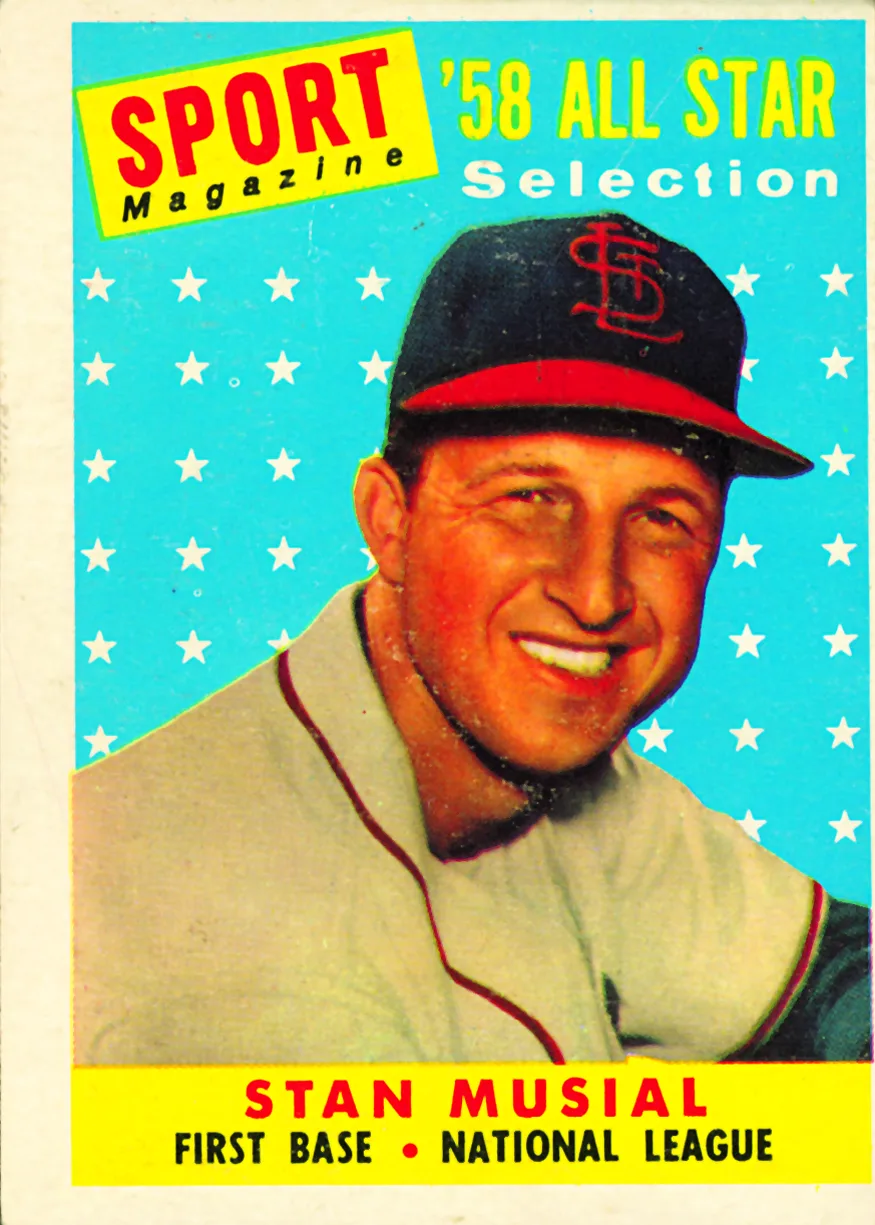
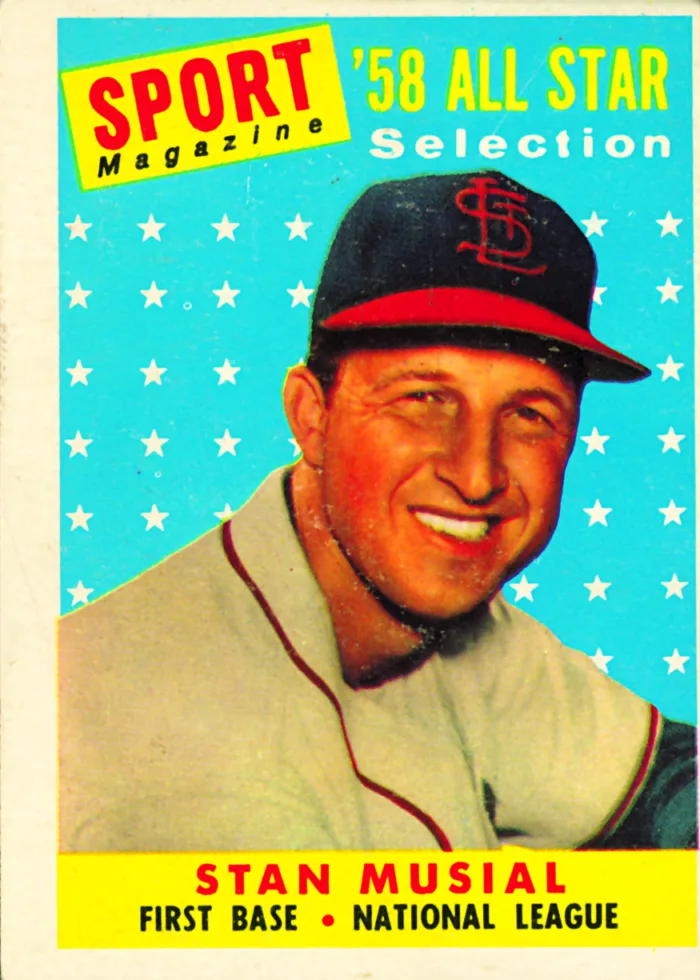
1958 Topps Baseball Stan Musial #476
Stan Musial’s first Topps appearance arrived in 1958 and immediately became one of the most important cards in The Hobby. Released as part of the “Sport Magazine ’58 All Star Selection” subset, it features Musial in his classic Cardinals uniform. The card was triple-printed, making it more obtainable than many others in the series while still sustaining strong demand. Its vibrant design and historical significance continue to make it an essential Musial card and a standout of 1950s Topps collecting.
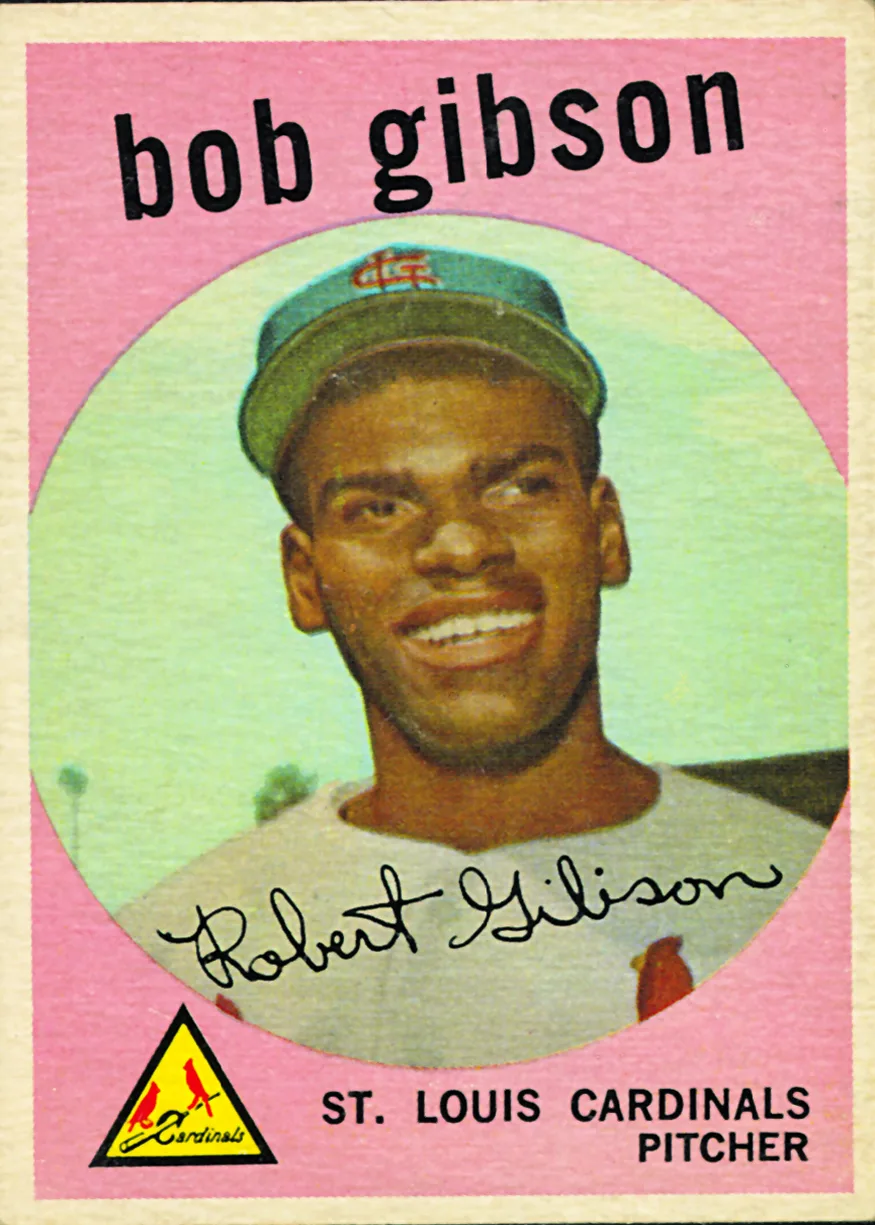
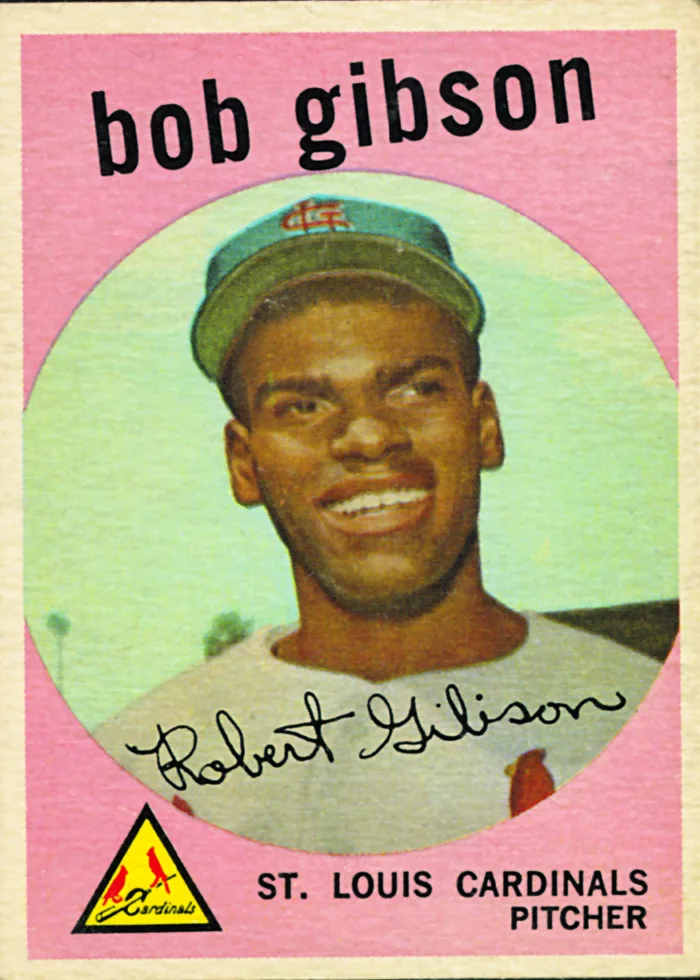
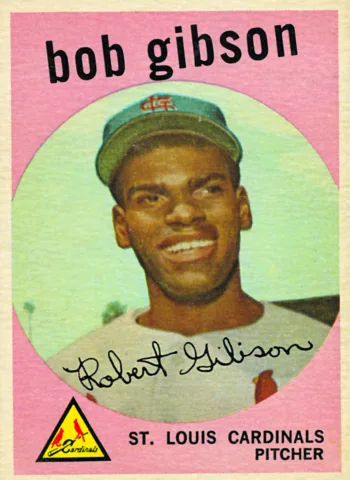
1959 Topps Baseball Bob Gibson #514
Bob Gibson’s rookie card is the defining pitching debut of the 1959 Topps set and a cornerstone in The Hobby. Issued before he reached the Majors, the card shows a smiling Gibson against a bright bubble gum background, a striking contrast to the intimidating ace he soon became. Released in the final series, it was tougher to pull at the time, but it gained significance as Gibson quickly established himself as one of baseball’s most dominant pitchers. A graded original 1959 Topps Bob Gibson No. 514 will be available via redemption in 2026 Topps Series 1.
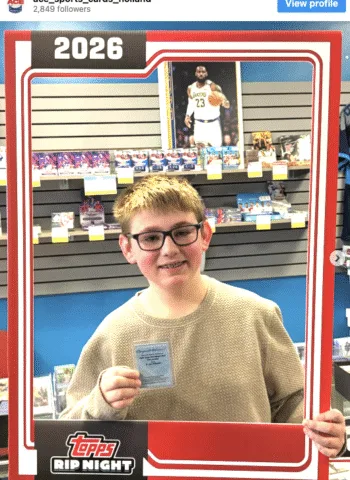
- Find this Iconic Topps Buyback in 2026 Topps Series 1 Baseball
- Find the 1959 Gibson on Fanatics Collect
- More Bob Gibson Cards to Collect
The 1960s
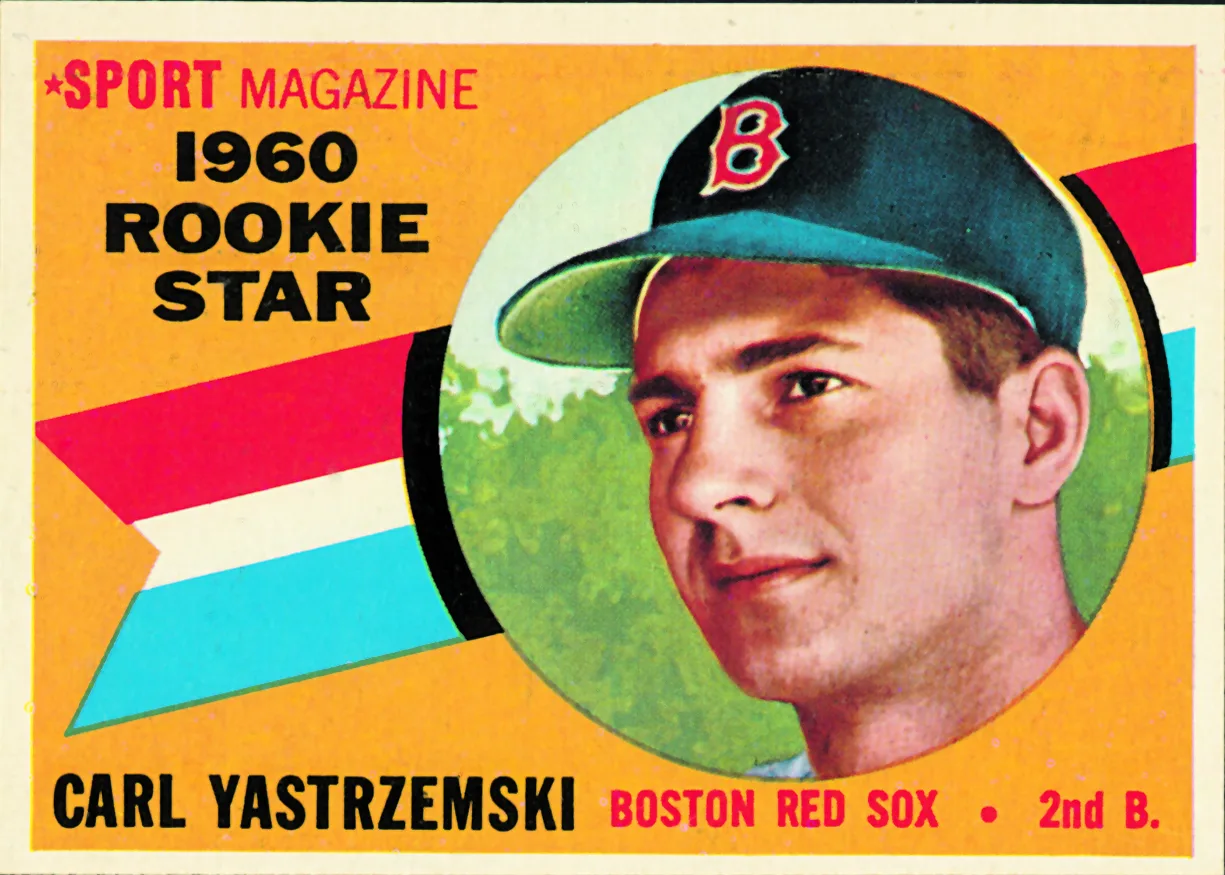
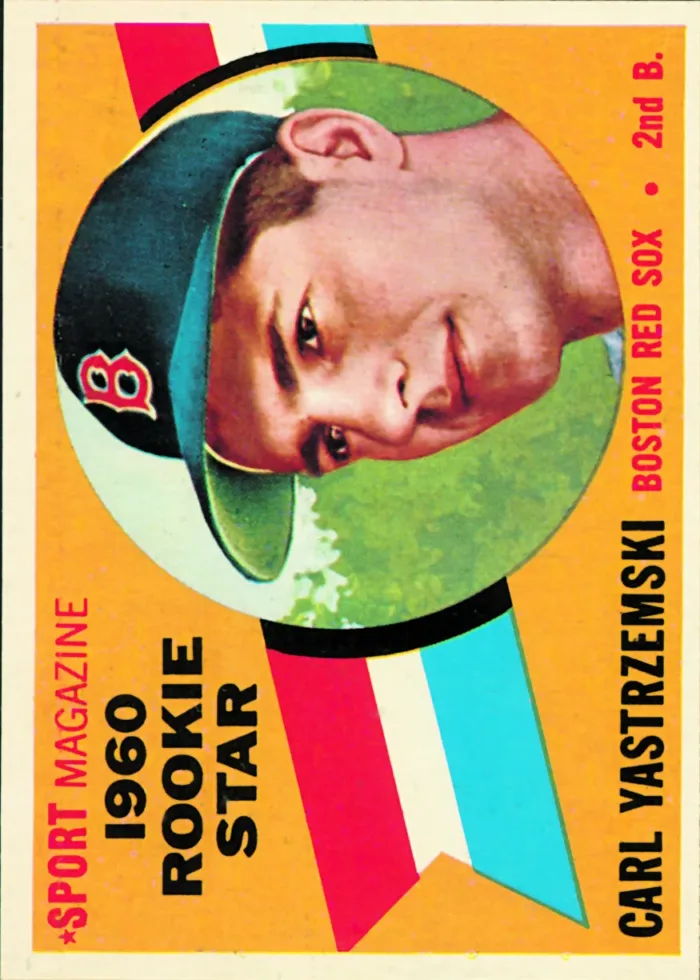
1960 Topps Baseball Carl Yastrzemski #148
The start of Carl Yastrzemski’s legendary run in Boston is captured here. Issued as a Rookie Star in the 1960 Topps set, it represents the debut of the player who went on to a 23-year career, won a Triple Crown, and succeeded Ted Williams as the face of the franchise. A rare solo rookie portrait and a smiling image set it apart from later cards. Printing flaws and centering issues make high-grade examples especially difficult to find, securing its status as one of Topps’ most iconic rookie cards.
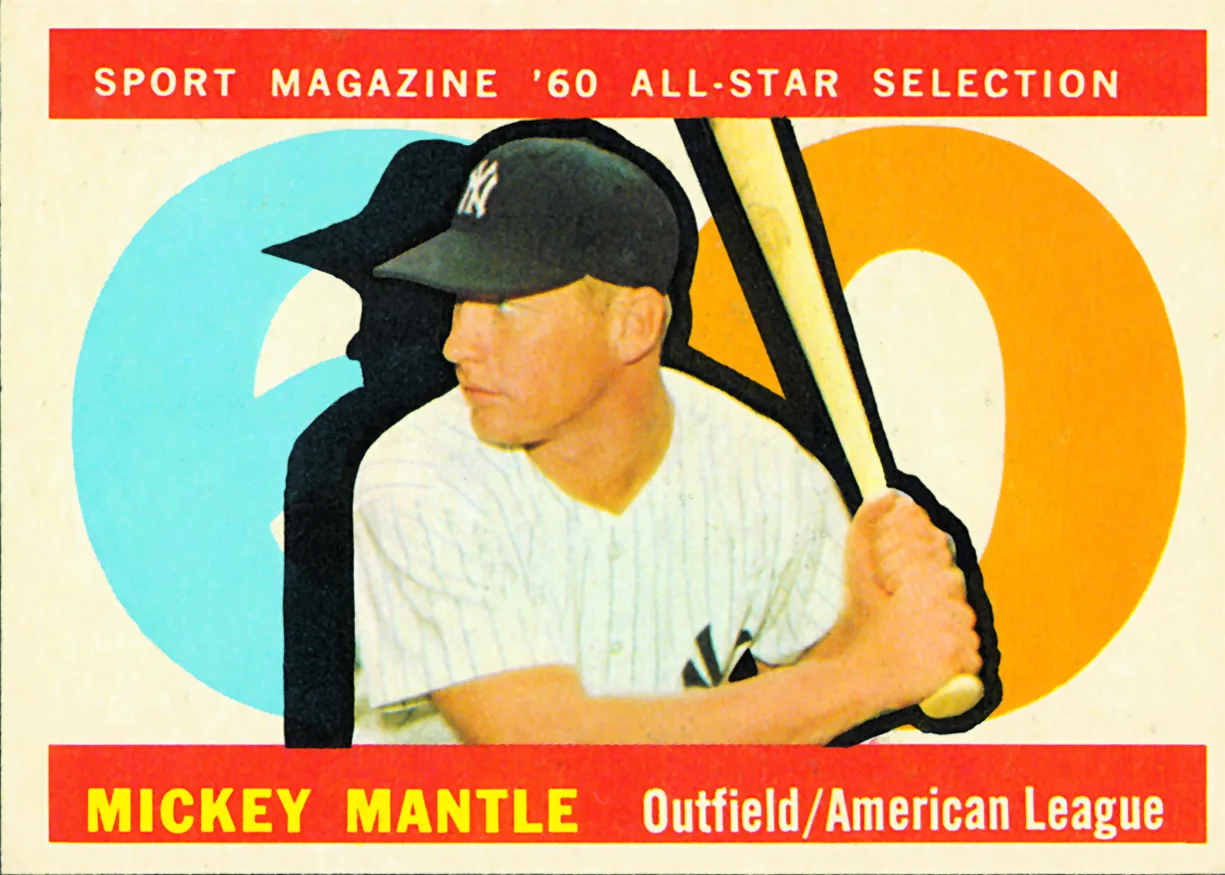
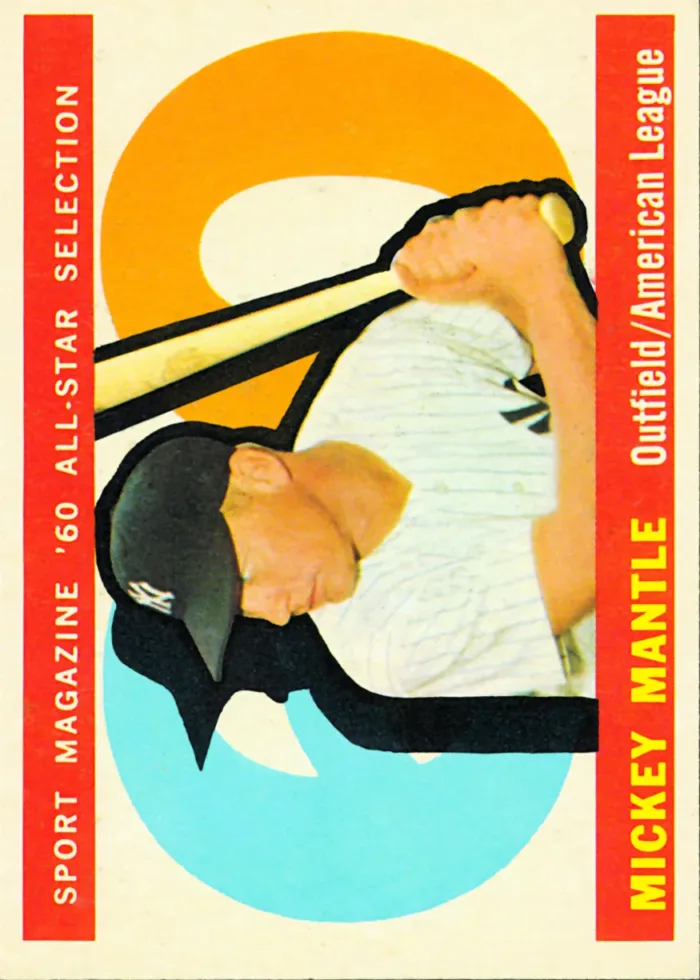
1960 Topps Baseball Mickey Mantle #563
This 1960 Mickey Mantle is one of the most striking cards in The Hobby and a standout from his prime. Issued in the vividly colored “Sport Magazine ’60 All Star Selection” subset, it pairs a bold blue-and-orange design with a powerful portrait, making it exceptionally visually appealing. As a high-number card, it was printed in small quantities, making high-grade examples extremely scarce and highly sought after by collectors. Demand for elite Mantle material has driven values to extraordinary levels, highlighted by a PSA 9 example that sold for $2.8 million in 2018.
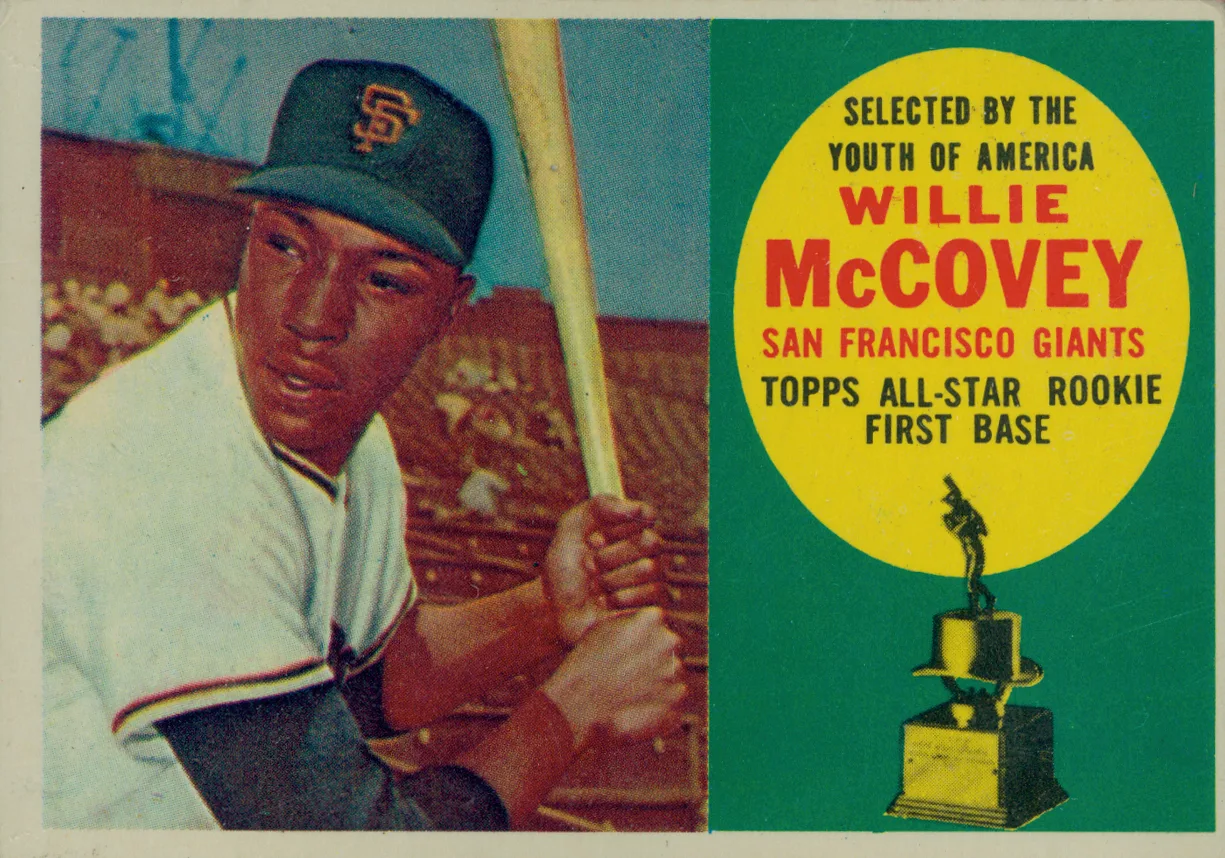
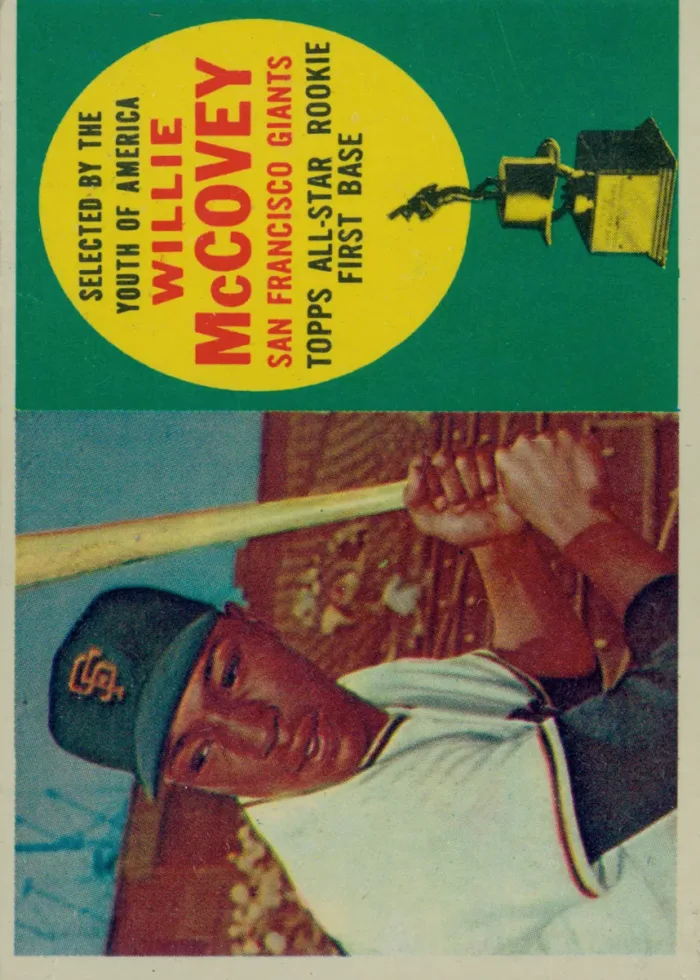
1960 Topps Baseball Willie McCovey Rookie Cup #316
Issued after Willie McCovey’s dominant 1959 debut, this Topps card stands as an important early 1960s rookie card in The Hobby. Including the All-Star Rookie Cup, this card reflects a season in which McCovey earned National League Rookie of the Year honors despite appearing in only 52 games. The distinctive split design pairs his batting stance with the Rookie Cup trophy. This rookie card of the Hall of Fame slugger remains a grail-level collectible.
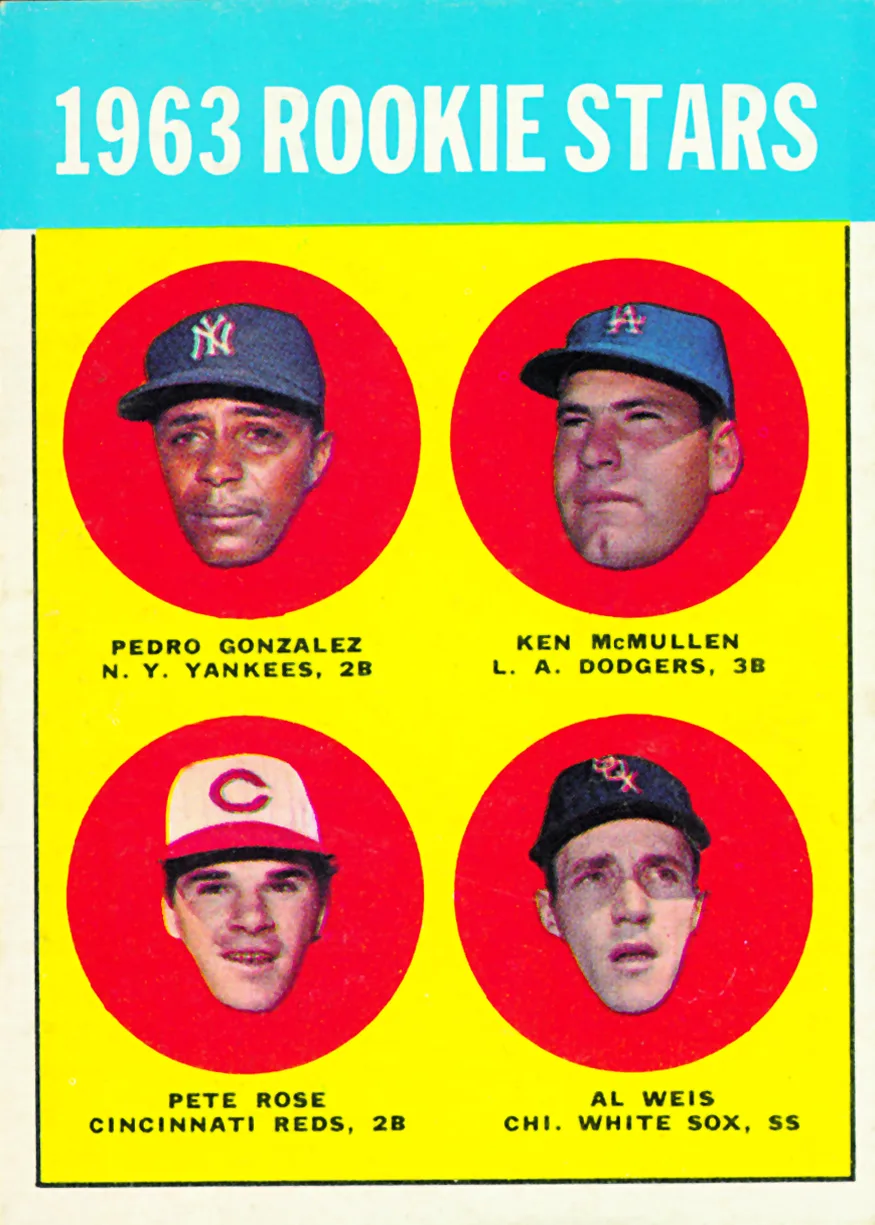
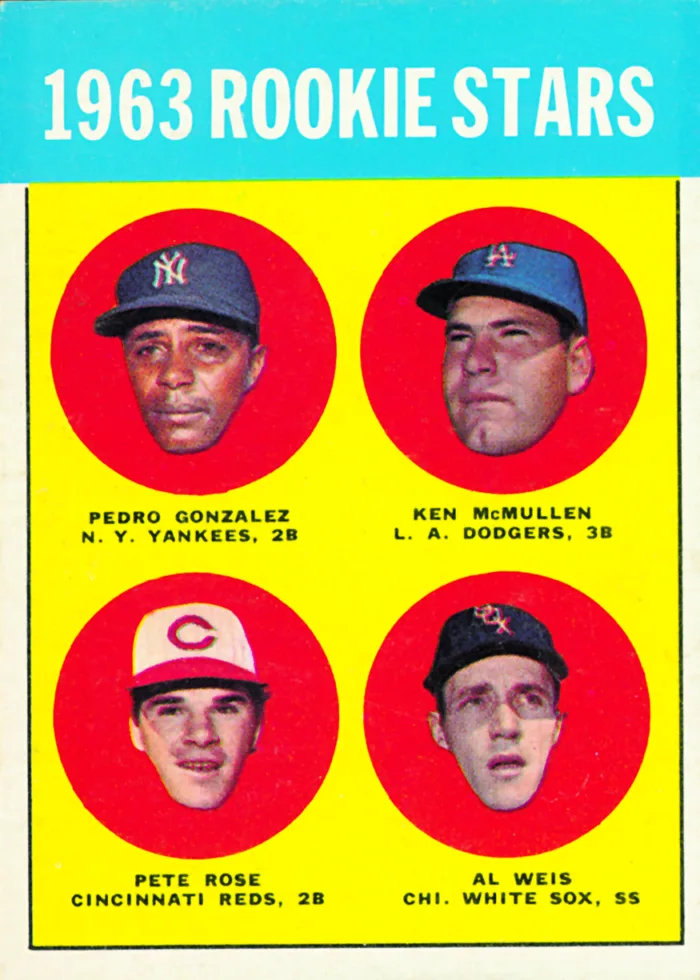
1963 Topps Baseball Pete Rose / Pedro Gonzalez / Ken McMullen / Al Weiss Rookie Stars #537
The beginning of Pete Rose’s historic career is captured on the only recognized rookie card of baseball’s all-time hits leader. Found in the 1963 Topps set, it features Rose alongside Pedro Gonzalez, Ken McMullen, and Al Weis, and marks the start of a run that produced 4,256 hits, 17 All-Star selections, and three batting titles. Its importance within the set and its connection to one of the game’s most relentless competitors have made it a defining card of 1960s baseball in The Hobby.
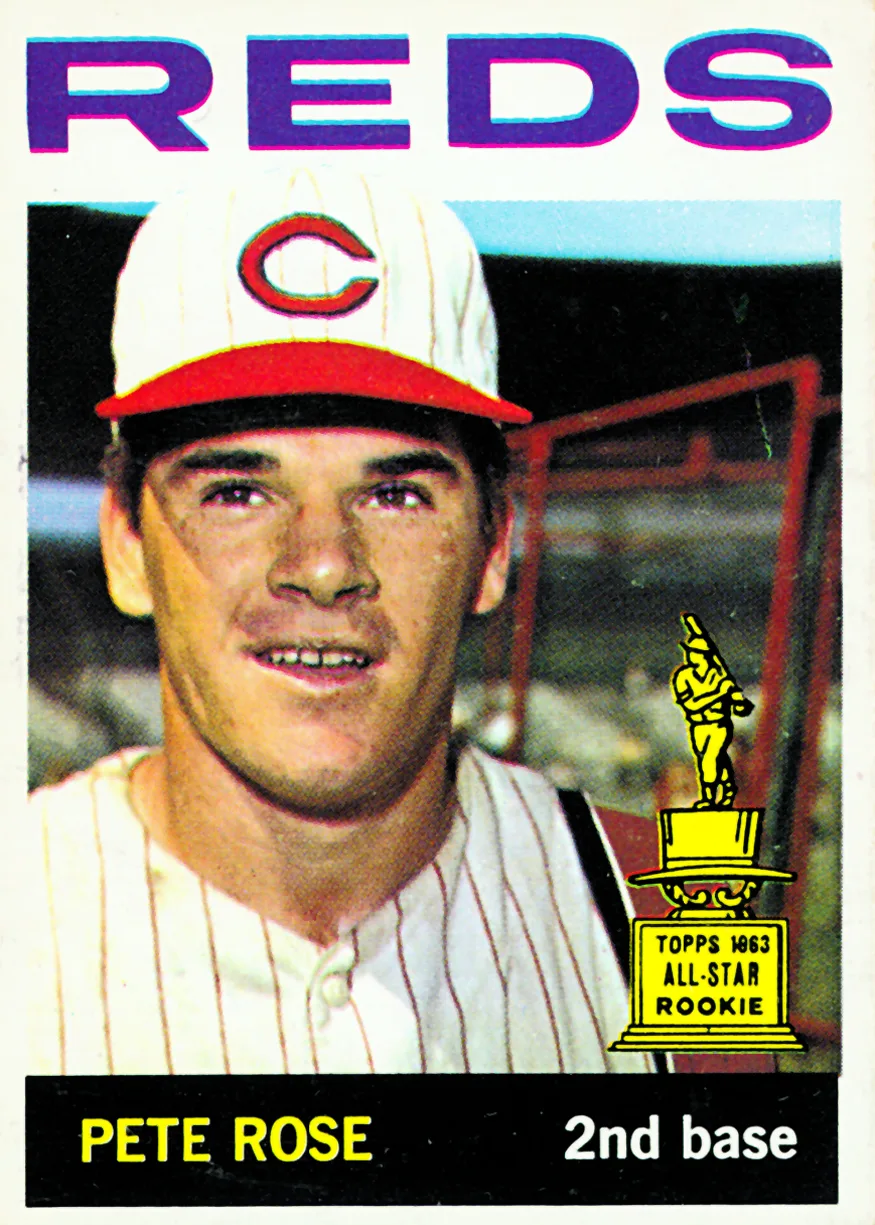
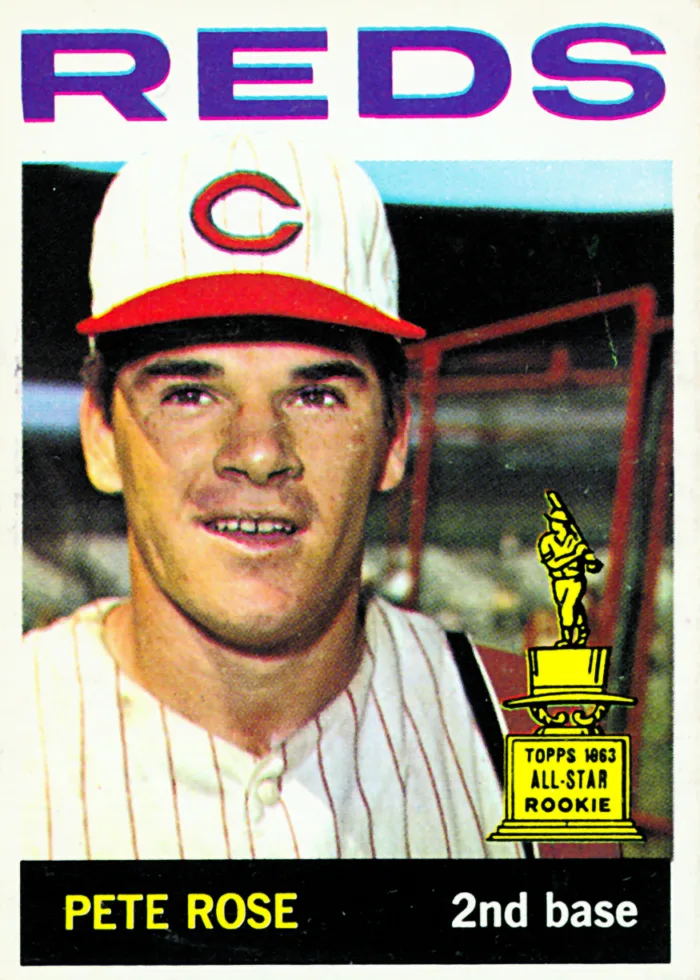
1964 Topps Baseball Pete Rose #125
Issued in the season following his Rookie of the Year campaign, this Topps card captures Pete Rose as he emerged from promising newcomer to rising star. It features the All-Star Rookie trophy after a 1963 season in which he collected 170 hits and scored 101 runs. A clean solo portrait sets it apart from his multi-player rookie card and has long appealed to collectors. Strong demand for Charlie Hustle and the scarcity of high-grade examples have secured its place as one of the most important early cards of the all-time hits leader in The Hobby.
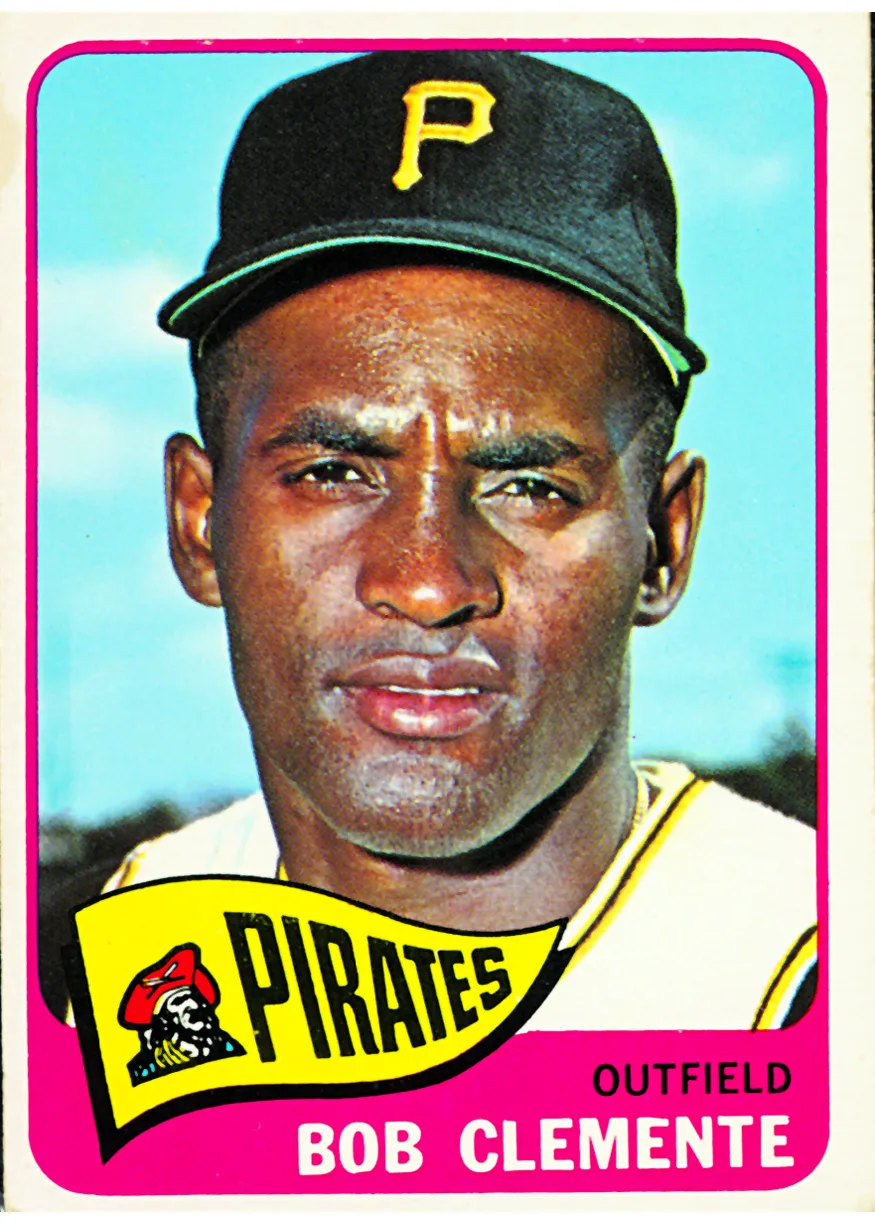
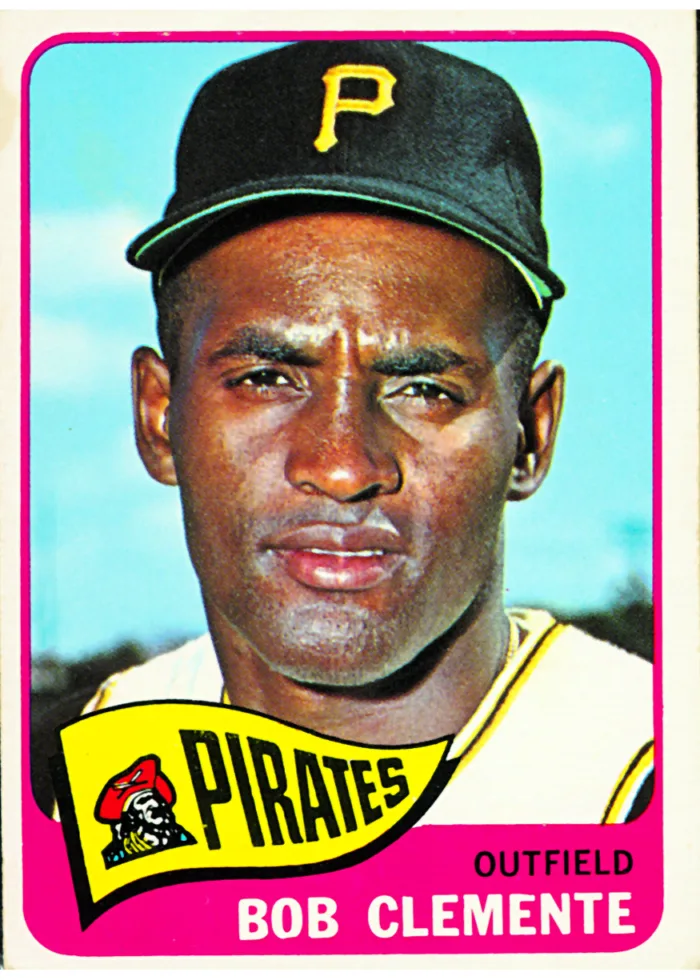
1965 Topps Baseball Roberto Clemente #160
From the peak of Roberto Clemente’s career comes one of the most recognizable vintage images in The Hobby. The card is part of the popular 1965 Topps set and features the horizontal layout and bold team color banner that define the release. It captures Clemente in his prime as a perennial All-Star, Gold Glove winner, and World Series champion with the Pirates. Sustained collector demand and the lasting appeal of the 1965 design have made high-grade examples especially desirable and central to his collecting legacy.
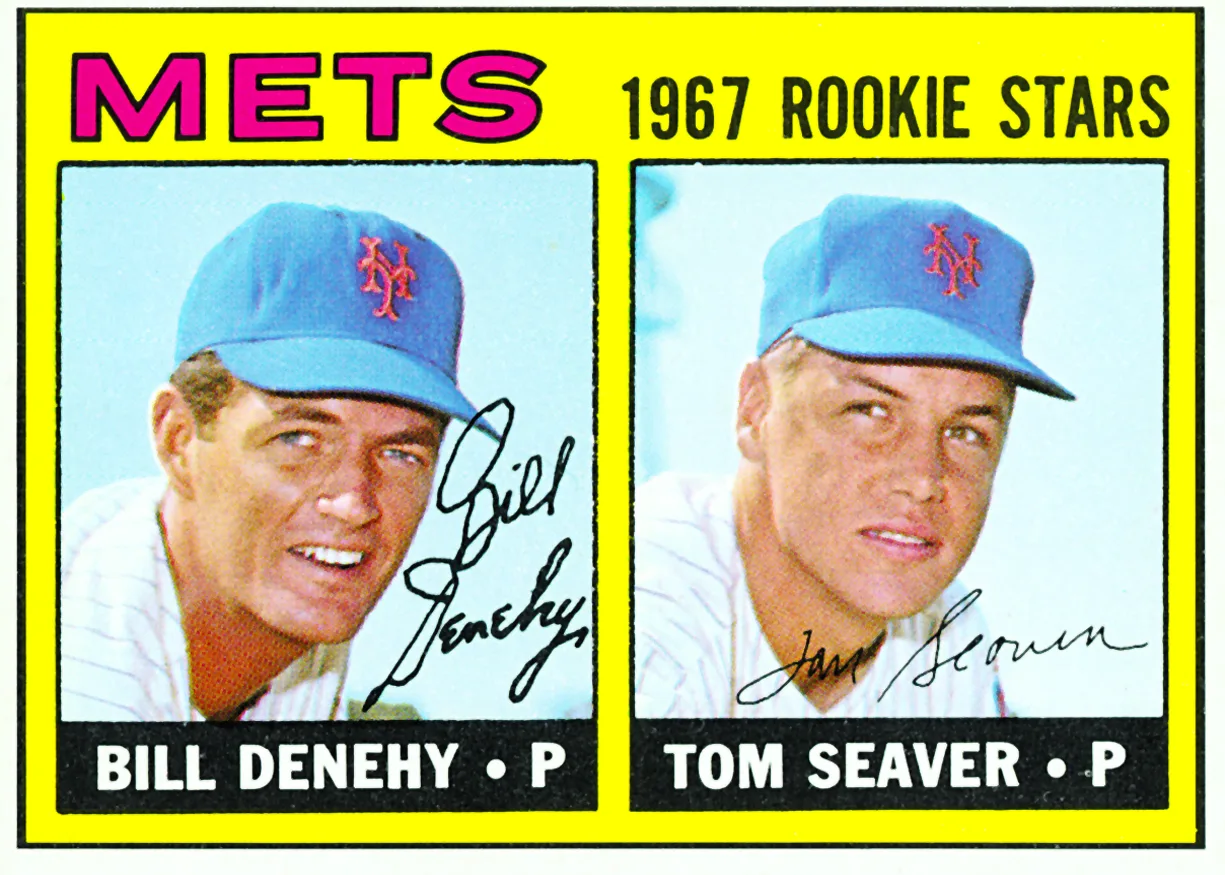
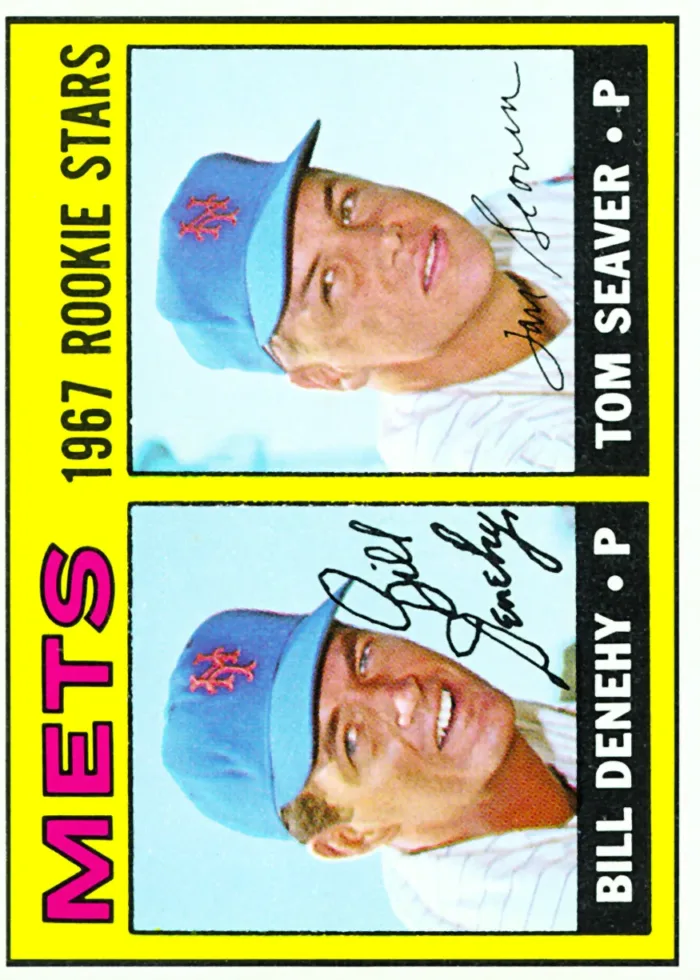
1967 Topps Baseball Tom Seaver/Bill Denehy #581
Tom Seaver’s rookie card is the defining issue of the 1967 Topps set and a landmark in The Hobby. Paired with Mets teammate Bill Denehy and released in the short-printed seventh series, the card arrived after Seaver had already established himself as a dominant rookie and All-Star. Its scarcity and clean photo-focused design have made it one of the most sought-after cards in the set. Seaver’s historic debut season signaled the rise of the Mets and the arrival of a pitcher who would redefine excellence for the franchise and the era. A graded original 1967 Topps Tom Seaver rookie card will be included in the 2026 Topps Series 1 set, giving collectors access to one of the most important cards of the 1960s.
- Find this Iconic Topps Buyback in 2026 Topps Series 1 Baseball
- Find the 1967 Seaver on Fanatics Collect
- New York Mets Team Collecting
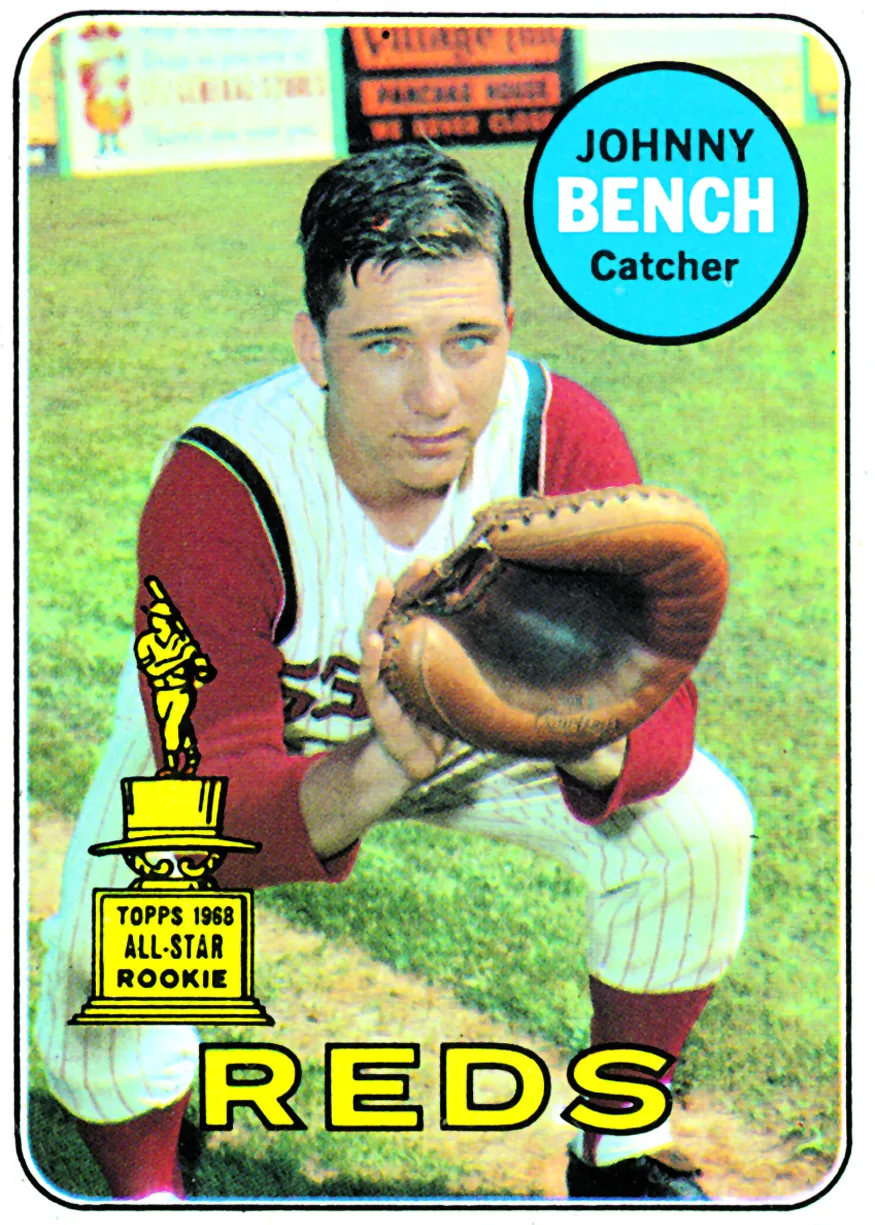
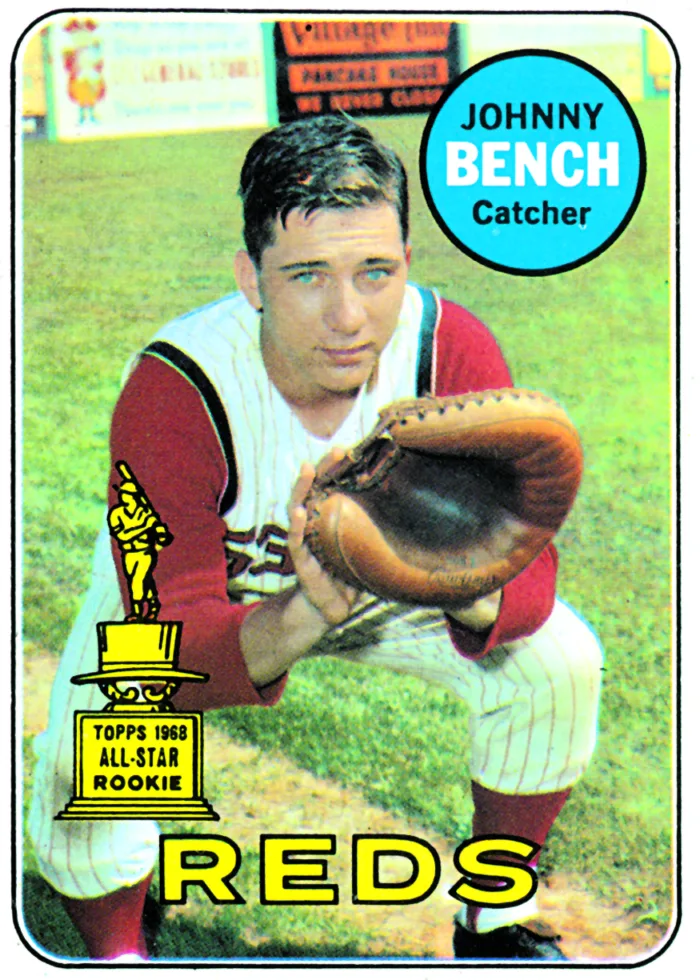
1969 Topps Baseball Johnny Bench #95
Coming on the heels of his National League Rookie of the Year season, this Topps card represents Johnny Bench’s rise into stardom. It features the All-Star Rookie trophy and is often favored as his first true solo card, separating it from his earlier multi-player rookie. The design reflects Bench at the start of his Big Red Machine era and remains one of his most important early-career cards. Strong collector demand and extreme scarcity in top condition have made it one of the most sought-after Johnny Bench cards in The Hobby.
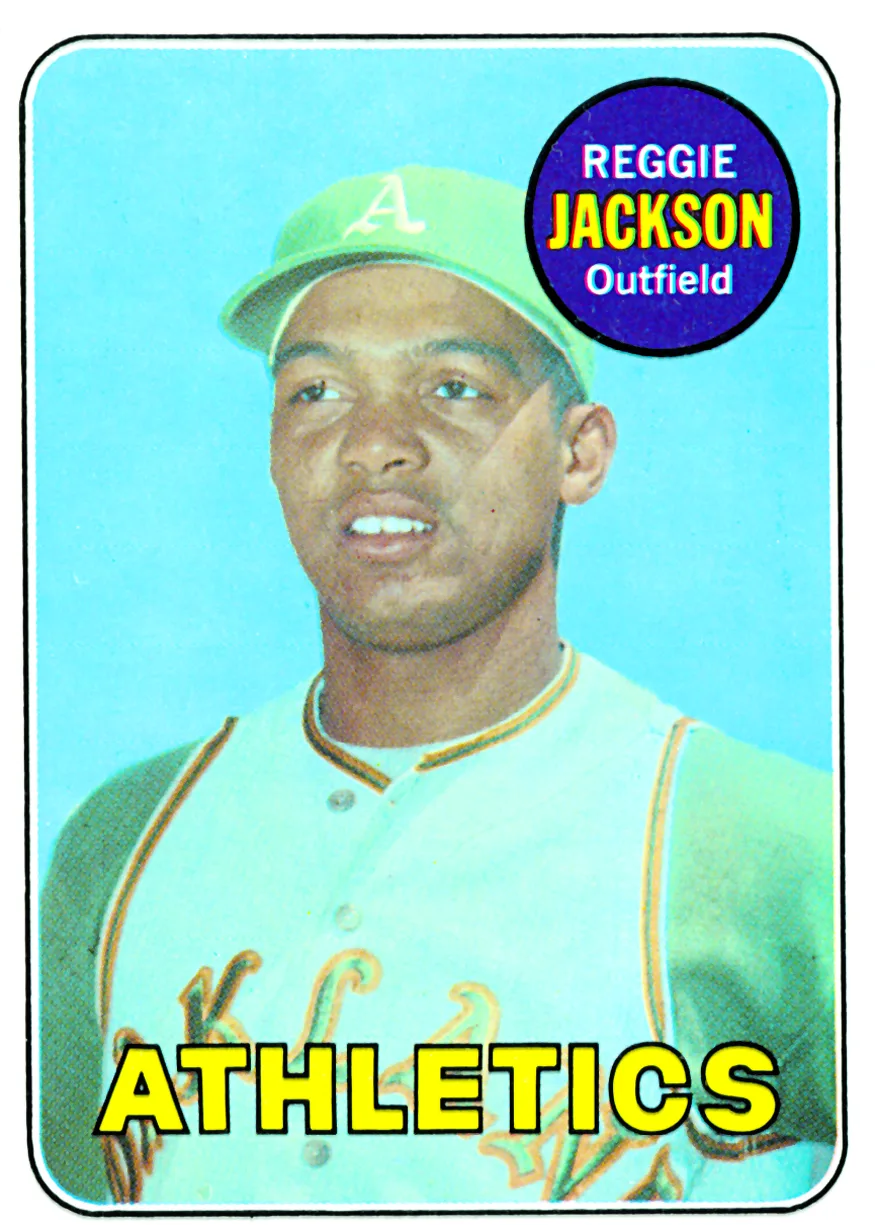
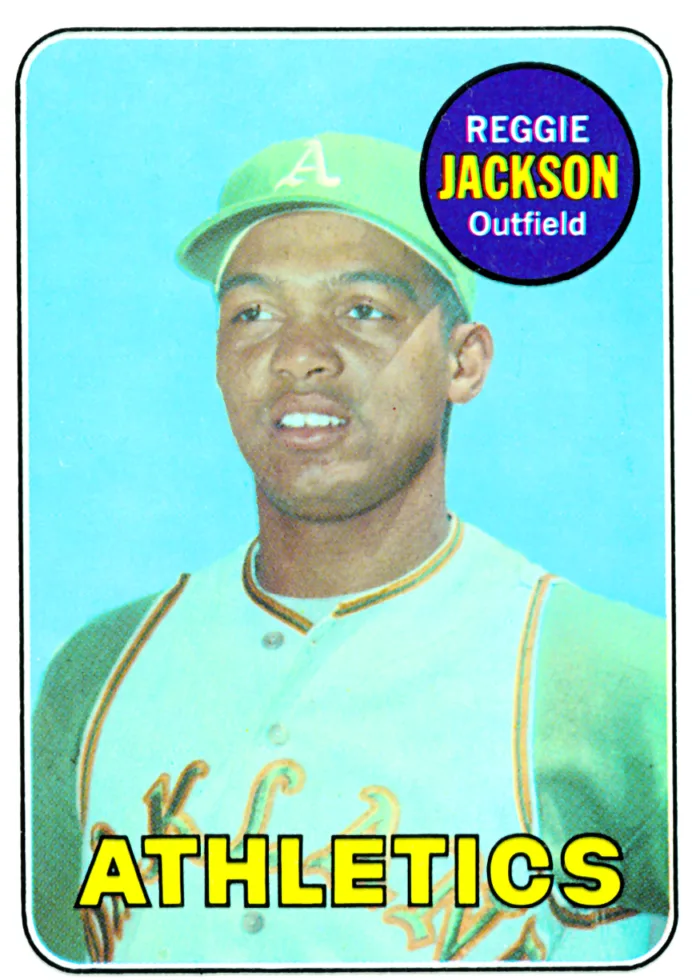
1969 Topps Baseball Reggie Jackson #260
Reggie Jackson received a rookie card all to himself in the 1969 Topps set, and it arrived at the perfect moment in The Hobby. Issued as card No. 260 in the tough third series, it captured Jackson as he was dominating headlines with a massive home run pace early in the season. The clean white border design and bold portrait made the card an instant standout, reflecting a personality too large to share cardboard. As Jackson’s career later delivered MVP honors and World Series greatness, the card became one of the era’s most important base rookies. A graded original 1969 Topps Reggie Jackson No. 260 will be available via redemption in 2026 Topps Series 1 Baseball.
- More Reggie Jackson cards to collect
- Find this Iconic Topps Buyback in 2026 Topps Series 1 Baseball
- Find the 1969 Jackson on Fanatics Collect
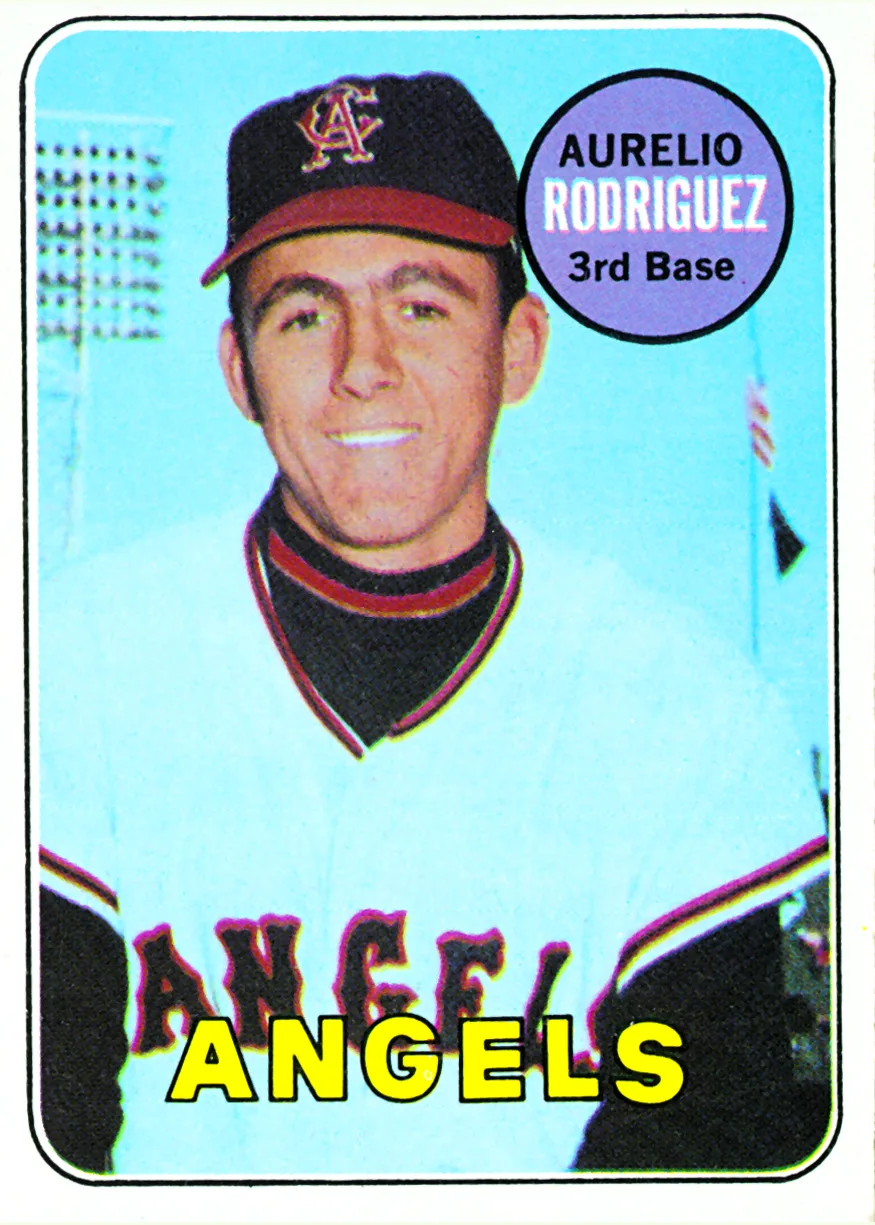
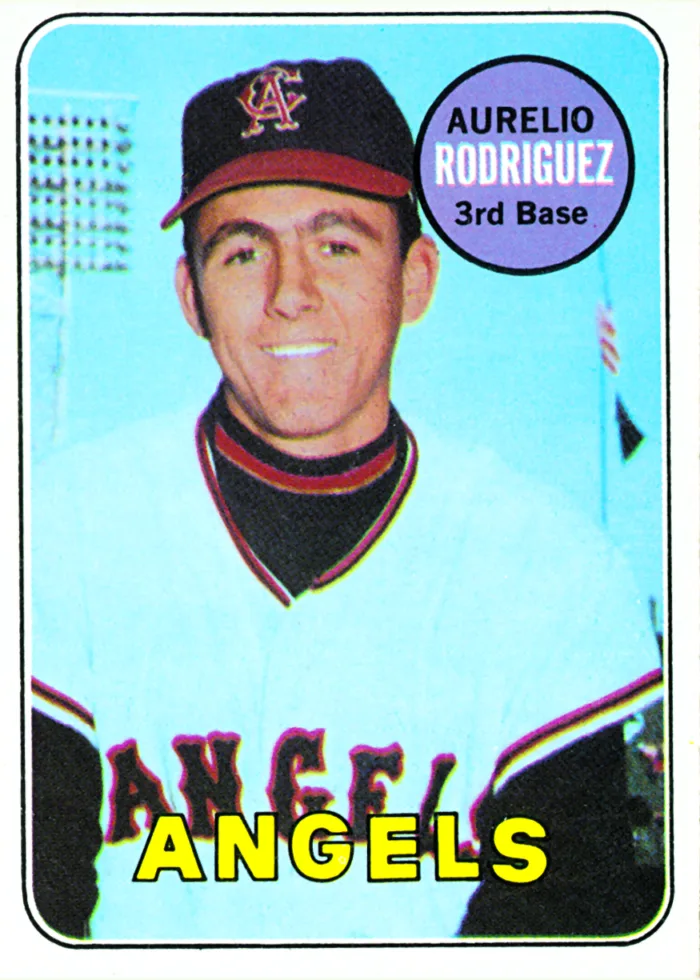
1969 Topps Baseball Aurelio Rodriguez #653 Error Card
One of the most famous error cards in The Hobby emerged when a Topps card meant for Aurelio Rodriguez instead pictured Angels batboy Leonard Garcia. The uncorrected, wrong player image created a lasting curiosity that collectors have prized for decades. As a high-number card, it is especially difficult to find, adding to its appeal. The mix-up traced back to a teenage photo session where Rodriguez and Garcia looked similar enough for files to be confused. With the mistake never corrected, the card remains a standout example of vintage Topps history and a favorite among error card collectors.
The 1970s
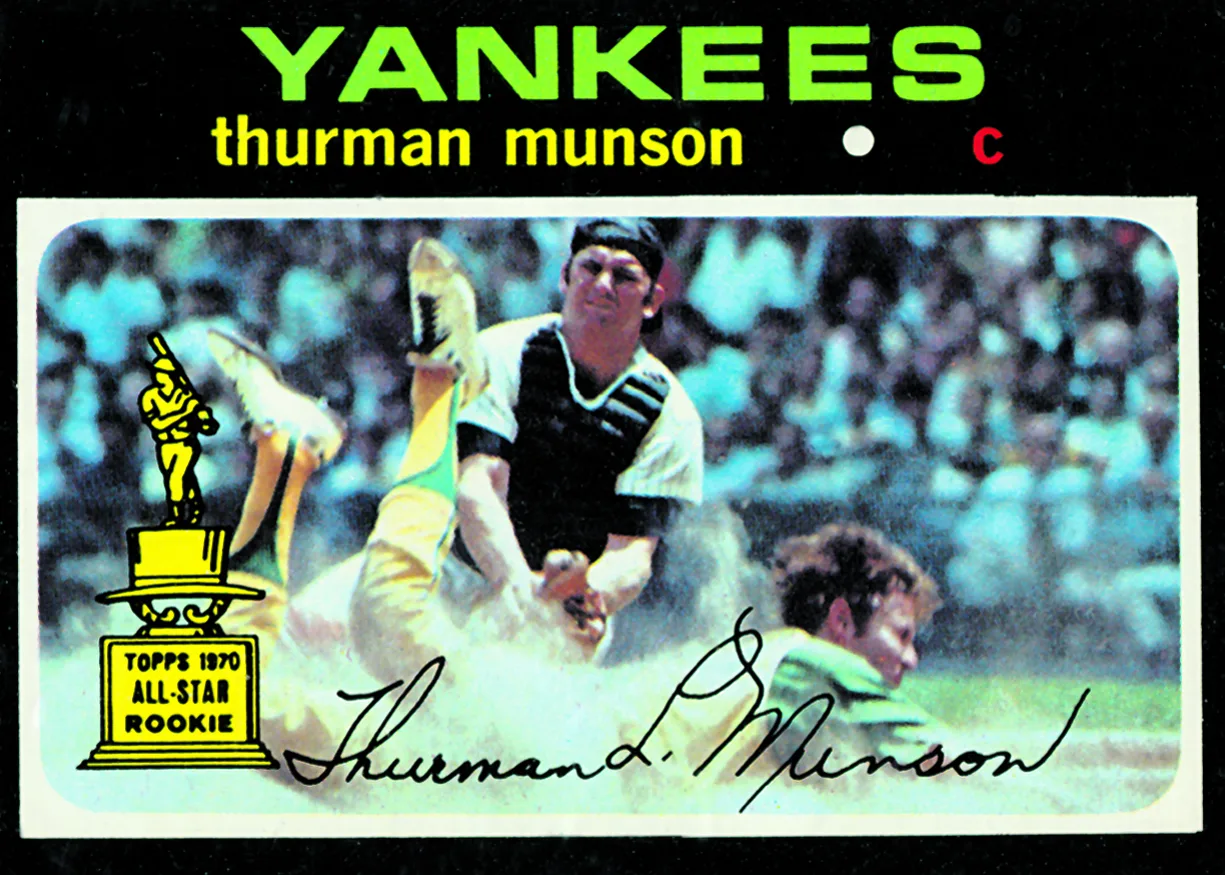
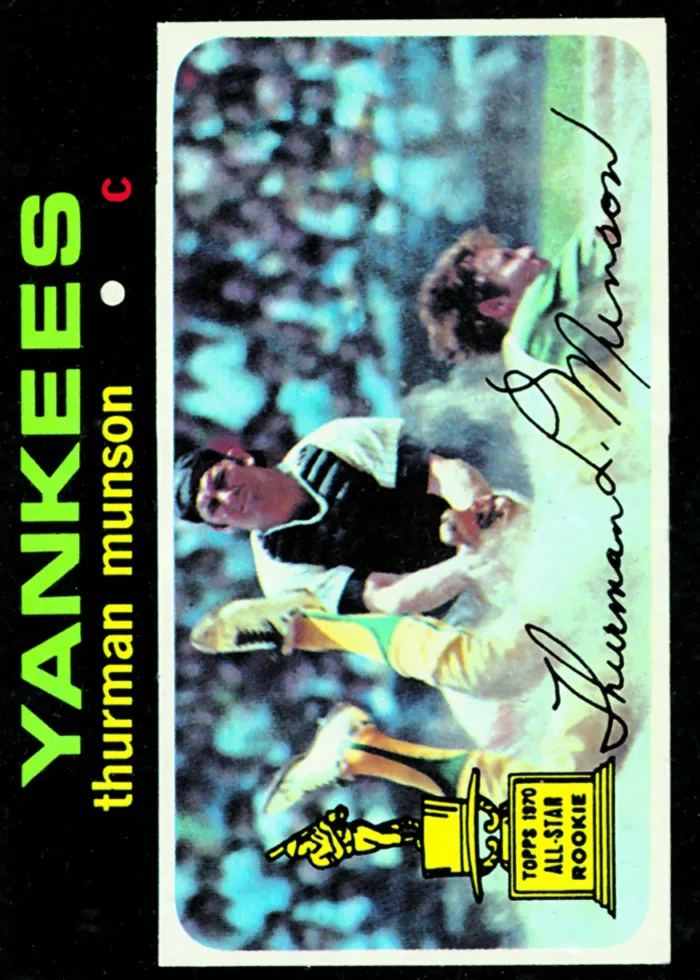
1971 Topps Baseball Thurman Munson #5
Often considered the defining image of the 1971 Topps set, this card captures Thurman Munson in a dramatic action shot as he blocks the plate amid a cloud of dust. The black-bordered design makes high-grade examples exceptionally difficult to find and has long fueled collector demand. Marked with the Rookie Cup and closely tied to Munson’s legacy as Yankees captain, it is frequently favored over his rookie card and stands among the most valuable issues of his career in The Hobby.
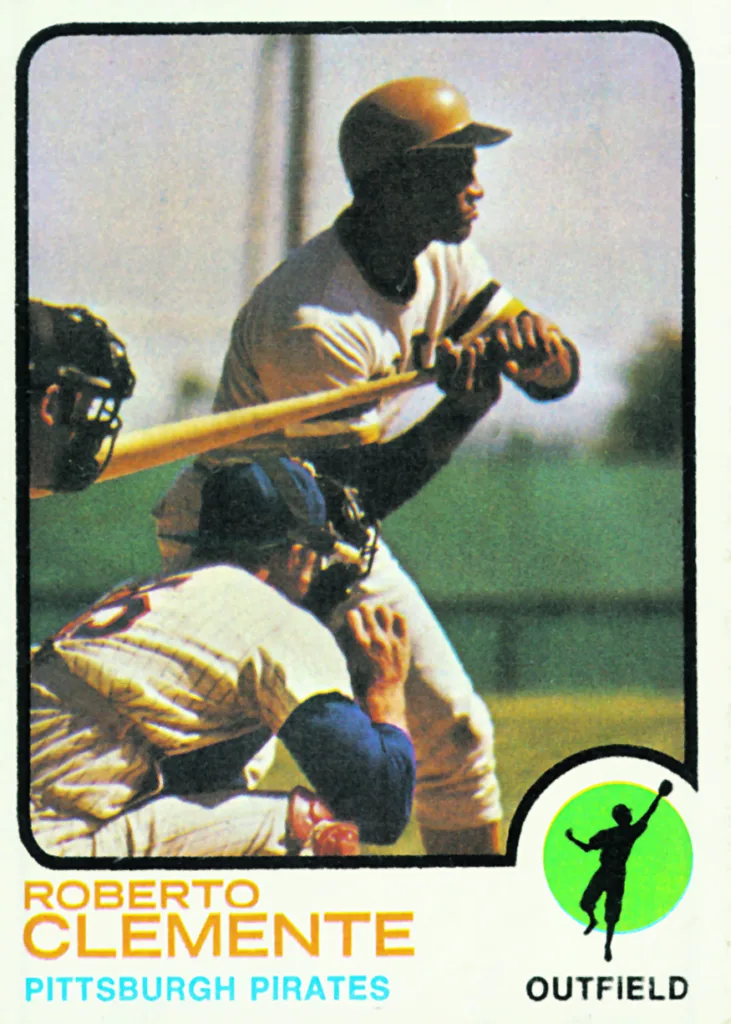
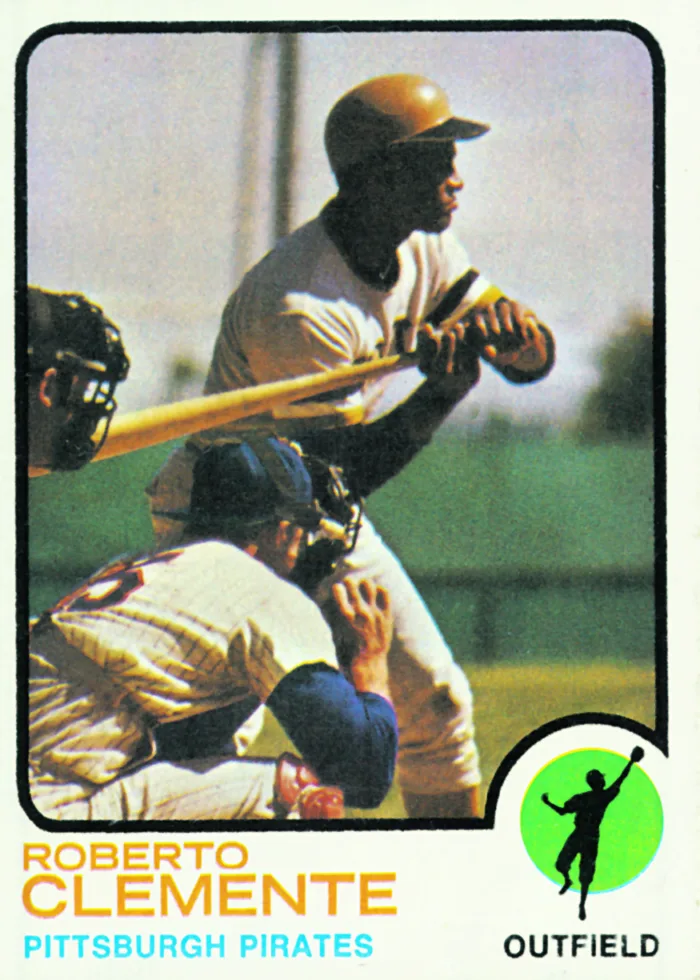
1973 Topps Baseball Roberto Clemente #50
Roberto Clemente is forever preserved in the 1973 Topps, issued unchanged just weeks after his tragic death while delivering humanitarian aid to Nicaragua. Topps chose not to add an in memoriam, leaving the card as a powerful snapshot of Clemente in action at the height of his career. For collectors and fans in The Hobby, it became both a tribute and a touchstone, pulled at a time when Clemente had already been inducted into the Hall of Fame under a special waiver. The image captured a player who transcended the game as a champion, humanitarian, and trailblazer for Latino players. A graded original 1973 Topps Roberto Clemente #50 will be available via redemption in 2026 Topps Series 1 Baseball, offering a lasting connection to one of baseball’s most revered figures.
- Find this Iconic Topps Buyback in 2026 Topps Series 1 Baseball
- Find the 1973 Clemente on Fanatics Collect
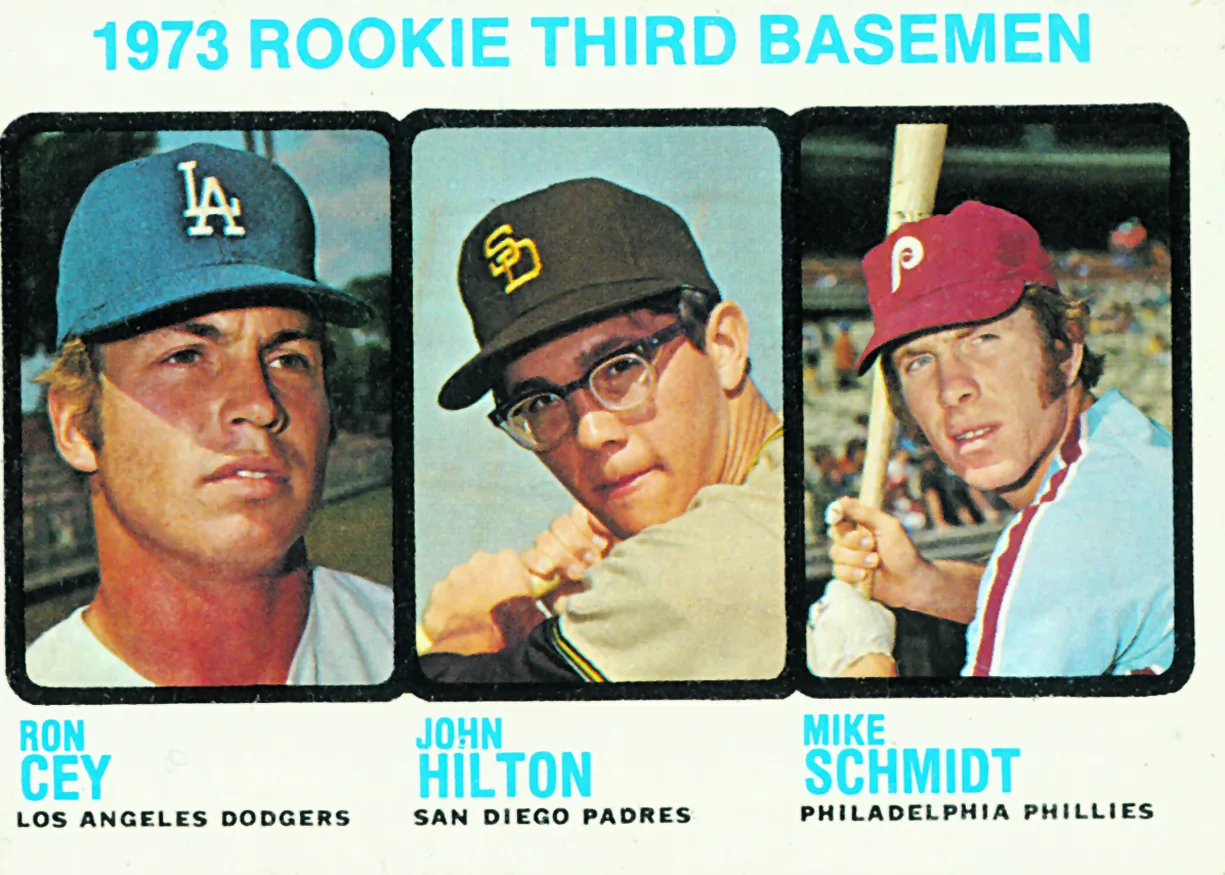
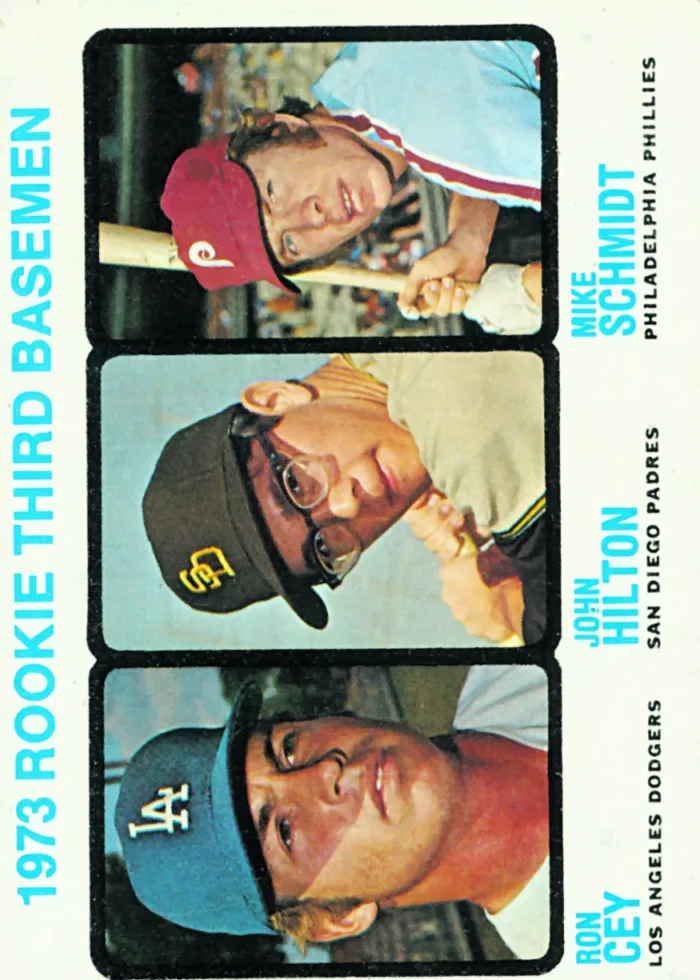
1973 Topps Baseball Mike Schmidt/Ron Cey/John Hilton #615
One of the defining rookie cards of the 1970s in The Hobby features a young Mike Schmidt on the far right of the 1973 Topps three-player rookie card. That placement proved fitting for a player who would go on to redefine third base and build a Hall of Fame career. The card is notoriously condition sensitive, which has made strong examples especially coveted. As Schmidt’s legacy grew, this rookie emerged as the most valuable card in the set. A graded original 1973 Topps Mike Schmidt rookie card will be available via redemption in 2026 Topps Series 1.
- Find this Iconic Topps Buyback in 2026 Topps Series 1 Baseball
- Find the 1973 Schmidt on Fanatics Collect
- Best Third Basemen of the 1970s
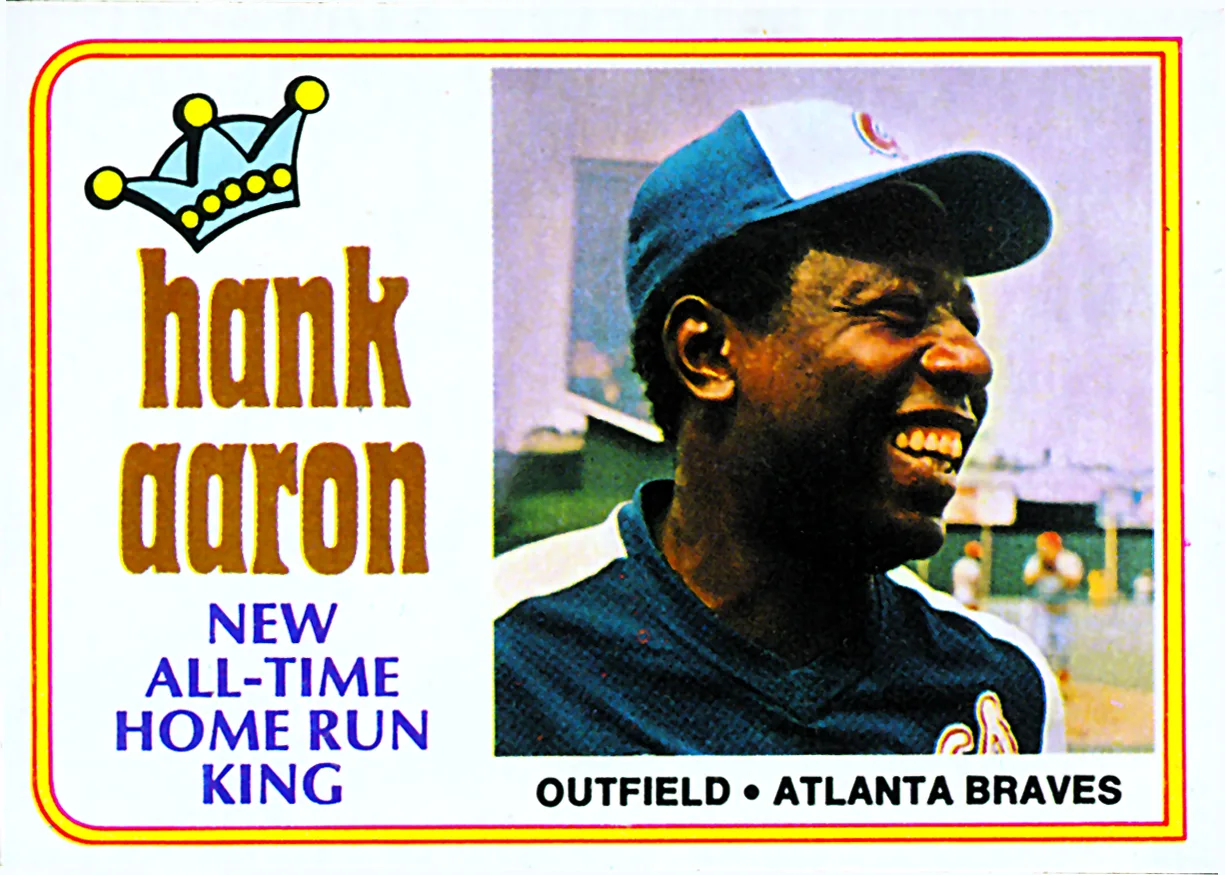
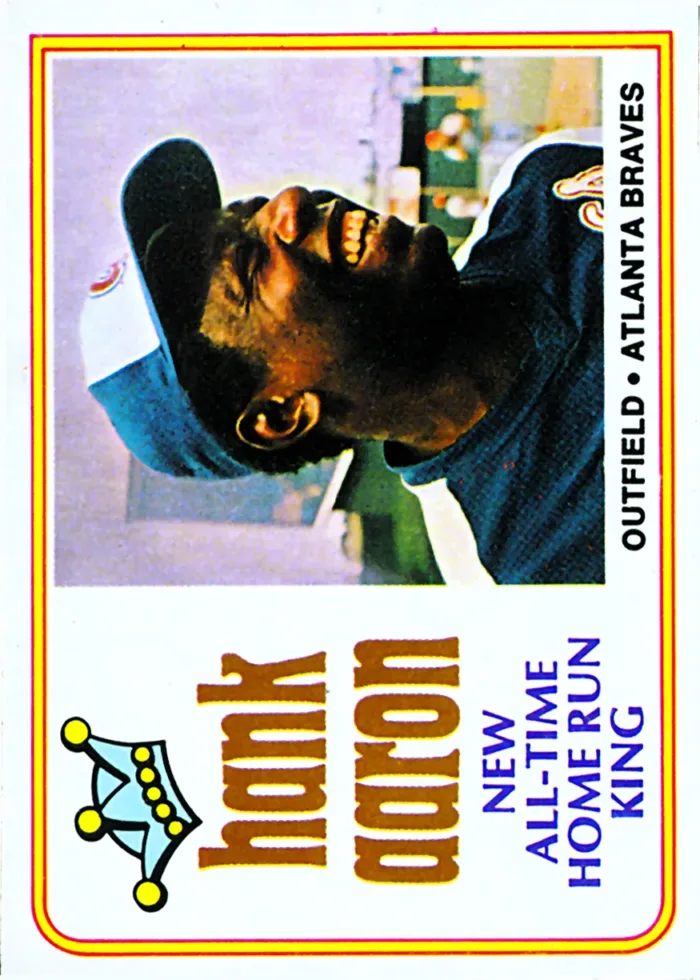
1974 Topps Baseball Hank Aaron Home Run King #1
One of baseball’s most historic moments was captured when Hank Aaron surpassed Babe Ruth’s home run record and claimed the title of all-time home run king. The Topps card commemorating that achievement leads off the 1974 set and features a smiling Aaron crowned in recognition of the milestone. It also launched the Hank Aaron Specials series, created to honor his career accomplishments. The combination of history, design, and placement has driven enduring demand and made it one of the most sought-after cards of the decade in The Hobby.
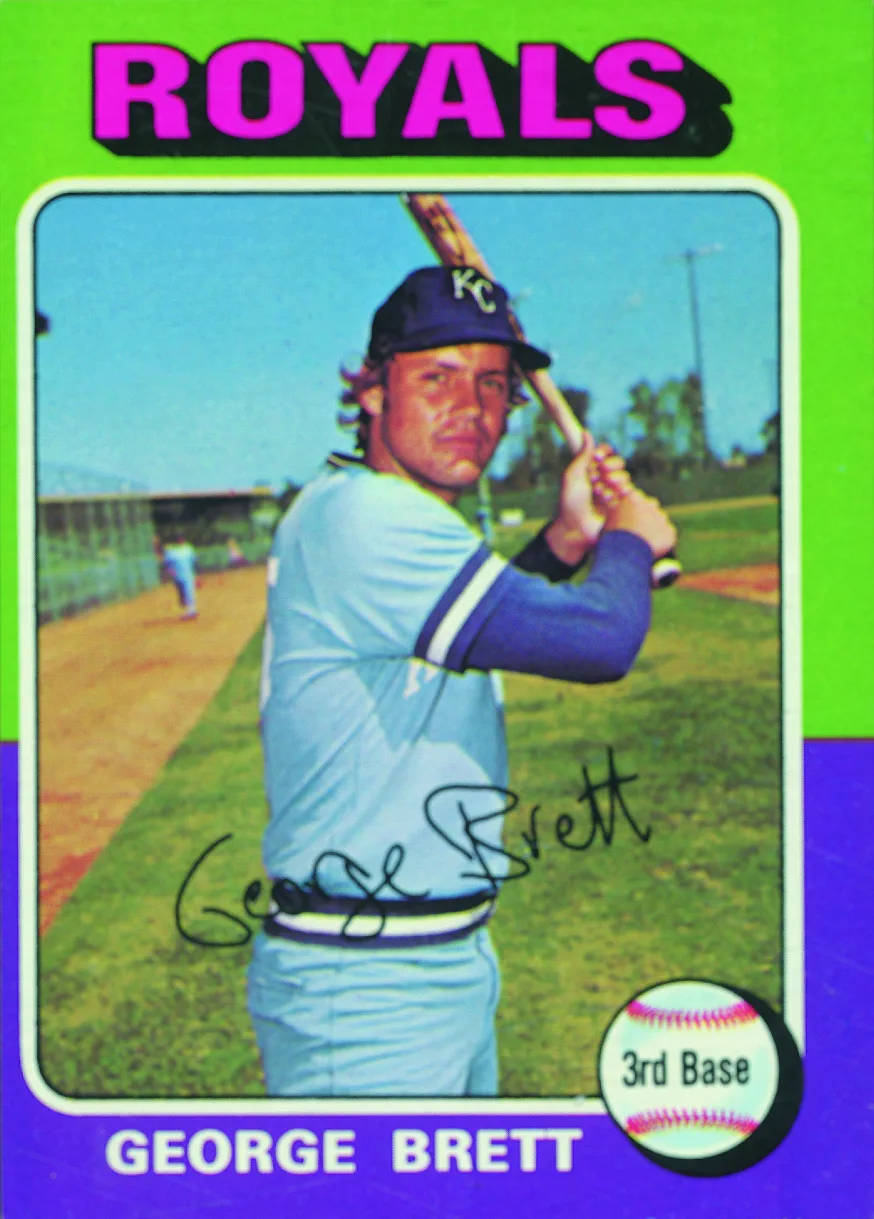
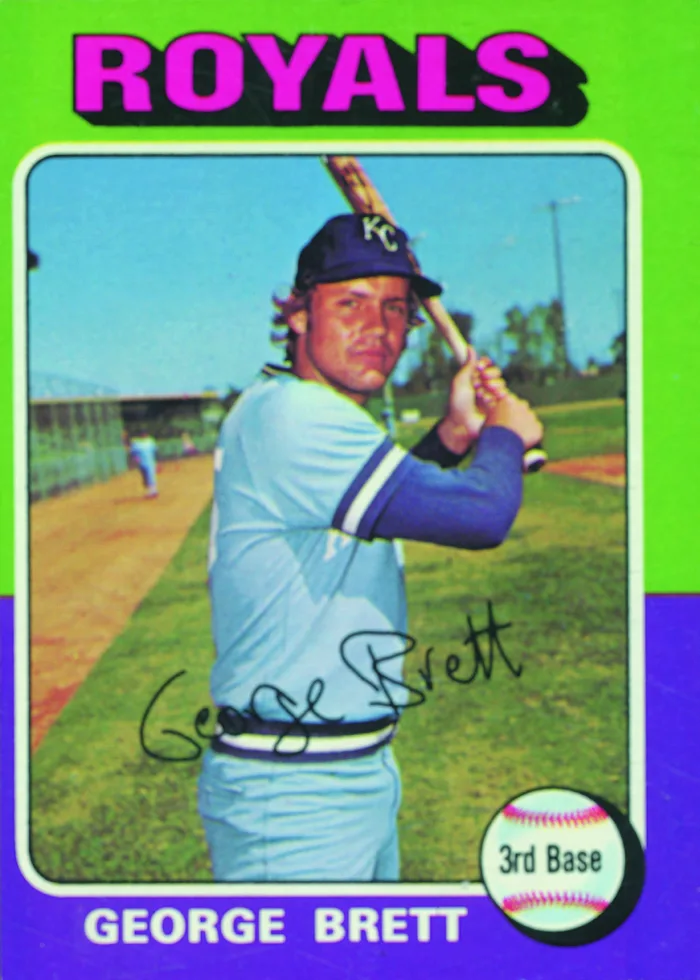
1975 Topps Baseball George Brett RC #228
One of the defining rookie cards of the 1970s introduced George Brett to The Hobby. The card pairs his official rookie appearance with the bold, colorful design that made the 1975 Topps set so memorable. Brett emerged from one of the strongest rookie classes of the era and went on to a historic career highlighted by 3,000 hits and rare all-around excellence. Condition sensitivity has made high-grade examples especially difficult to find, while the scarce Topps Mini variation remains even more coveted by collectors.
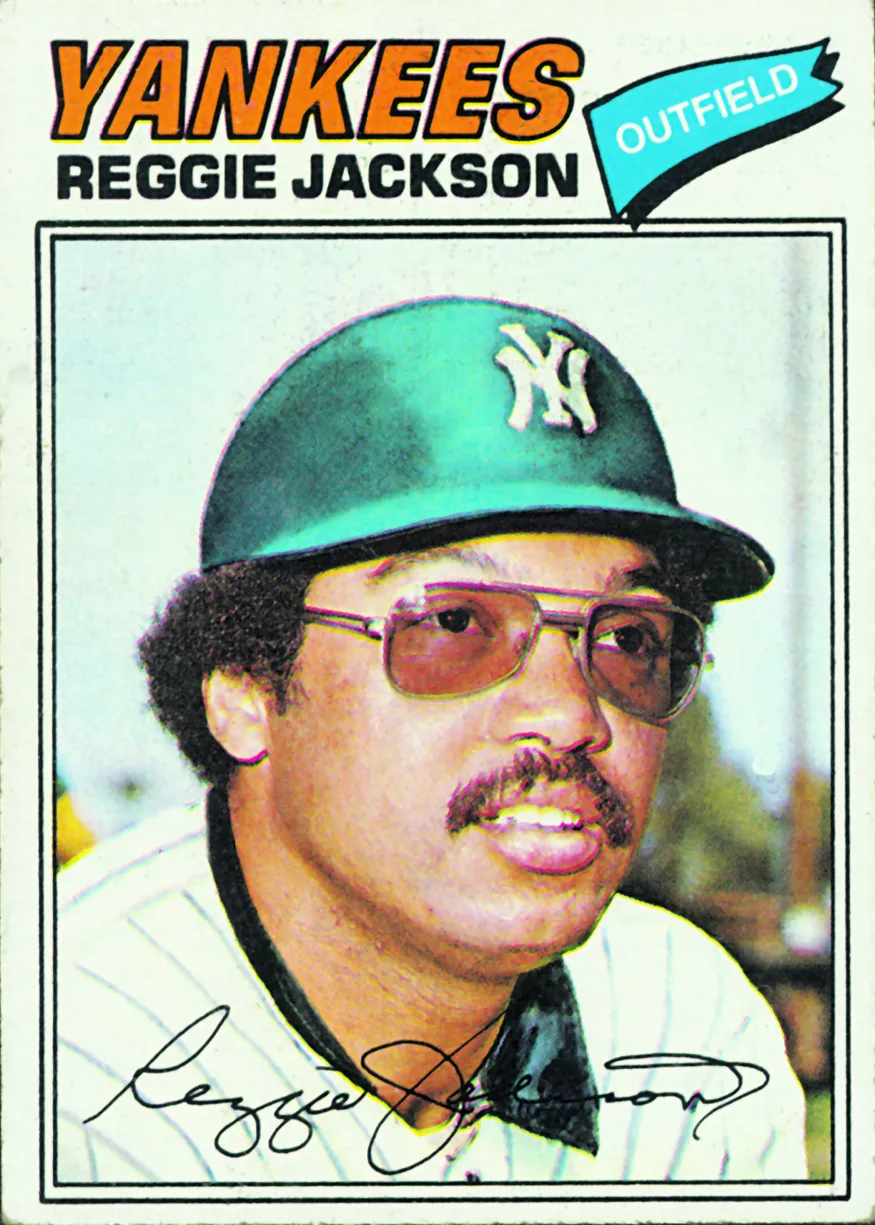
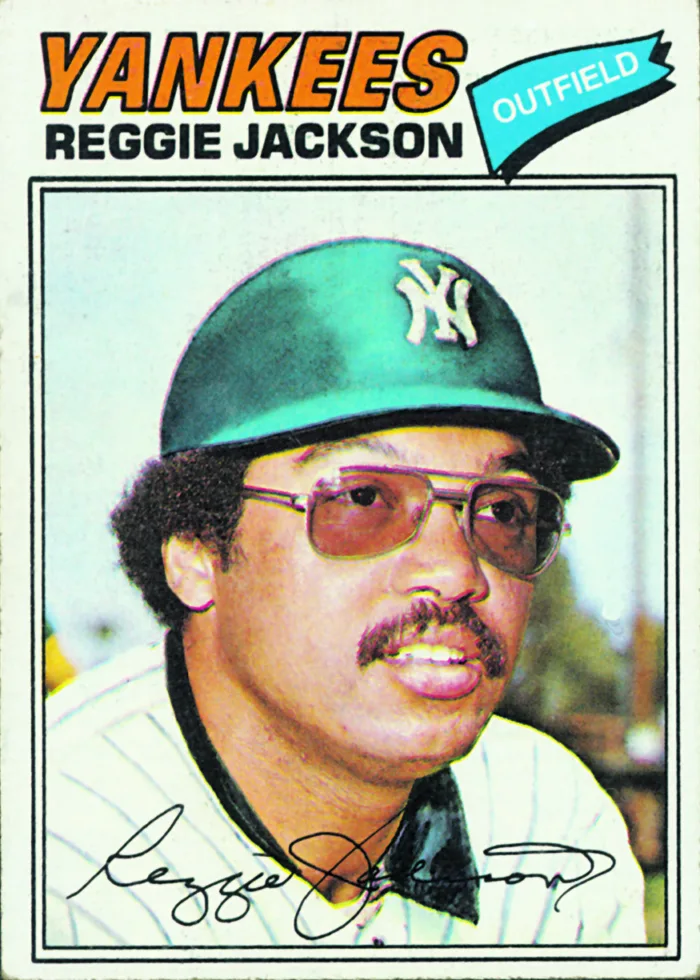
1977 Topps Baseball Reggie Jackson #10
The start of Reggie Jackson’s legendary run with the Yankees is captured on one of the most important cards of the 1970s in The Hobby. The card marks his first season in pinstripes, the year he earned the “Mr. October” nickname and powered the Yankees to a World Series title. Collector demand has remained strong for decades, fueled in part by the challenge of finding pristine examples. Its direct connection to one of the most iconic seasons in Yankees history has secured its place as a defining piece of Reggie Jackson’s legacy.
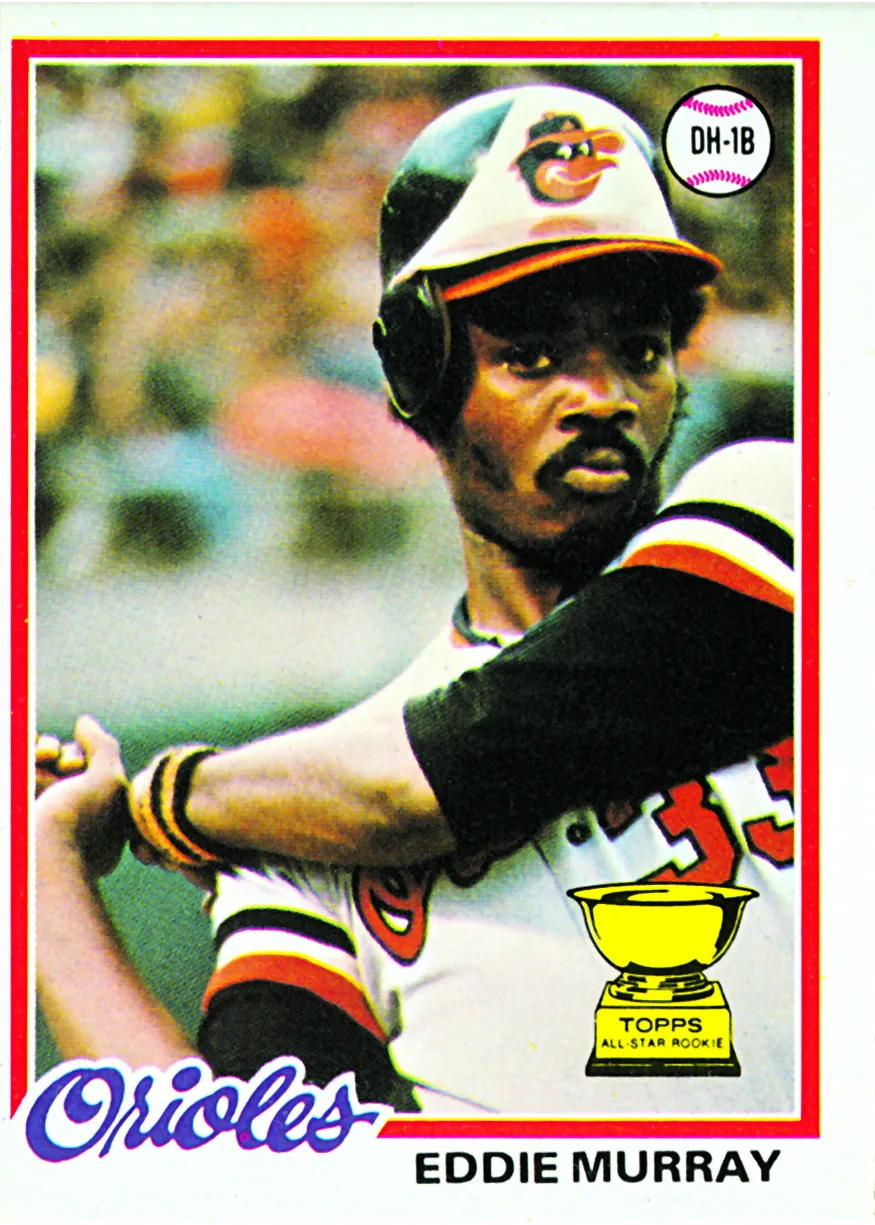
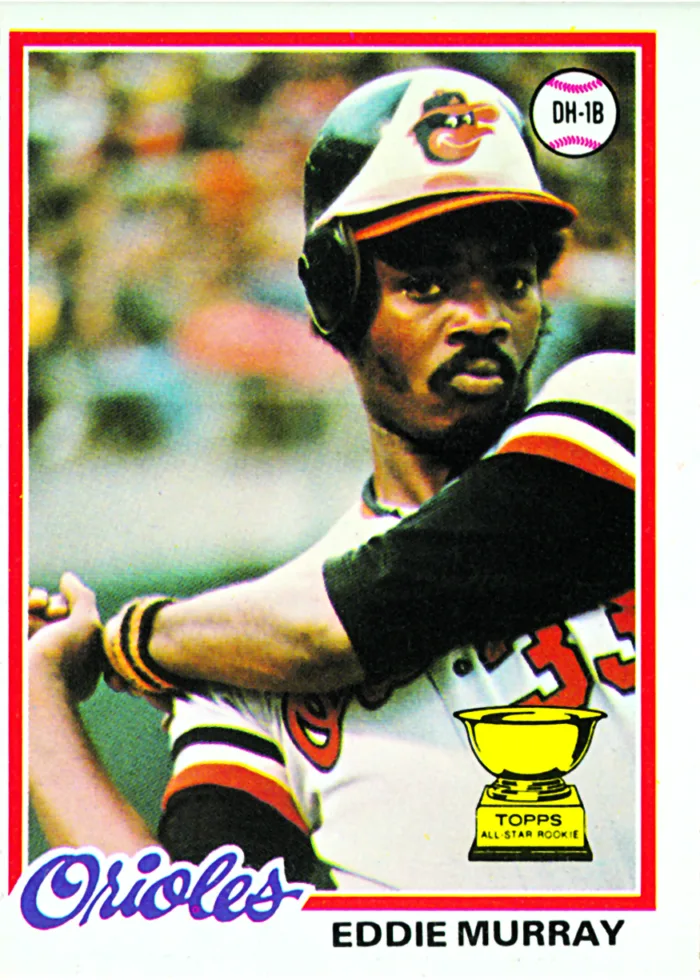
1978 Topps Baseball Eddie Murray #36
One of the key rookie cards of the 1970s introduced Eddie Murray to The Hobby. The card captures him at the start of a Hall of Fame career that would reach 500 home runs and 3,000 hits and features the coveted All-Star Rookie trophy. It has remained in constant demand for decades as one of the standout cards from the 1978 Topps set. Centering issues and inconsistent printing have made pristine examples extremely scarce, adding to the lasting appeal of its clean, classic design.
The 1980s
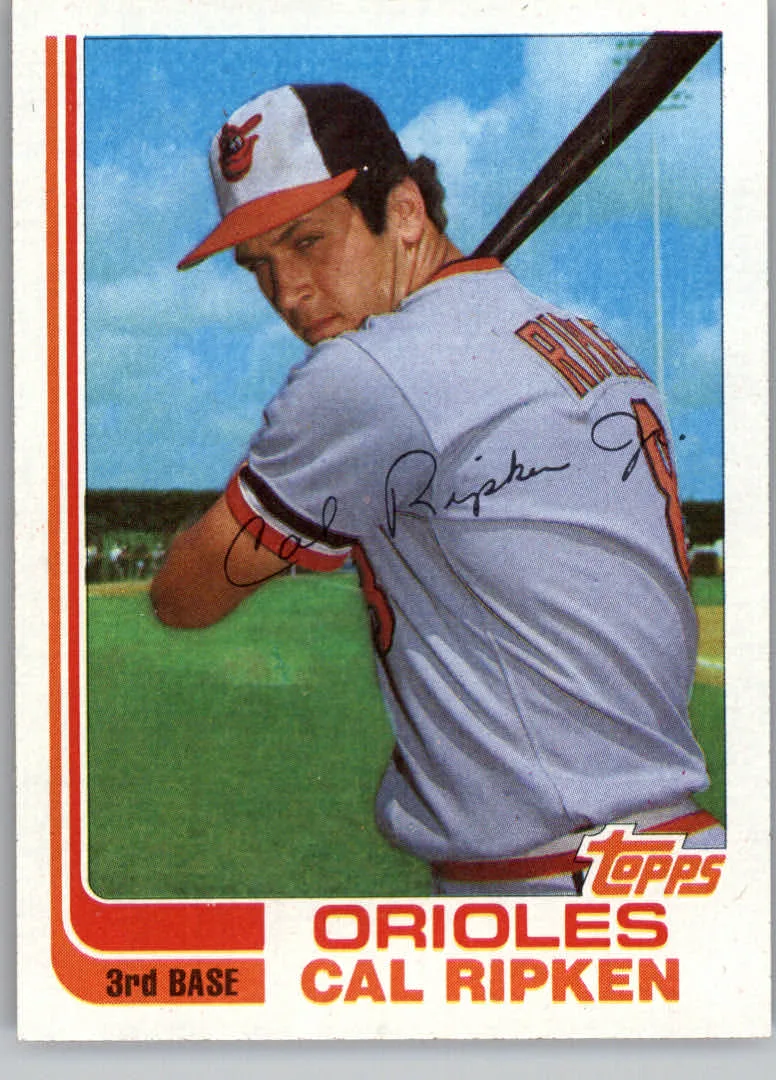
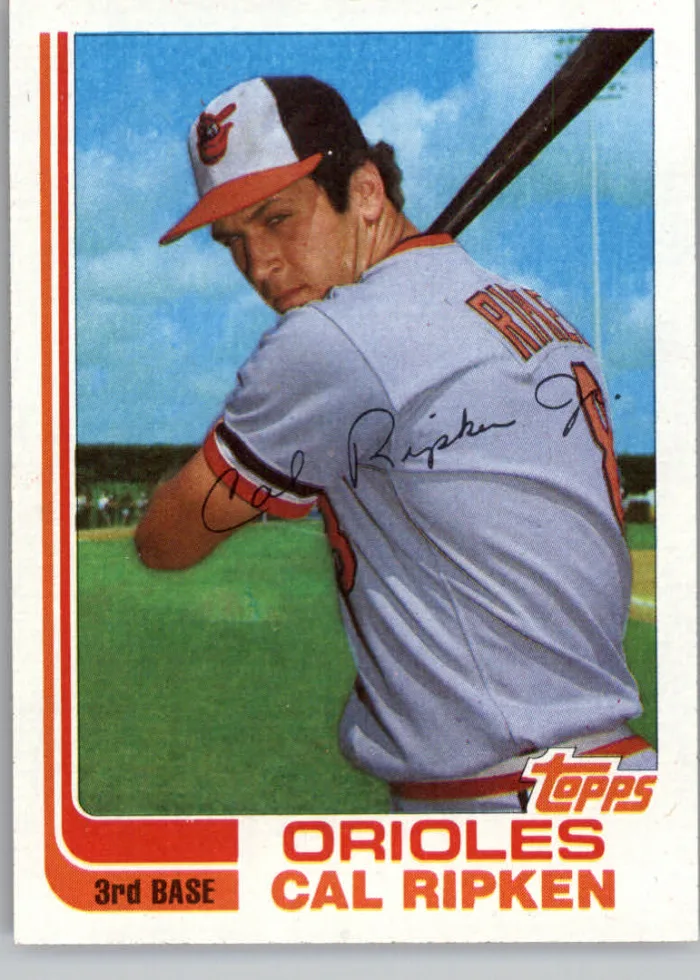
1982 Topps Traded Baseball Cal Ripken Jr. #98T
The most widely recognized solo rookie of Cal Ripken Jr. marked the beginning of a Hall of Fame career defined by durability and excellence in The Hobby. Unlike earlier multi-player cards, this Topps Traded issue presented Ripken on his own and quickly became his definitive early card. It represents the American League Rookie of the Year and the future Iron Man at the very start of his ascent. Strong collector demand, combined with condition sensitivity due to chipping along the red-bordered back, has made high-grade examples especially valuable.
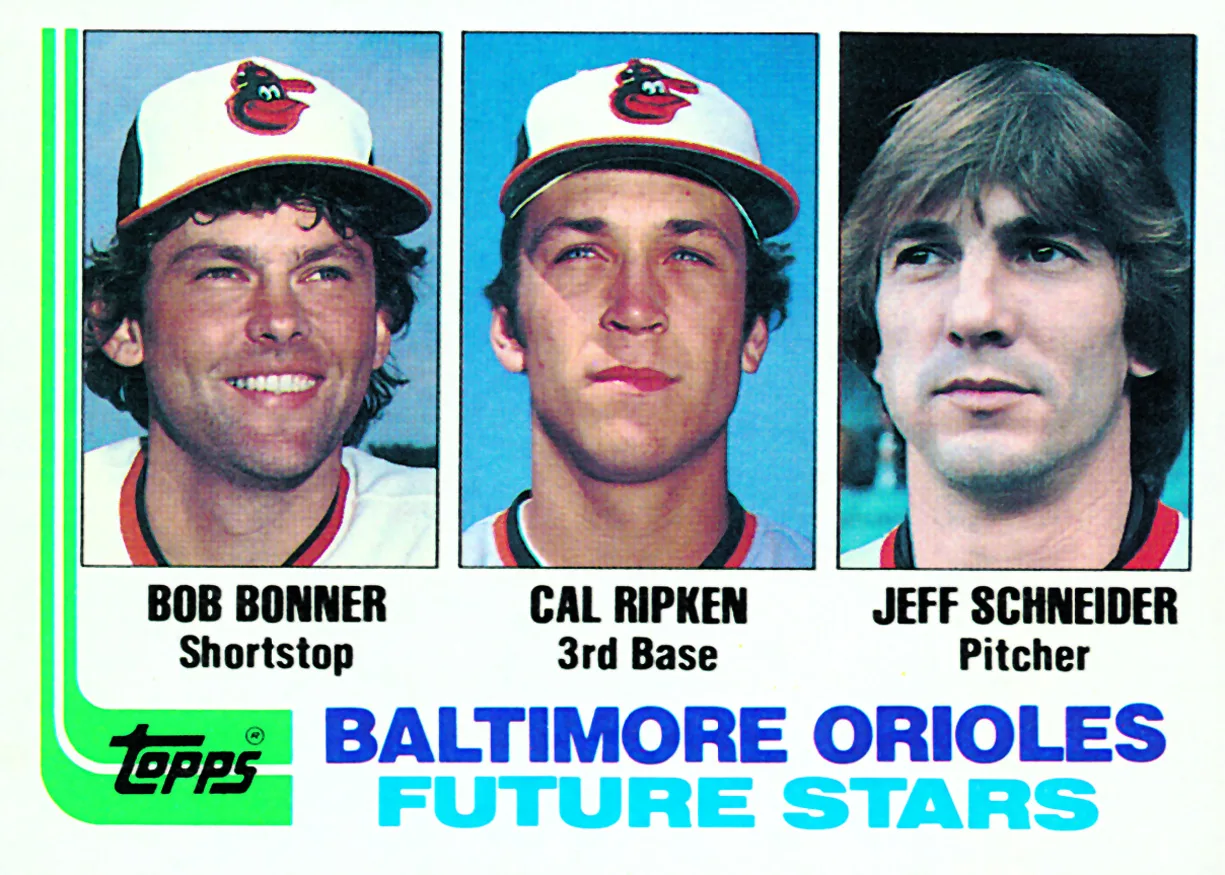
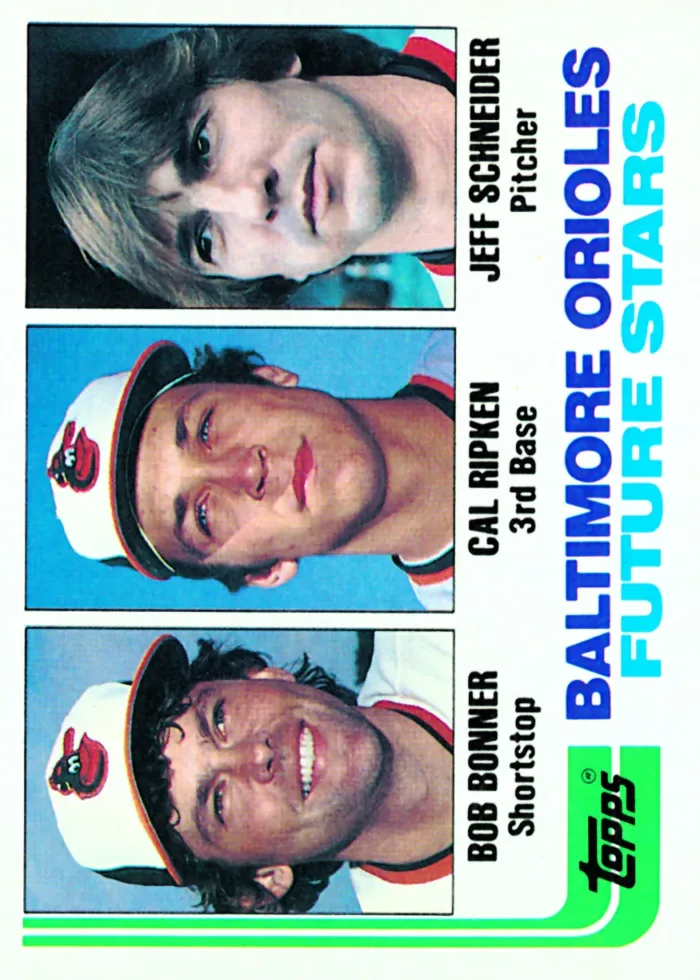
1982 Topps Baseball Cal Ripken Jr./Bob Bonner/Jeff Schneider Future Stars #21
An early look at Cal Ripken Jr. appears on this Orioles Future Stars card, which captures the future Iron Man just before his Rookie of the Year season. It features Ripken alongside Bob Bonner and Jeff Schneider at the beginning of a career that would redefine the shortstop position and produce a record 2,632 consecutive games played. Collector demand has remained strong over time, while centering challenges have made high-grade examples especially difficult to secure. The card stands as an important early chapter of Ripken’s career in The Hobby.
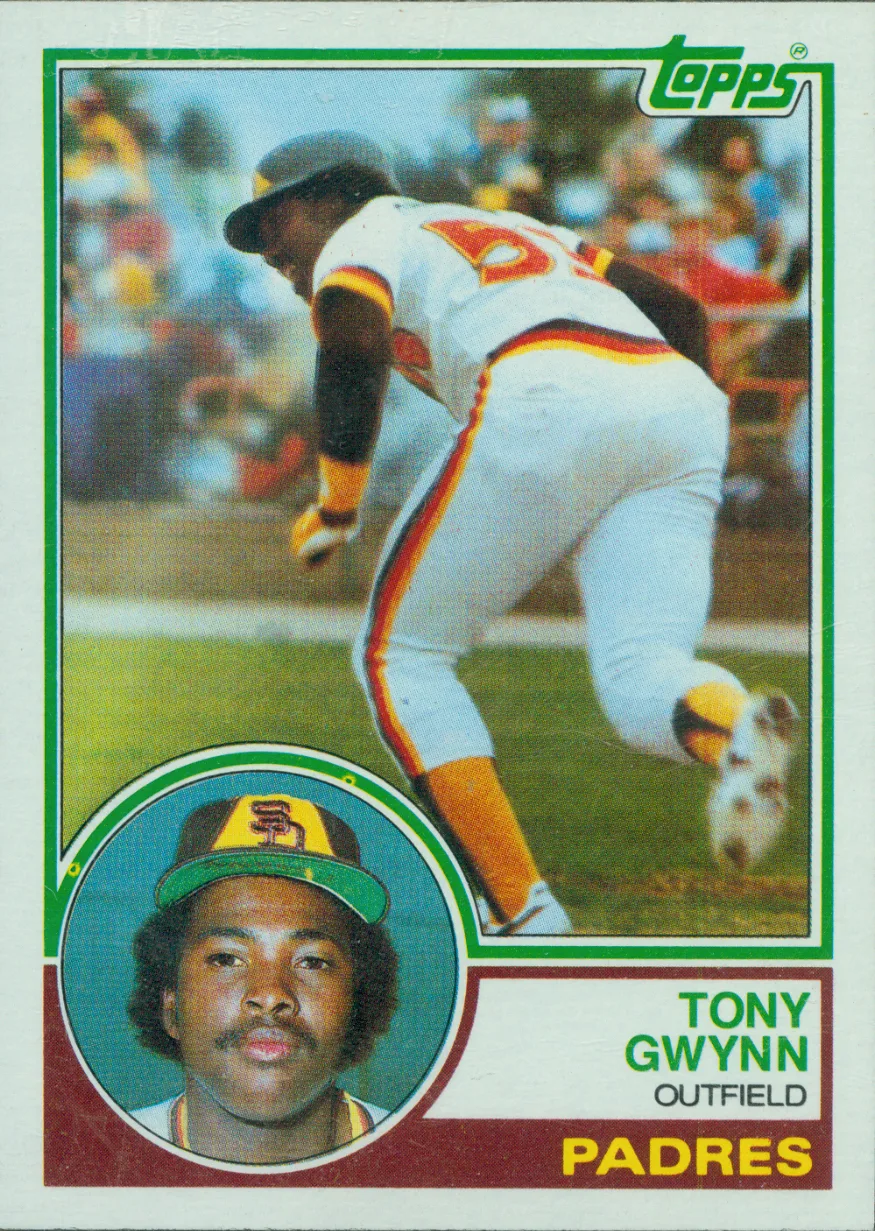
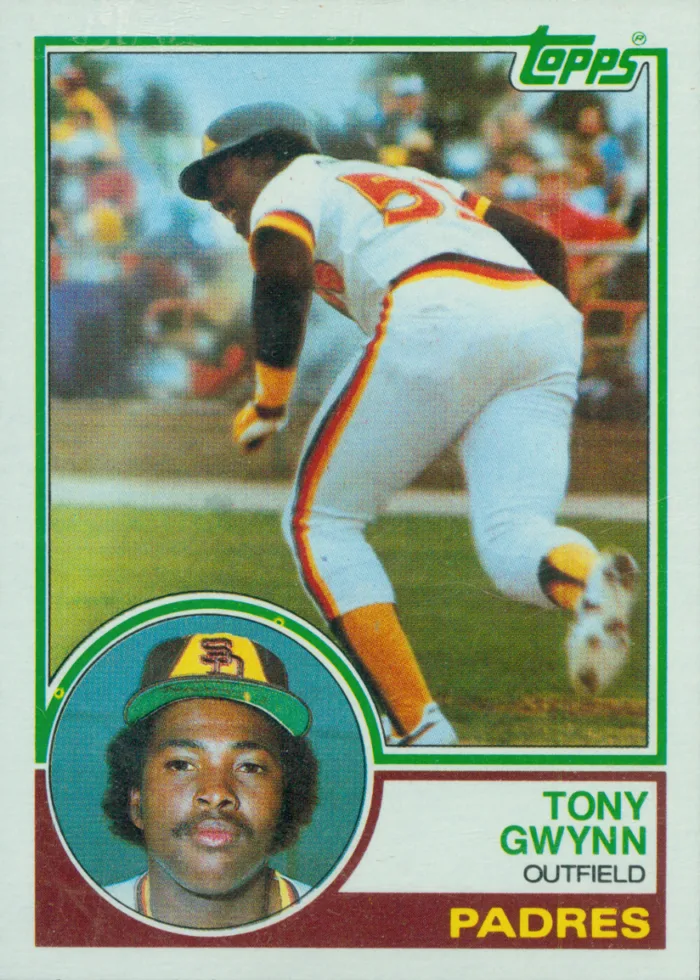
1983 Topps Baseball Tony Gwynn #482
A timeless design and a legendary hitter came together on one of the defining rookie cards of the 1980s in The Hobby. The throwback look, inspired by the 1963 Topps set, pairs an action image with a circular portrait that perfectly suits Tony Gwynn’s classic approach at the plate. Known for elite contact skills and a remarkable ability to avoid strikeouts, Gwynn went on to a Hall of Fame career that included eight batting titles and a .338 lifetime average. Centering challenges have added to the card’s long-term appeal and helped distinguish it within a set loaded with star rookies.
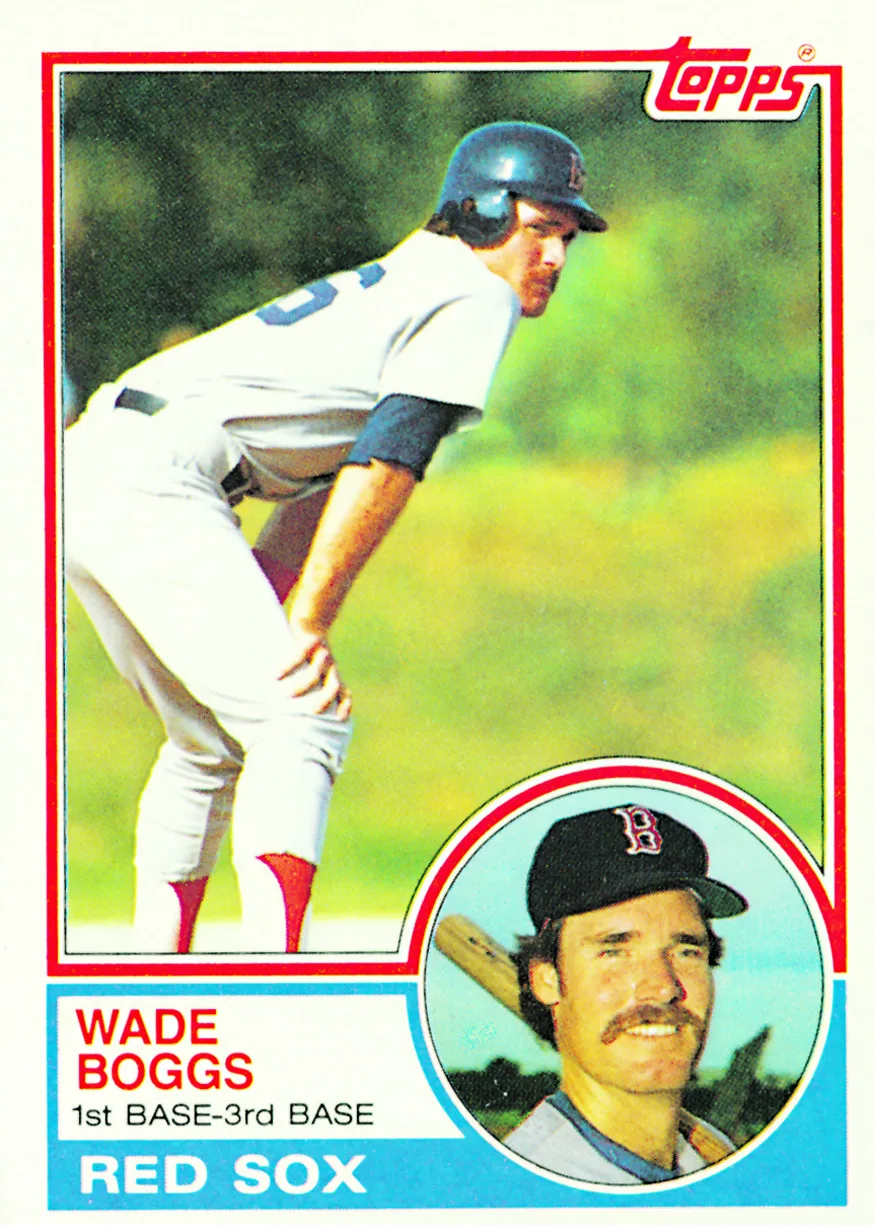
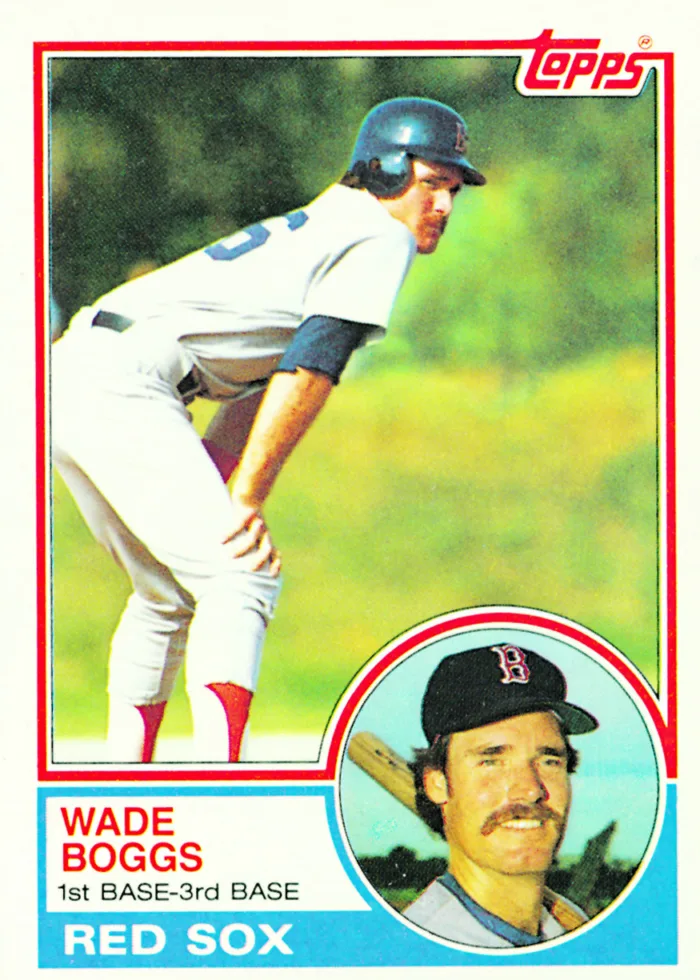
1983 Topps Baseball Wade Boggs #498
The rise of one of baseball’s greatest pure hitters began on a flagship rookie that quickly became a defining card of the 1980s in The Hobby. It captures Wade Boggs at the start of his Red Sox career and foreshadows a résumé that would include 3,000 hits, five batting titles, and 12 All-Star selections. Collector demand surged in real time as Boggs chased the batting crown during the 1983 season. The red, white, and blue design and its place among other elite rookies in the set have kept the card highly sought after, especially in high-grade condition.
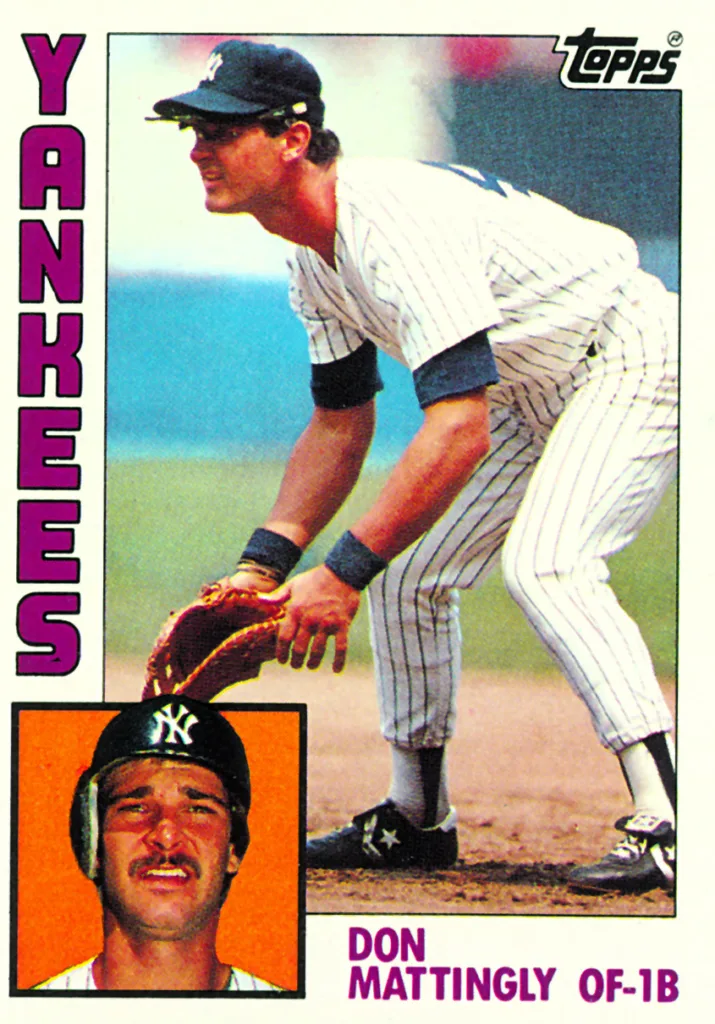
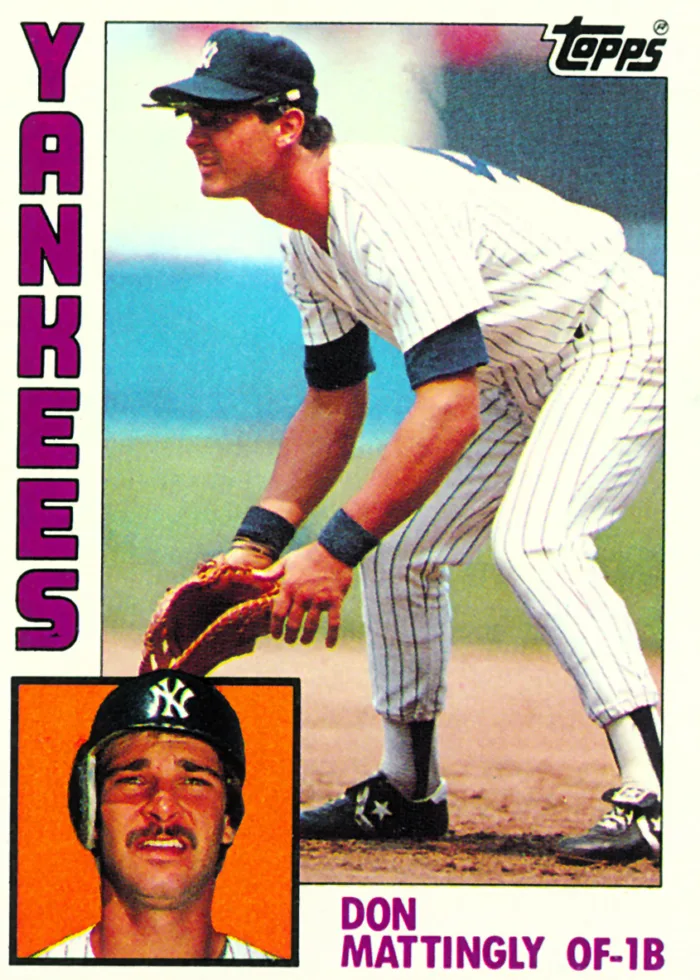
1984 Topps Baseball Don Mattingly #8
A defining rookie of the 1980s became a lasting favorite in The Hobby. The card marks Donnie Baseball’s first widely distributed base set appearance and captures the beginning of his impact in New York. Mattingly went on to win an MVP award and nine Gold Gloves, giving the card enduring significance tied to his prime years. Strong collector demand has kept it among the most popular rookies of the decade, with the glossy Topps Tiffany version adding another sought-after layer for advanced collectors.
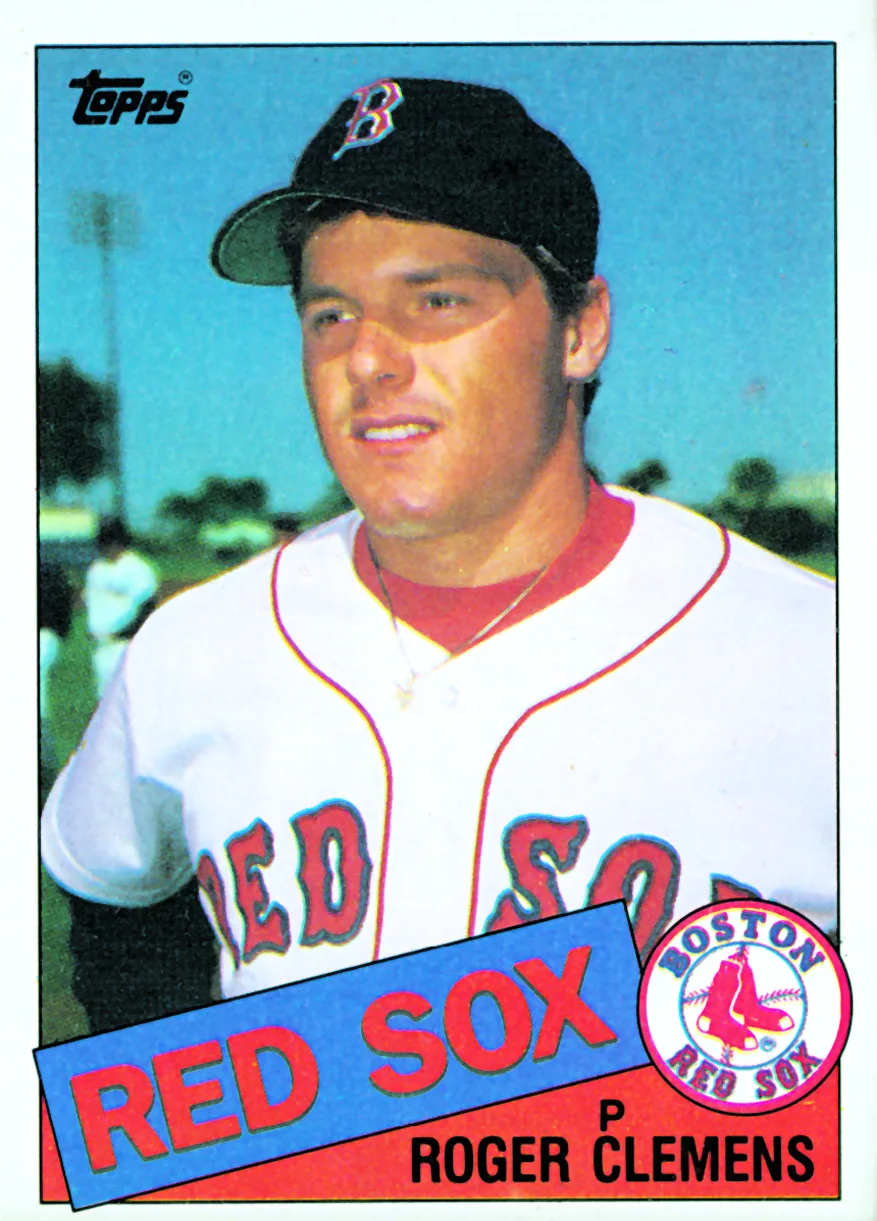
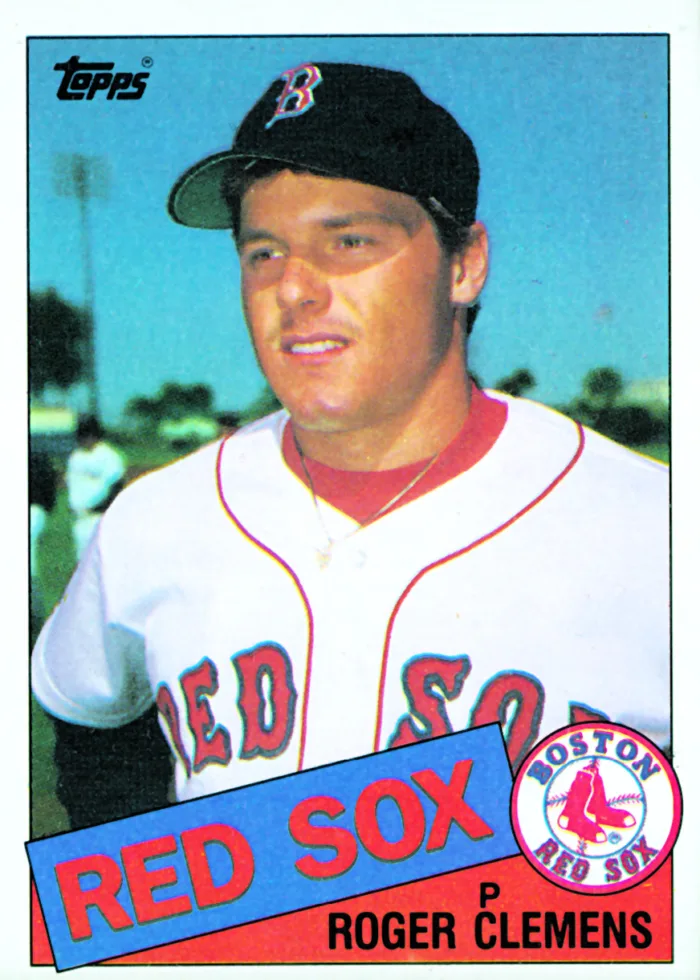
1985 Topps Baseball Roger Clemens #181
Roger Clemens’ rookie card captures the moment his major league career began with the Red Sox and quickly became a defining issue in The Hobby. It marks the start of a run that produced seven Cy Young Awards, 354 wins, and 4,672 strikeouts. The classic 1985 Topps design has helped sustain demand for decades. High-grade examples are especially prized, cementing its place as Clemens’ definitive early career card for collectors.
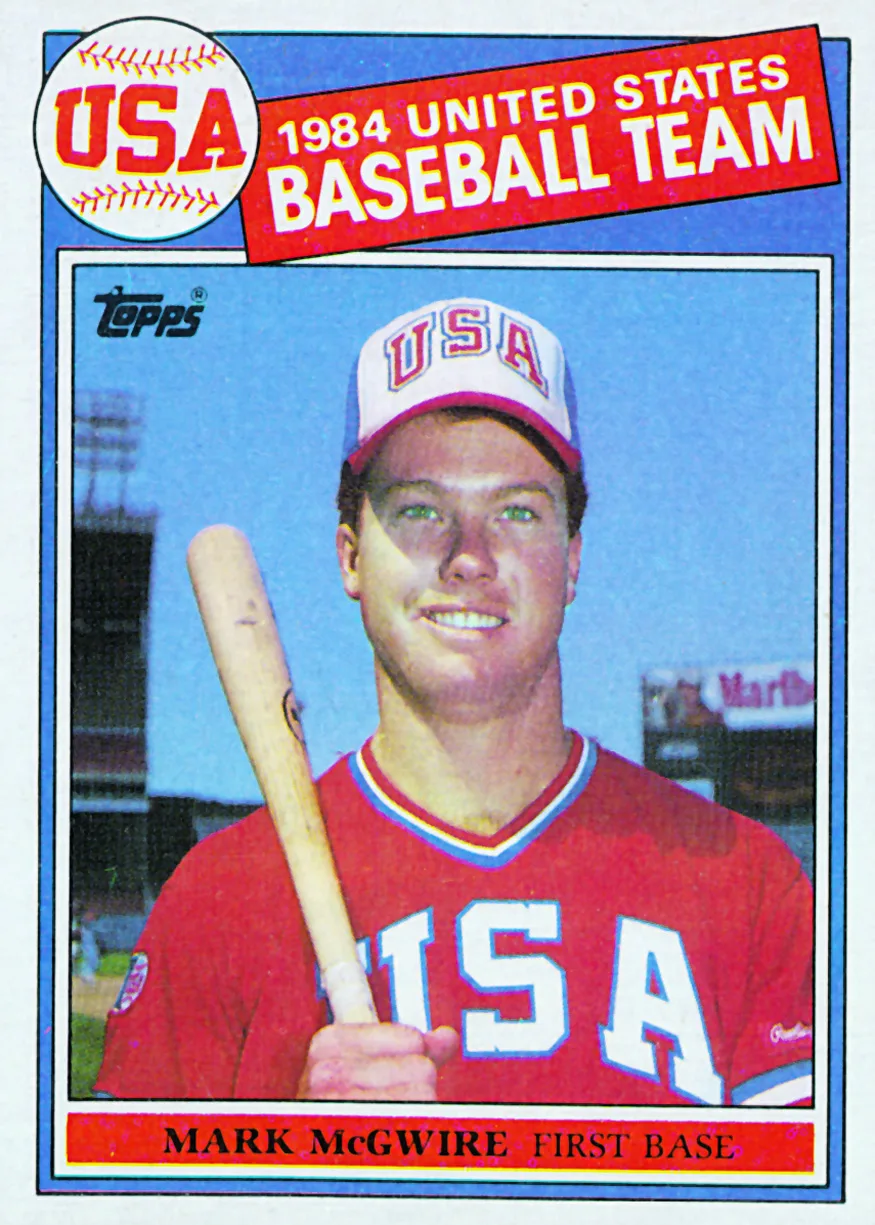
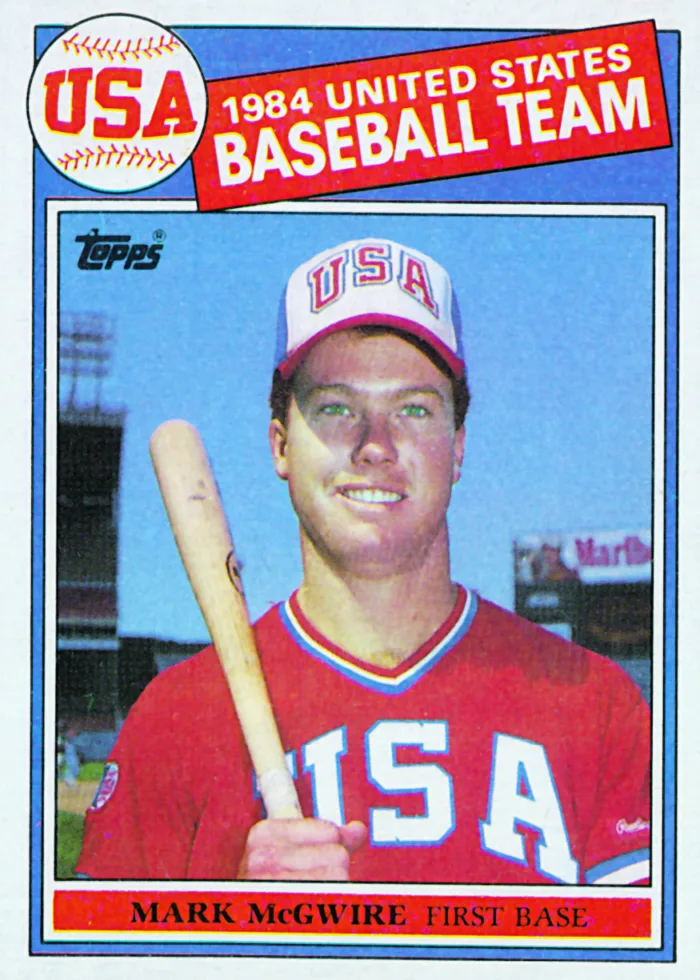
1985 Topps Baseball Mark McGwire 1984 USA Baseball Team #401
Mark McGwire’s 1984 Team USA card stands as one of the most important rookie era issues of the 1980s and a cornerstone of The Hobby. Released as part of Topps’ forward-looking push to feature amateur stars, the card captured McGwire before his historic Major League power surge began. Within a few years, he set the rookie home run record and later redefined power hitting during the home run chase of the late 1990s. The Team USA image became instantly recognizable to a generation of collectors and remains the most sought-after card in the insert set, with centering challenges adding to its appeal. A graded original 1985 Topps Mark McGwire Team USA card will be available via redemption in 2026 Topps Series 1 Baseball.
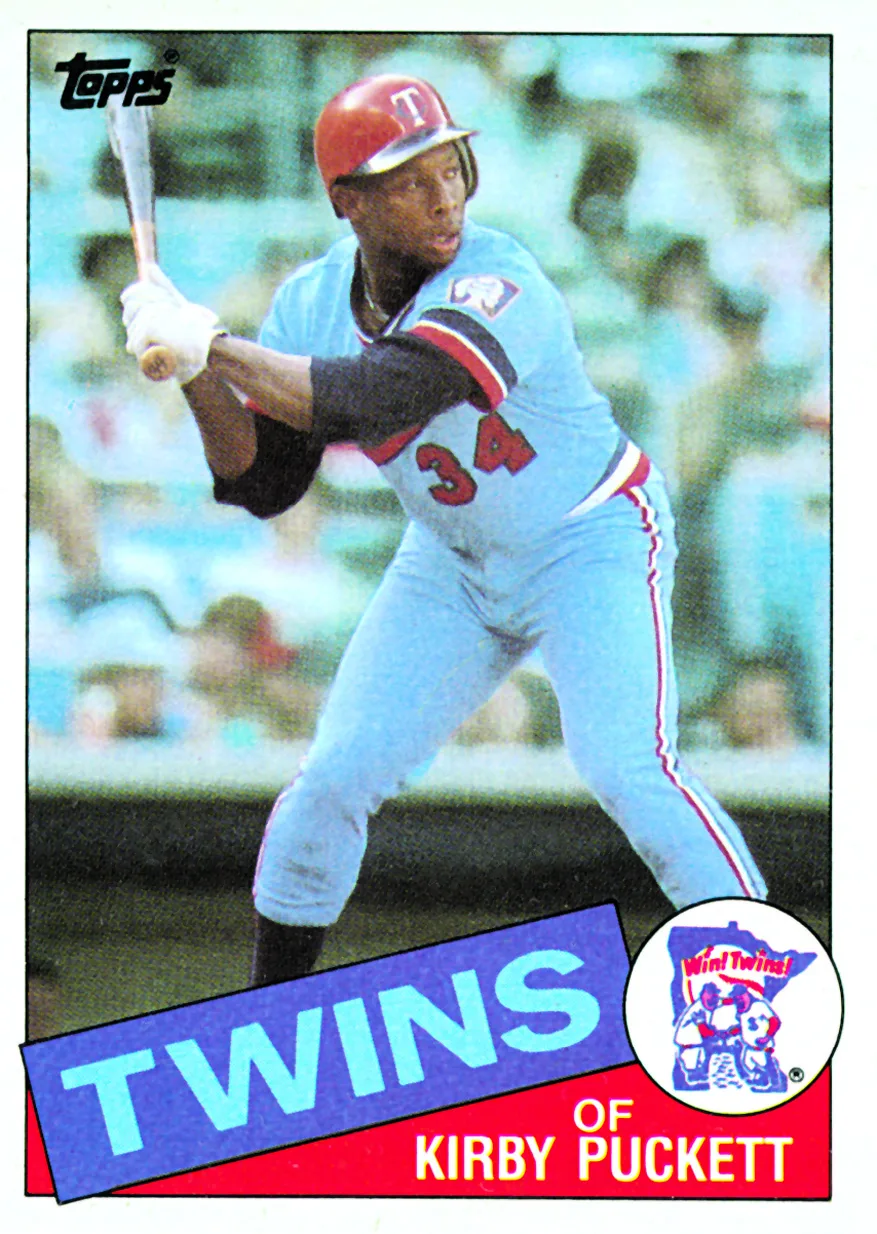
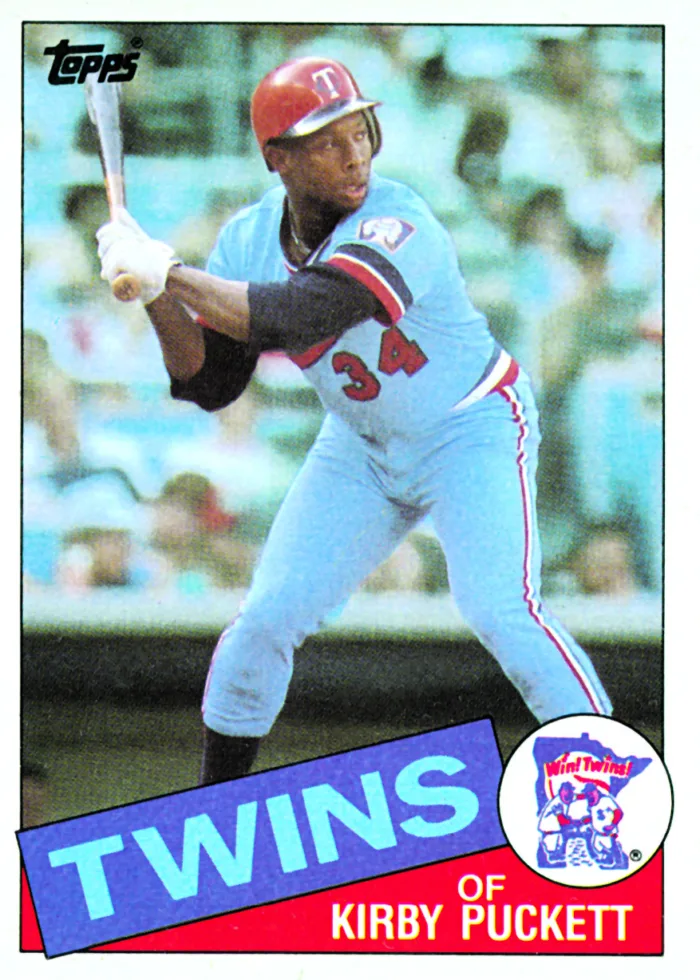
1985 Topps Baseball Kirby Puckett #536
The defining rookie card of Kirby Puckett, this card captures the future Twins legend at the start of his rise and remains his primary rookie card despite a scarcer earlier update. Puckett’s Hall of Fame résumé includes 10 All-Star selections, six Gold Gloves, and two World Series championships, accomplishments that have sustained long-term demand for the card. Issued in the iconic 1985 Topps set, it remains highly sought after in top condition, with the Topps Tiffany version commanding an even greater premium.
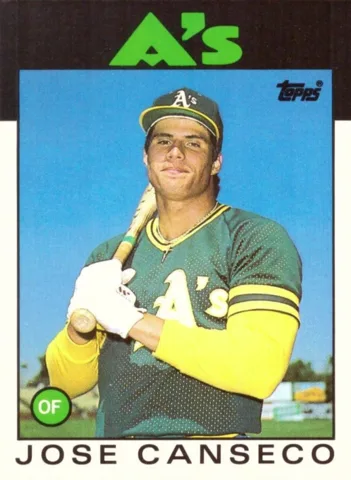
1986 Topps Traded Baseball Jose Canseco RC #20T
Issued in the 1986 Topps Traded set, Canseco’s rookie card marks the debut of the Oakland Athletics slugger, who went on to win the American League Rookie of the Year award and rapidly become a household name. The card captures Canseco just before his historic milestones. It remains a focal point of the era, with collector demand enduring for decades, especially for high-grade examples tied to one of the most influential players of the 1980s.
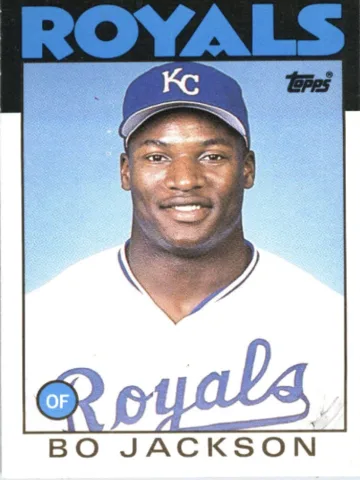
1986 Topps Traded Baseball Bo Jackson RC #50T
Bo Jackson’s 1986 Topps Traded card is the definitive rookie card of one of the most electric athletes of his era and a major card in The Hobby. It captures Bo Jackson at the start of his career with the Royals and reflects his rise as a rare two-sport phenomenon. Jackson’s cultural impact and on-field dominance drove lasting collector demand from the moment the card was released. Issued in the limited Topps Traded set, the card is especially prized in high grade, with the glossy Tiffany version standing out as one of the most valuable modern era rookies.
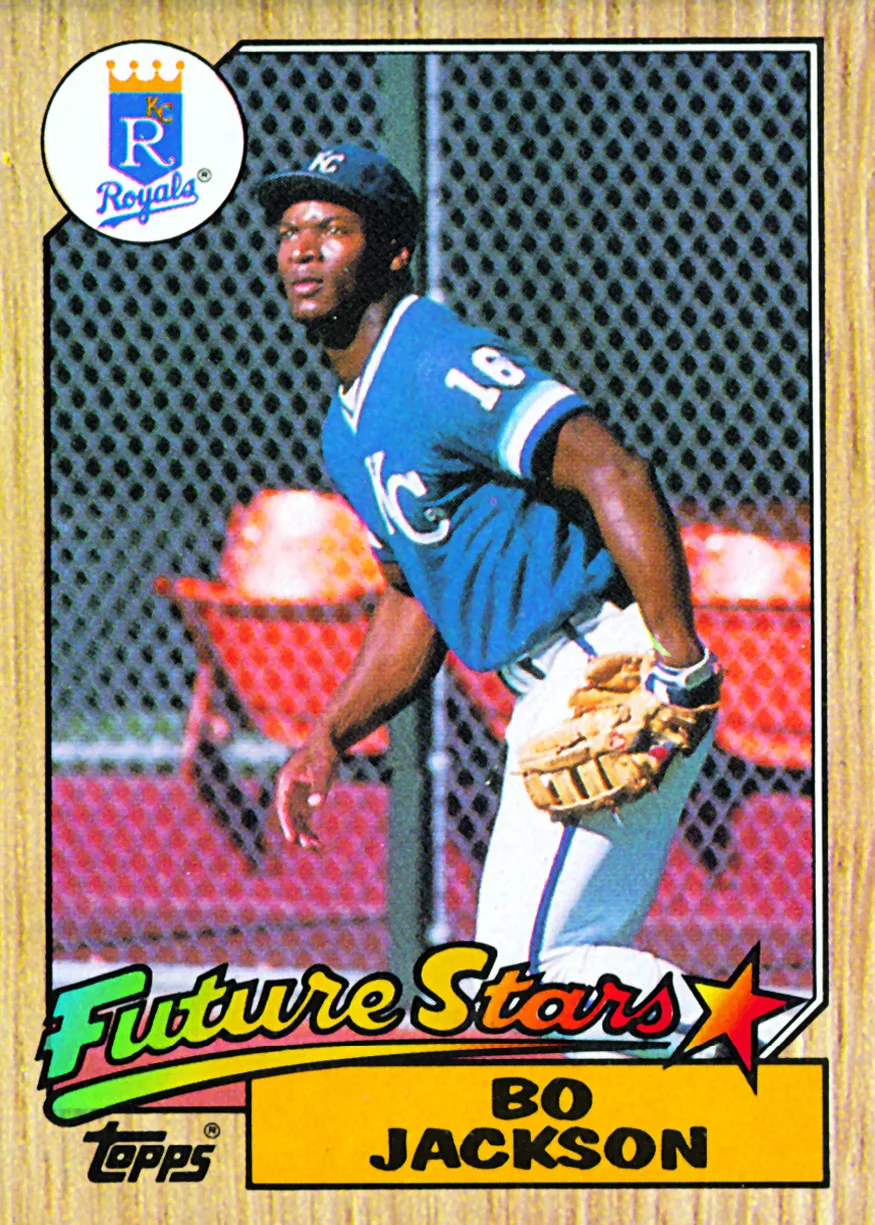
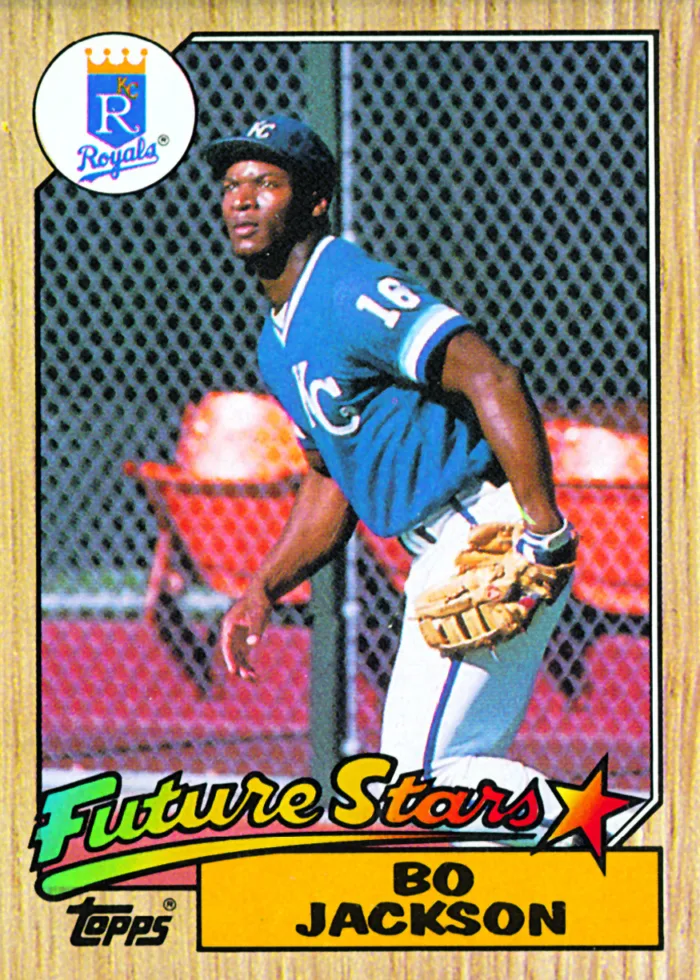
1987 Topps Baseball Bo Jackson Future Stars #170
Released at the height of Bo Jackson’s rise, this 1987 Topps Future Stars card became one of the defining early images of the two-sport phenomenon. Released in the popular 1987 Topps set, it captured Jackson with the Royals as collectors began to grasp his rare blend of power, speed, and cultural impact. Although his Topps Traded card arrived earlier, this card emerged as his flagship rookie for an entire generation. The Future Stars designation proved prophetic, and ongoing demand for the card remains strong in The Hobby, especially for high-grade examples and the scarce Tiffany version.
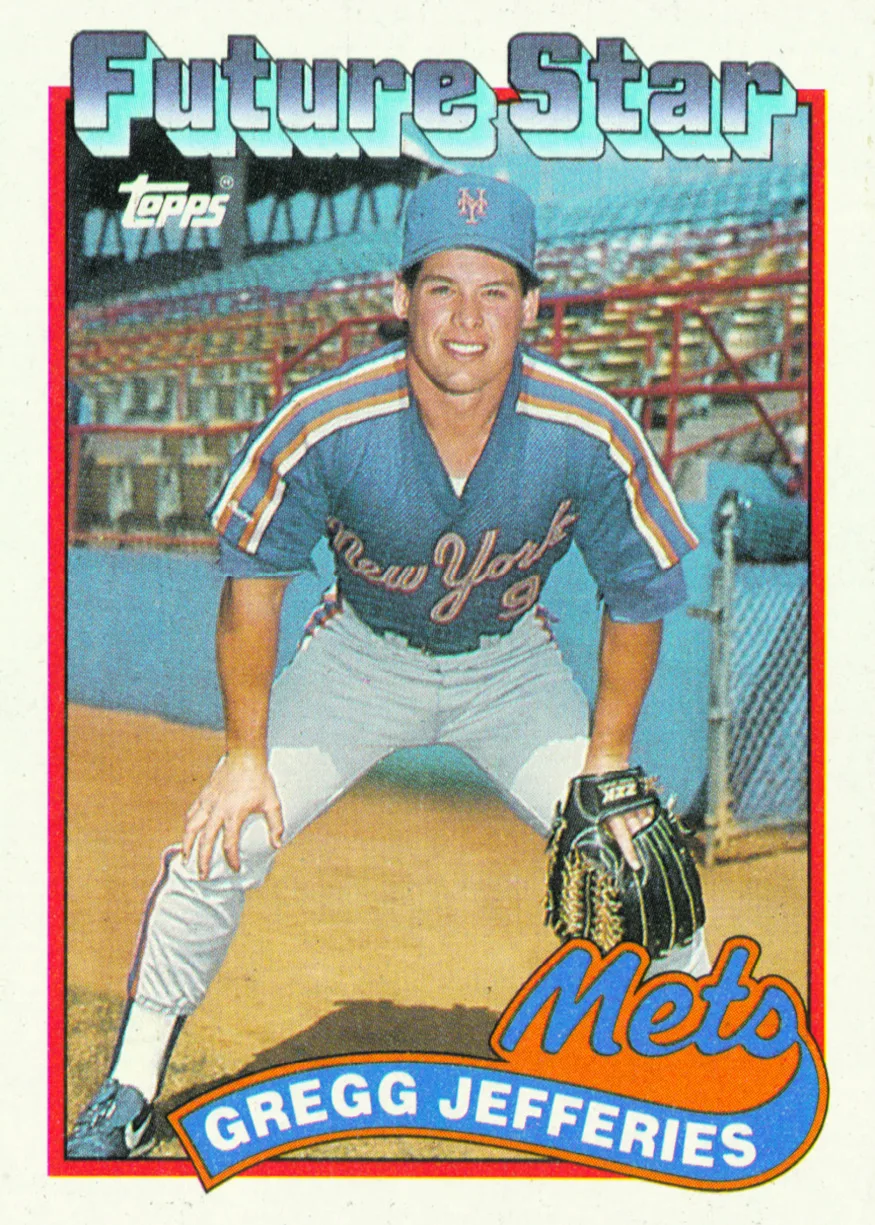
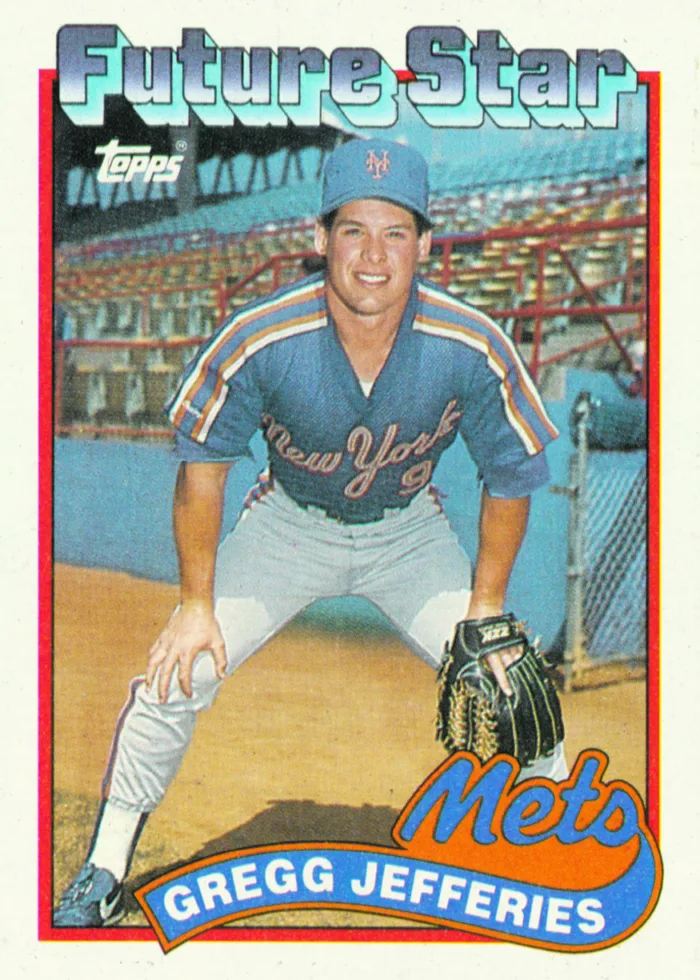
1989 Topps Baseball Gregg Jeffries Future Star #233
In 1989, Gregg Jefferies was the most coveted name in The Hobby. His first Topps card, 1989 Topps No. 233, marked with the bold “Future Star” banner, captured a moment when Jefferies was viewed as baseball’s next great hitter after dominating the minors and delivering a historic late-1988 debut. Demand reached a frenzy as mail-order sellers moved the card in bulk, making it a defining symbol of the rookie-card boom. The card now stands among the Topps Top 75, and an original will be available via redemption in 2026 Topps Baseball, preserving its legacy as one of the era’s most iconic chase cards.
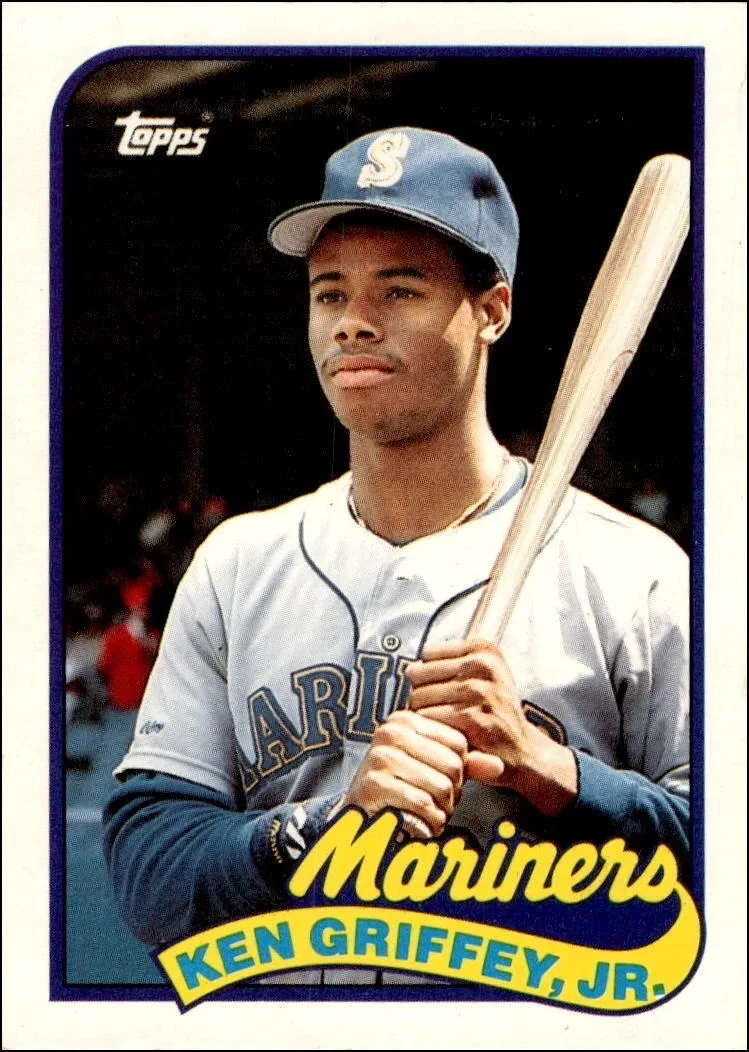
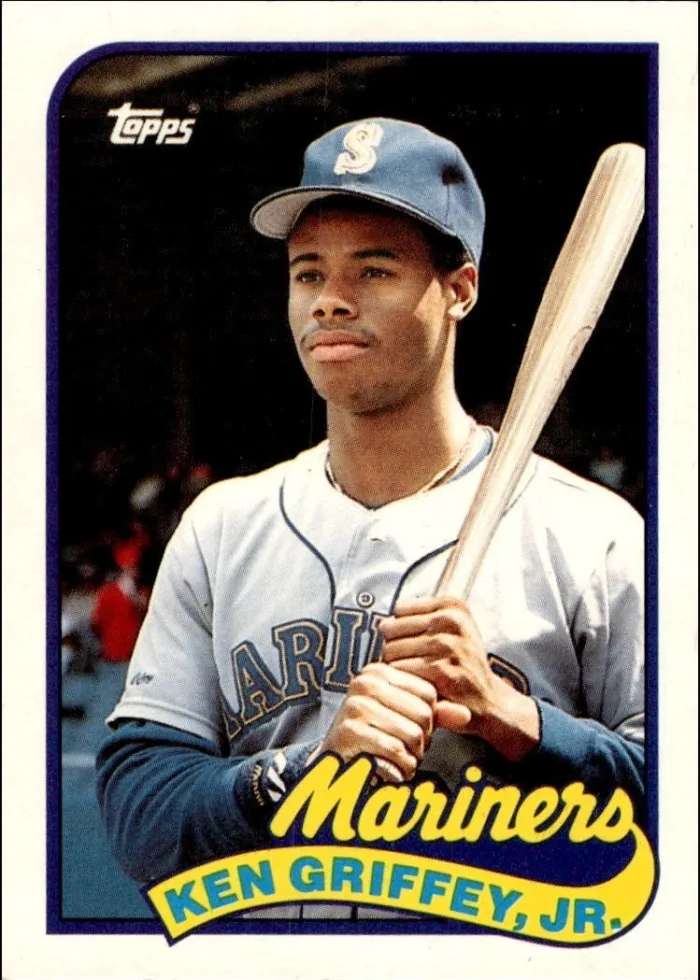
1989 Topps Traded Baseball Ken Griffey Jr. #41T
Few modern rookie cards have helped define The Hobby the way Ken Griffey Jr.’s 1989 Topps Traded rookie did. Issued in the limited Topps Traded boxed set, the card features a timeless portrait of Griffey with his bat on his shoulder, capturing the very beginning of a Hall of Fame career. The image became instantly iconic and has often been compared to classic vintage cards for its simplicity and lasting appeal. Demand has remained strong across all grades, with the glossy Topps Traded Tiffany version standing among the most coveted cards of the late 1980s. Decades later, it remains one of the most recognizable and essential Griffey cards ever produced.
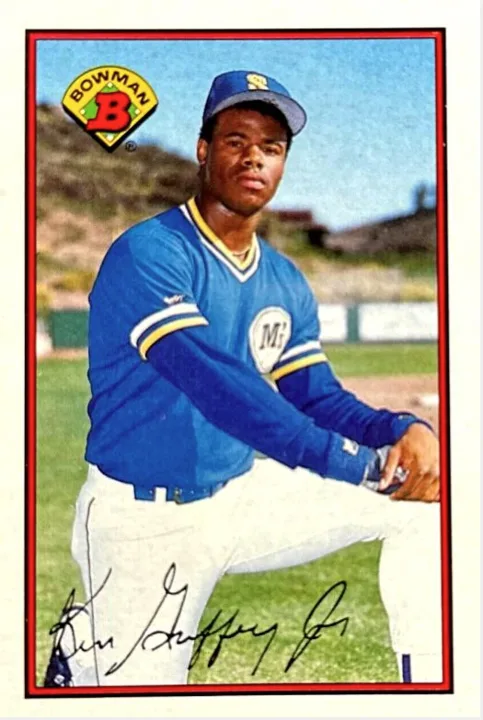
1989 Bowman Baseball Ken Griffey Jr. #220
Topps revived the Bowman name in 1989 with a release that instantly reshaped modern collecting, and Ken Griffey Jr. was the face of that return. The Bowman card features The Kid early in his rookie season and stands apart from the era’s standard designs. It remains one of Griffey’s essential early cards and a symbol of Bowman’s rebirth as a future home for prospect collecting. Centering and print issues make high-grade examples especially challenging, which has sustained long-term demand in The Hobby for this distinctive rookie era issue.
The 1990s
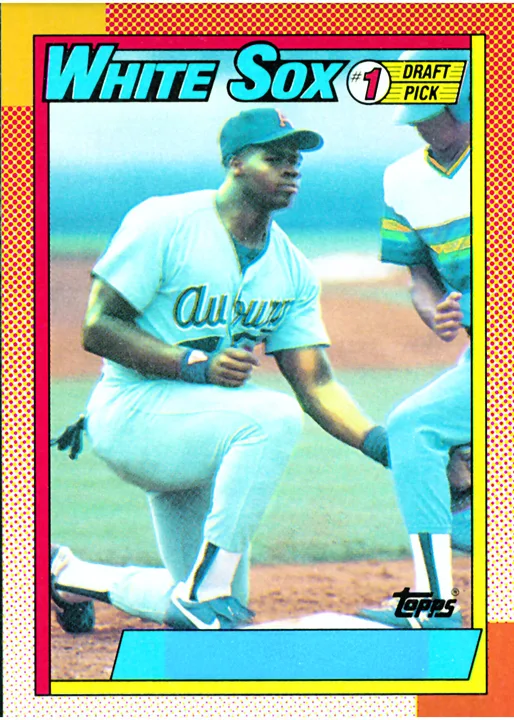
1990 Topps Baseball Frank Thomas #414 No Name Variation
The 1990s were defined by mass production, leaving little room for true scarcity in The Hobby. That reality makes the 1990 Topps Frank Thomas No Name rookie a remarkable outlier, an accidental printing error that became one of the most coveted cards of the decade. With just 469 graded examples as of February, even low-grade copies routinely command prices in the thousands. The card offered an early glimpse of how rarity could drive demand long before numbered parallels became standard. To mark Topps’ 75th anniversary, a graded original 1990 Frank Thomas No Name will be available via redemption in 2026 Topps Series 1 Baseball.
- Find this Iconic Topps Buyback in 2026 Topps Series 1 Baseball
- Find the 1990 No Name on Fanatics Collect
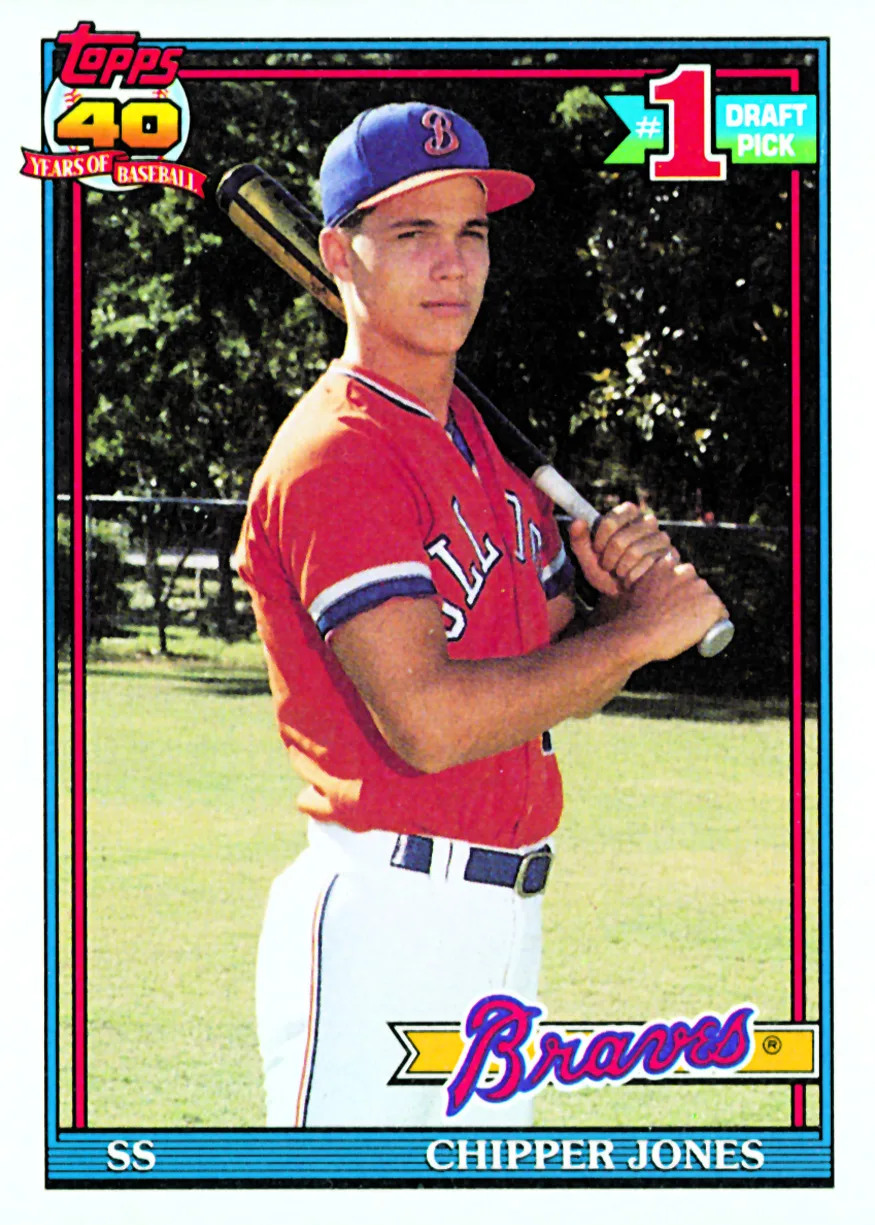
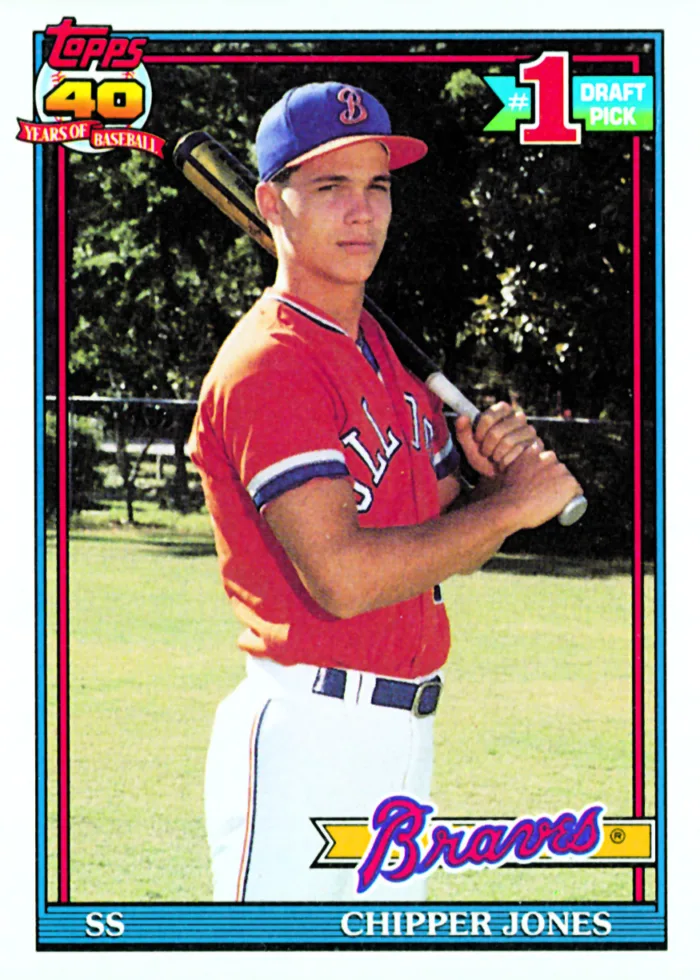
1991 Topps Baseball Chipper Jones RC #333
Chipper Jones’ primary rookie card arrived in 1991 and quickly became one of the most recognizable debut issues in The Hobby. Issued in the flagship Topps set, the card captures the future Hall of Fame third baseman at the very start of a career spent entirely with the Braves. Collector interest is elevated by several notable variations, led by the scarce Desert Shield version created for troops during the Gulf War, which commands significant premiums in high grade. Additional formats like the Topps Micro edition add further depth, while pristine base copies remain challenging despite broad production. Together, these versions have made the card a lasting fixture in modern rookie collecting.
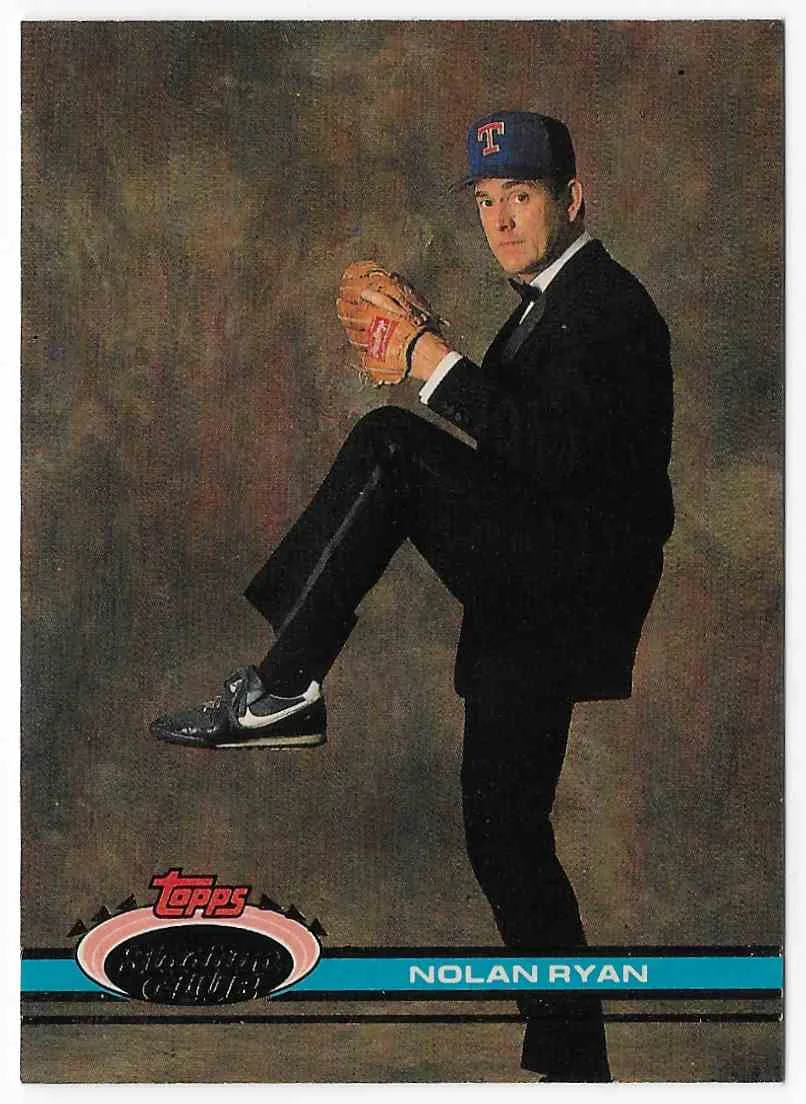
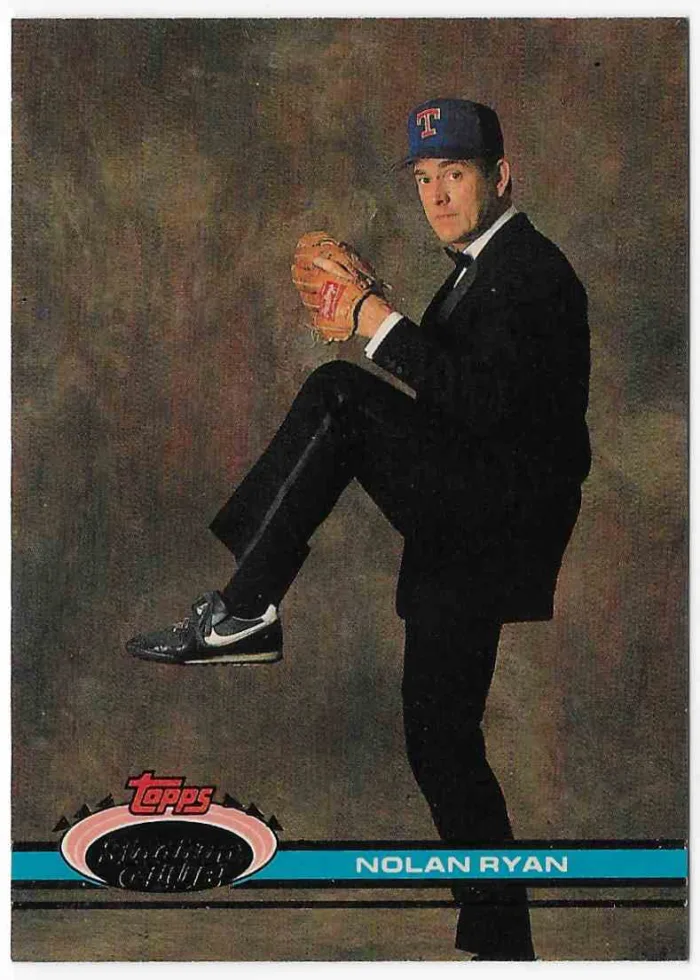
1991 Topps Stadium Club Baseball Nolan Ryan #200
Released as part of Topps’ first premium Stadium Club offering, this Nolan Ryan card helped redefine the look of modern baseball cards in The Hobby. The inaugural Stadium Club set introduced full-bleed, UV-coated photography, and this issue stands out with a dynamic image of Ryan uncoiling after a pitch during his time with the Rangers. The visual quality set a new industry standard and elevated the appeal of photography-driven cards. Collectors have also noted scarce variations tied to the card, adding another layer of interest. As a late career Ryan issue from a groundbreaking release, it remains a popular and visually striking piece from the early 1990s.
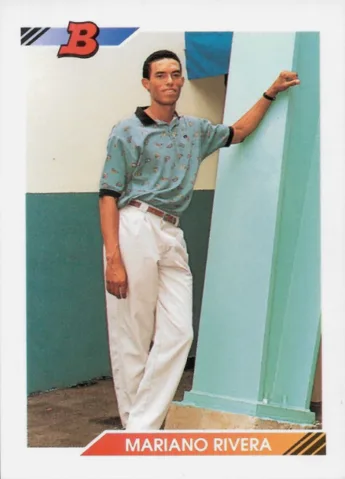
1992 Bowman Baseball Mariano Rivera #302
Long before he became the game’s all-time saves leader, Mariano Rivera appeared on his most important rookie card in the 1992 Bowman set. Widely regarded as his premier debut issue, the card predates his major league arrival and captures the future Yankees legend at the very start of a historic career. Rivera’s role in multiple championship teams and his status as the first unanimous Hall of Fame selection have driven lasting demand in The Hobby. Condition sensitivity tied to the set’s white card stock and coating has made high-grade examples especially desirable, placing this card among the most respected early issues of the 1990s.
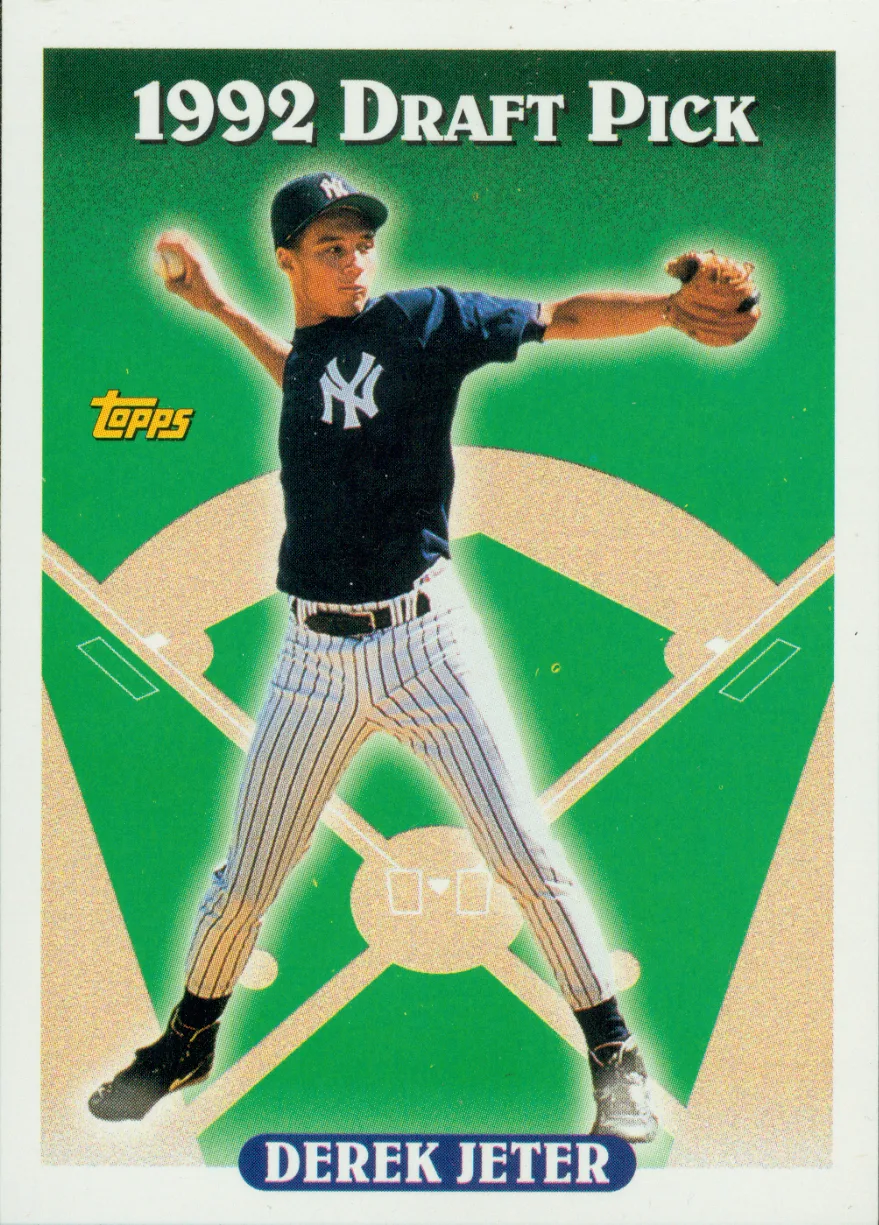
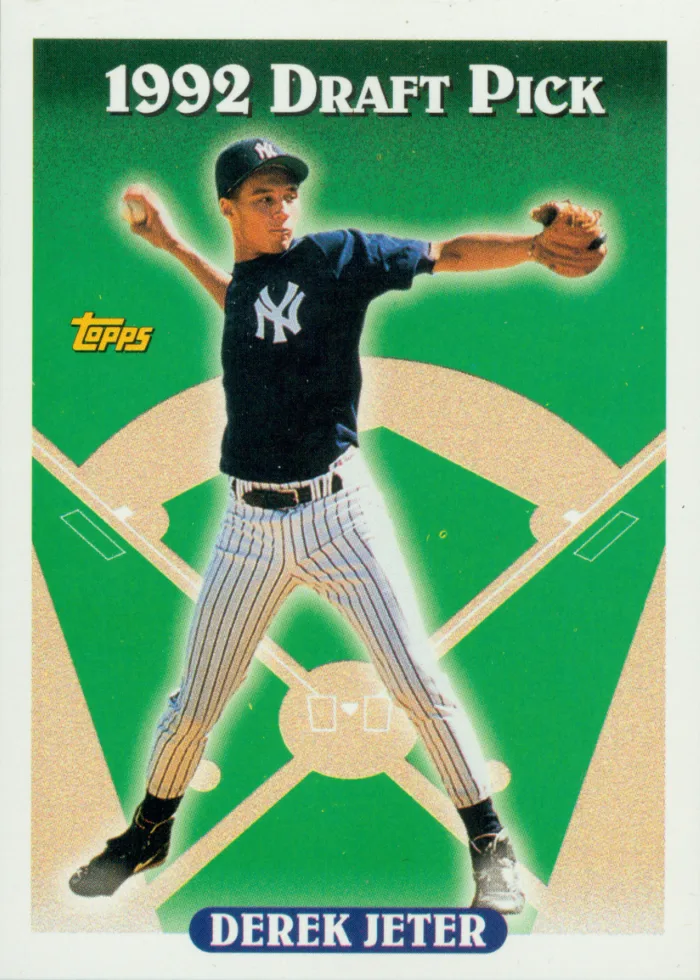
1993 Topps Baseball Derek Jeter 1992 Draft Pick #98
Derek Jeter’s rise with the Yankees began on a flagship Topps rookie that has become one of the defining modern cards in The Hobby. Issued in the 1993 Topps Draft Pick subset, the card is widely regarded as his true rookie. The sought-after Topps Gold version from the same set highlights its role in the early years of pack-inserted parallels. Strong collector demand has followed the card for decades, with high-grade examples remaining especially prized as a lasting entry point to Jeter’s Hall of Fame career.
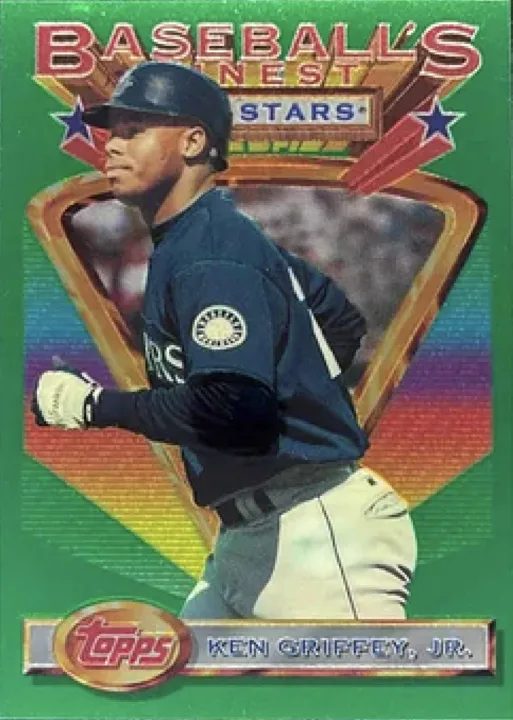
1993 Topps Finest Baseball Ken Griffey Jr. All-Star #110
Few cards changed the direction of The Hobby like the 1993 Topps Finest Ken Griffey Jr. All-Star card. As one of the earliest chrome-style cards, it introduced a chromium finish that immediately set it apart and helped usher in a new era of premium design. Even more influential was its Refractor parallel, which added a shimmering effect and true scarcity, reshaping how collectors thought about parallels. With an extremely limited print run and significant condition sensitivity, especially on the Refractor, both versions became instant icons. Griffey’s status as the game’s premier star at the time cemented the card as one of the most important and influential issues of the modern era.
The 2000s
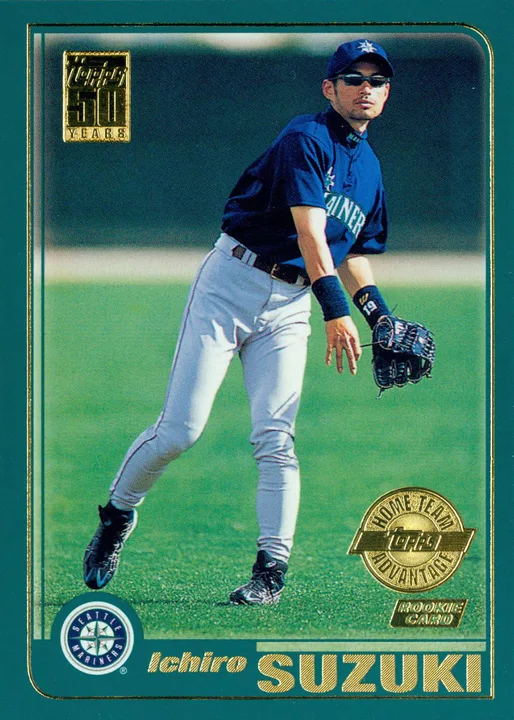
2001 Topps Baseball Ichiro Suzuki #726
Ichiro Suzuki’s arrival signaled a turning point for The Hobby as baseball cards became truly global. The centerpiece of 2001 Topps Baseball was Ichiro’s card No. 726, issued as he came off a .387 season and seven straight batting titles in Japan and entered MLB as the clear Rookie of the Year favorite. Demand for the card never faded as Ichiro immediately validated the hype with a historic debut season that led to Rookie of the Year and AL MVP honors. Today, pristine examples trade for roughly $1,600, reflecting both his on-field greatness and lasting collector appeal. To commemorate Topps’ 75th anniversary, a graded copy of Ichiro’s iconic rookie card will be available via redemption in 2026 Topps Series 1 Baseball.
- Find this Iconic Topps Buyback in 2026 Topps Series 1 Baseball
- Find the 2001 Ichiro on Fanatics Collect
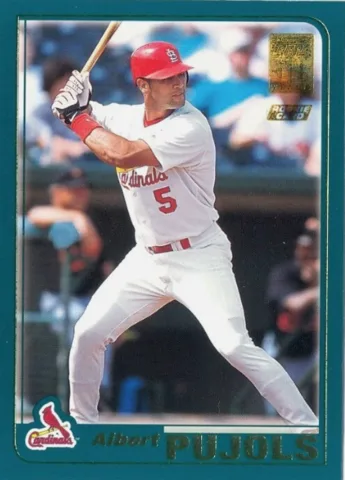
2001 Topps Chrome Traded Baseball Albert Pujols #T247
Albert Pujols delivered one of the most dominant rookie seasons in baseball history in 2001, finishing with 37 home runs, 130 RBI, a fourth-place MVP finish, and the National League Rookie of the Year Award. The rush for his rookie cards followed, led by the 2001 Topps Chrome Traded Albert Pujols No. T-247, now recognized by a panel of experts as one of the Top 75 cards in Topps history. A graded original will be available via redemption in 2026 Topps Baseball. Pujols went on to finish his career with 703 home runs and 3,384 hits, and the enduring demand for his rookie reflects how his early dominance helped shape his lasting legend in The Hobby.
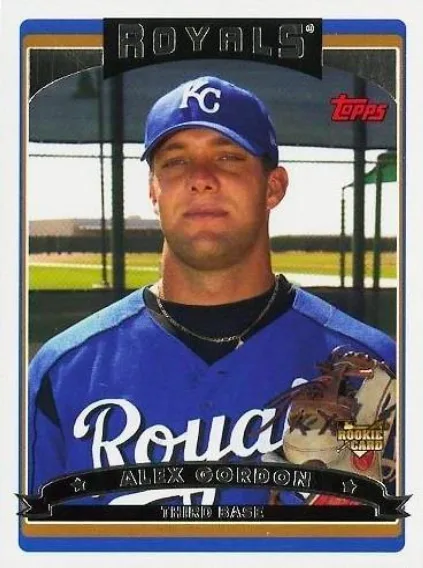
2006 Topps Baseball Alex Gordon #297 Cut Out
The 2006 Topps Baseball Alex Gordon #297 Cut Out card stands as a tangible reminder of one of the most infamous production errors in modern card history. Topps included Gordon in its 2006 flagship set before he was eligible under new MLB and MLBPA rules, prompting an emergency shutdown and recall to avoid contractual fallout. In an effort to neutralize the mistake, Topps physically punched Gordon’s image out of some cards, leaving behind an empty frame with his name and team intact. While most were meant to be destroyed, thousands slipped into retail packs, turning the Cut Out into a widely recognized artifact of a card that should never have existed. Its unusual form and origin story have cemented its status as a modern Hobby grail, offering collectors a rare chance to own a piece of baseball card lore born from controversy rather than design.
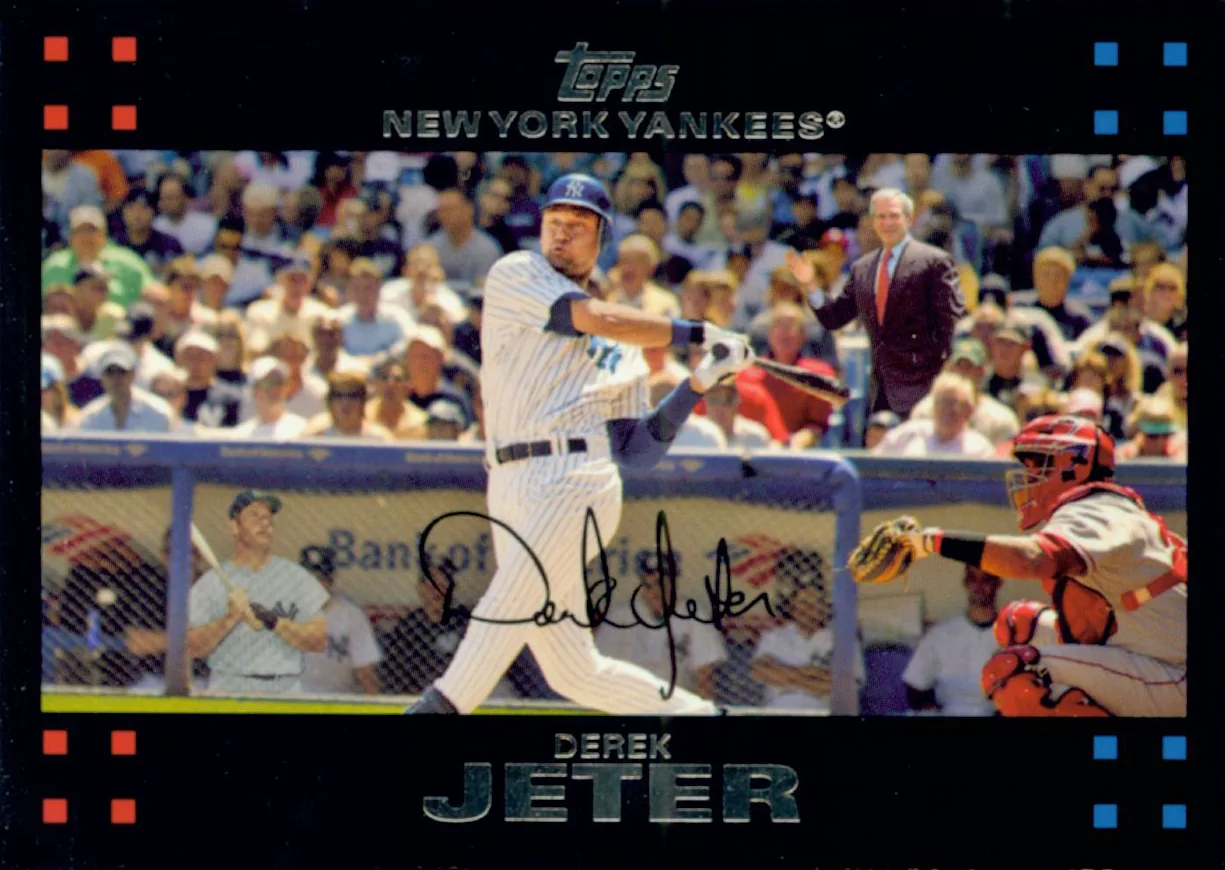
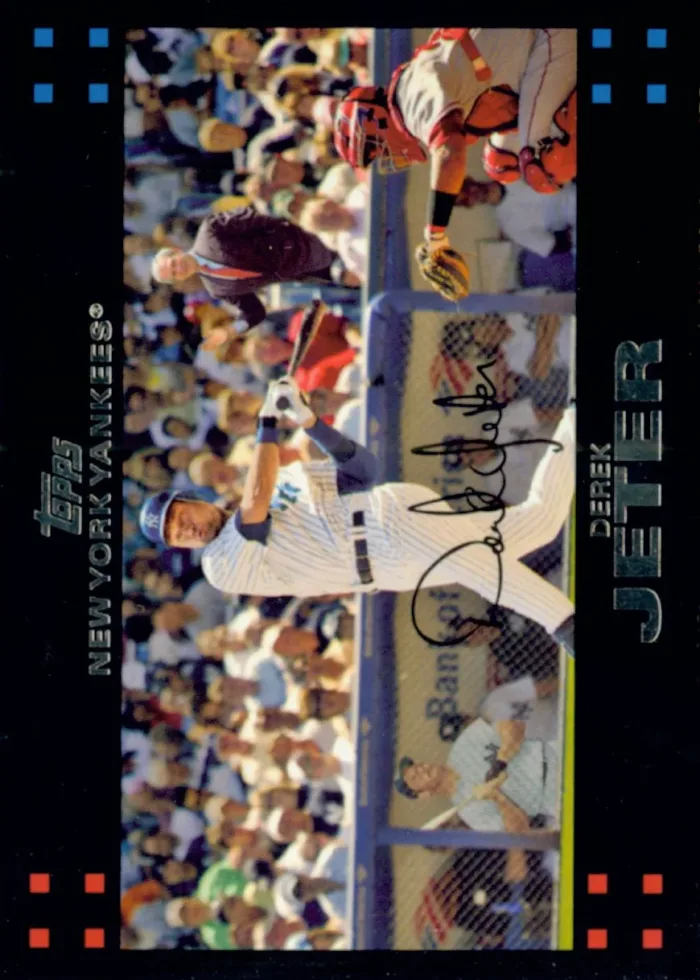
2007 Topps Baseball Derek Jeter #40 with George W. Bush and Mickey Mantle
Baseball cards are meant to be fun, and few modern cards captured that spirit like the 2007 Topps Derek Jeter card that quietly became a hobby sensation. Collectors noticed that Jeter’s action photo included a superimposed President George W. Bush in the stands and a fully uniformed Mickey Mantle lurking in the dugout, an intentional mash-up of classic error card themes. The discovery sparked immediate buzz that spilled beyond The Hobby into mainstream news coverage and late-night conversation. Topps leaned into the moment, allowing the card to live on as a conversation piece rather than pulling it from circulation. To mark Topps’ 75th anniversary, a graded original Jeter Mantle Bush card will be available via redemption in 2026 Topps Series 1 Baseball.
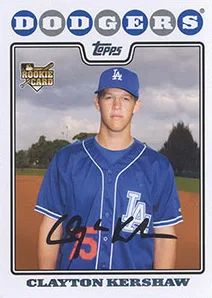
2008 Topps Update Series Baseball Clayton Kershaw #UH240
Clayton Kershaw’s official Topps flagship rookie arrived in the 2008 Topps Update Series and has since become one of the defining modern cards of its era. The card’s importance is rooted in Kershaw’s historic career, highlighted by multiple Cy Young Awards, a pitching Triple Crown, and a National League MVP, achievements that place him among the greatest pitchers of his generation. Issued in Topps Update, which traditionally carries a smaller print run than Series 1 and Series 2, the card also benefits from relative scarcity, especially in top condition. Centering challenges have made high-grade examples particularly elusive, driving strong demand and premium values. Combined with a rookie class that also includes Max Scherzer and Evan Longoria, Kershaw’s Topps Update rookie remains one of the most coveted modern-era cards in The Hobby.
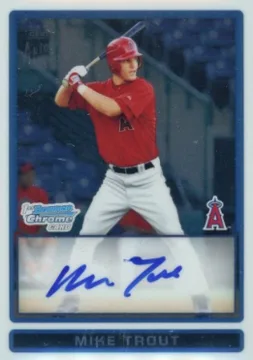
2009 Bowman Chrome Draft Picks & Prospects Mike Trout Bowman Chrome Prospect Auto #BDPP89
Mike Trout’s first pack-pulled, on-card autograph arrived in the 2009 Bowman Chrome Draft Prospects set and quickly became one of the most influential modern cards in The Hobby. Widely recognized as Trout’s “1st Bowman” autograph, it represents the earliest licensed signature of a generational talent whose career includes multiple MVP awards and sustained dominance at the highest level. Limited production and extreme condition sensitivity, especially among serial-numbered refractor parallels, have elevated its status and value, with the one-of-one Superfractor setting a record as the highest-selling sports card ever. The chase for this autograph helped define the modern emphasis on Bowman prospect autos, cementing its place as a defining benchmark for collectors and the broader industry.
The 2010s
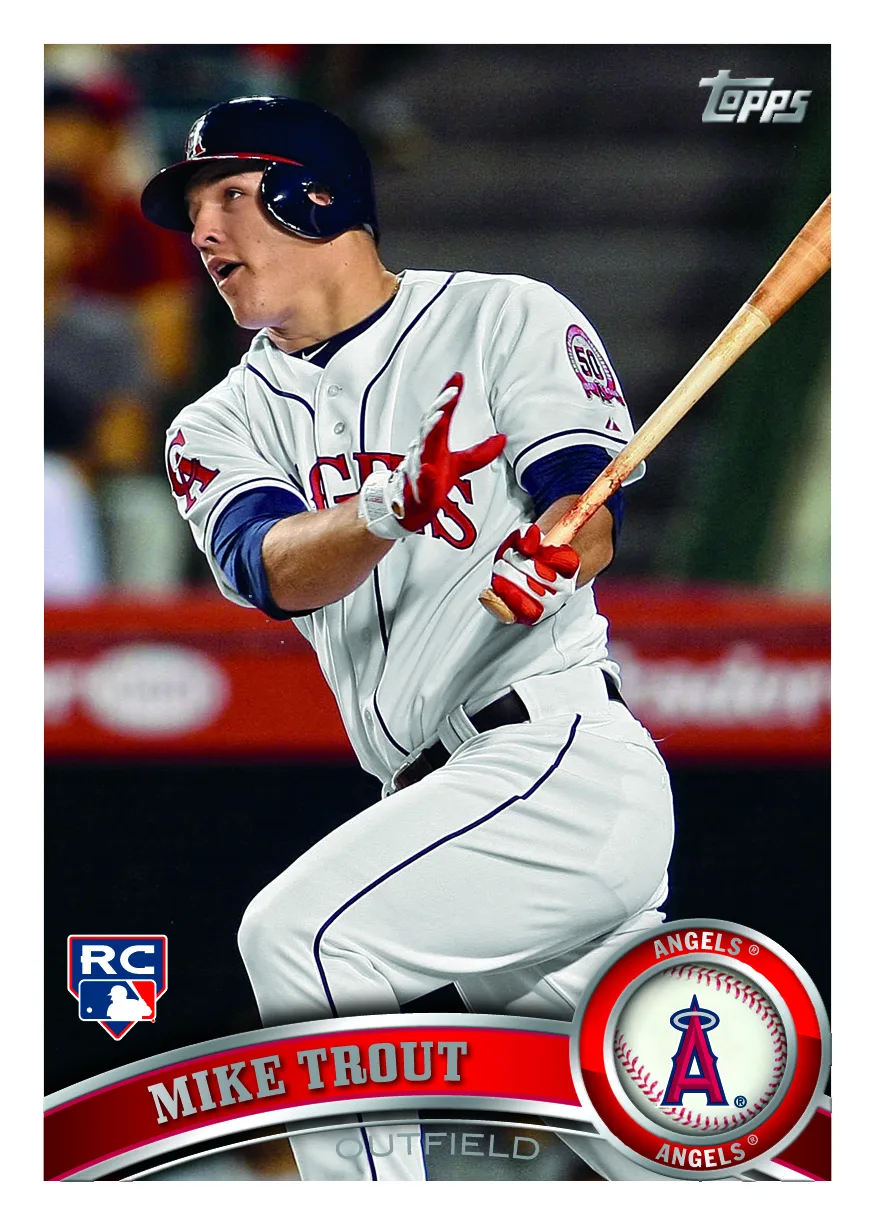
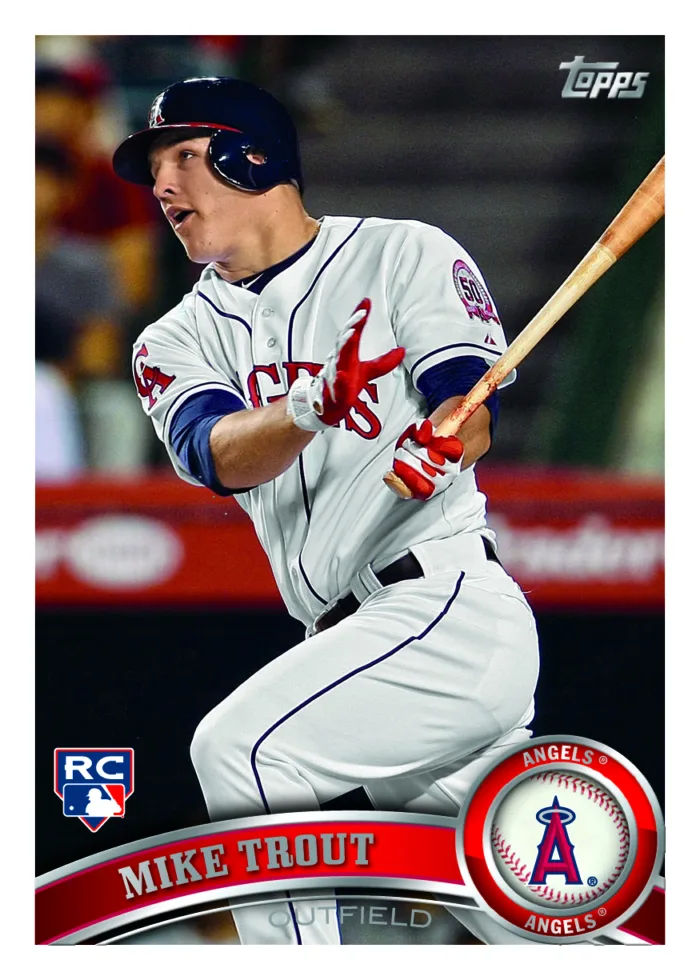
2011 Topps Update Series Baseball Mike Trout #U175
Mike Trout’s 2011 Topps Update Rookie Card No. US175 stands as one of the defining modern base cards in The Hobby. Issued after he became one of the youngest players of the Expansion Era to reach 100 at-bats, the card gained momentum as Trout quickly emerged as the game’s best all-around player and American League Rookie of the Year. Driven entirely by performance rather than scarcity, it became a landmark modern rookie. A panel of experts voted it into the Top 75 cards in Topps history, and a graded original will be available via redemption in 2026 Topps Baseball.
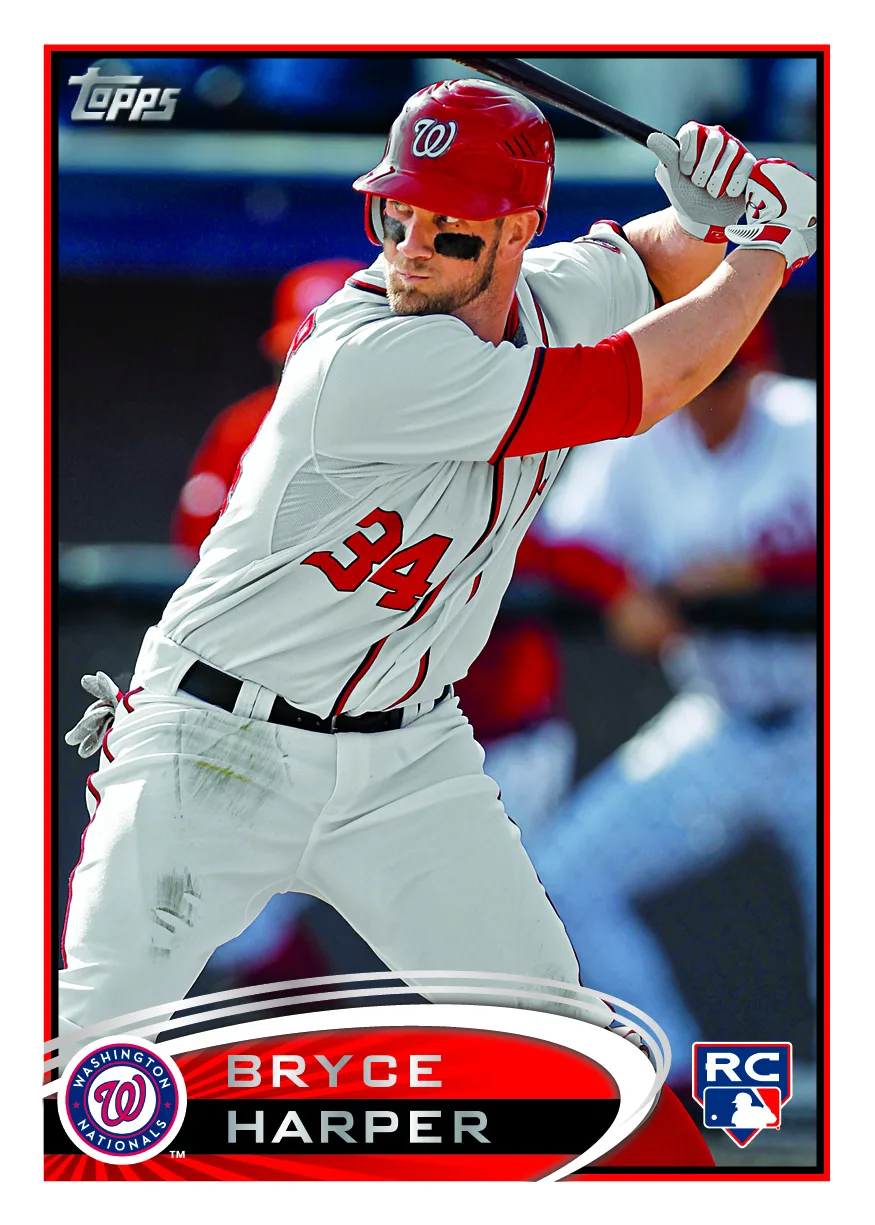
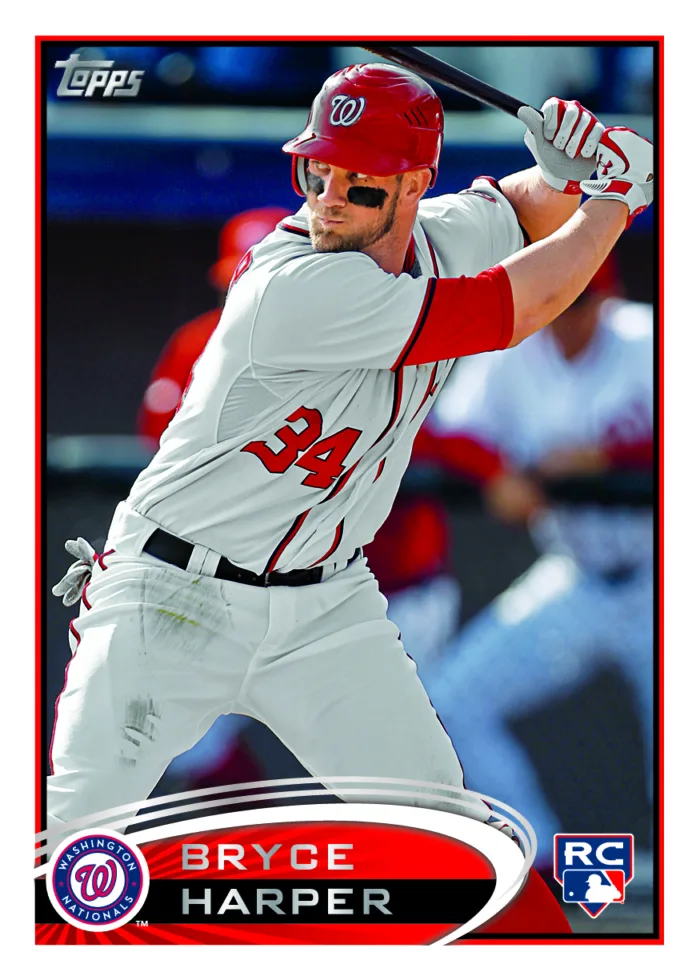
2012 Topps Series 2 Baseball Bryce Harper #661
Bryce Harper’s flagship rookie took on new meaning in 2012 when Topps quietly introduced an unannounced short print into its base set, reshaping expectations for modern rookie cards. Added late to Series 2 after Harper’s April debut, the card was produced in far smaller quantities than standard base rookies and appeared in multiple versions, fueling debate and sustained demand. The pack-pulled short print featuring Harper in a blue helmet is the rarest, while alternate poses were reserved for factory and retail sets. Its limited availability and layered variations have driven strong premiums for high-grade cards and influenced how collectors approached Series 2 and Update releases, marking a pivotal moment in the evolution of modern rookie card strategy in The Hobby.
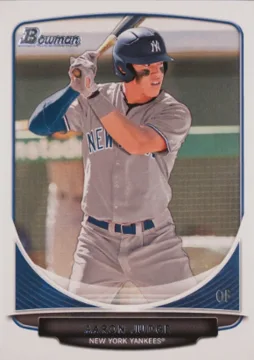
2013 Bowman Chrome Draft Picks & Prospects Aaron Judge #BDPP19
Aaron Judge’s collecting legacy began with his first MLB-licensed, on-card autograph, issued by Bowman years before his Major League debut. As his “1st Bowman” autograph, the card captures the moment the Yankees drafted a future superstar and stands as the earliest signed card in his professional catalog. Judge’s historic career, including multiple MVP awards and the American League single-season home run record, has driven sustained demand for this early prospect issue. Limited production and highly coveted parallel versions, highlighted by the one-of-one Superfractor that brought a six-figure auction result, have further elevated its status. The combination of an on-card signature, early timing, and a generational player has made this autograph one of the most sought-after modern prospect cards in The Hobby.
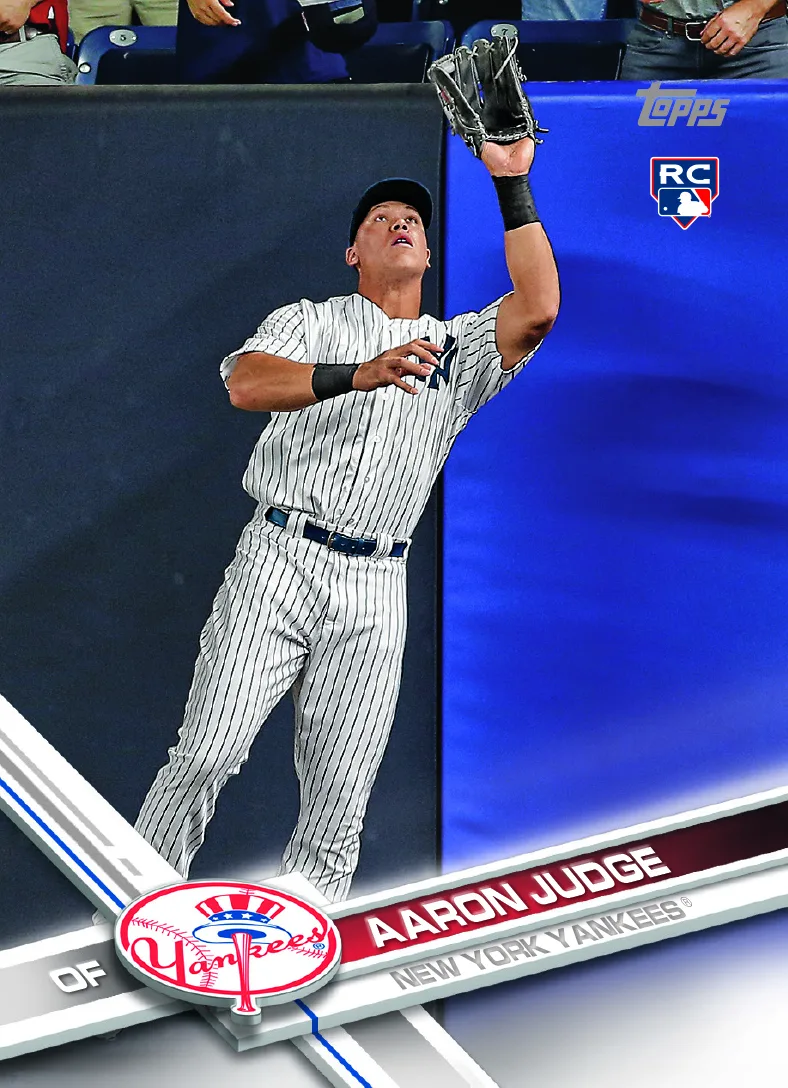
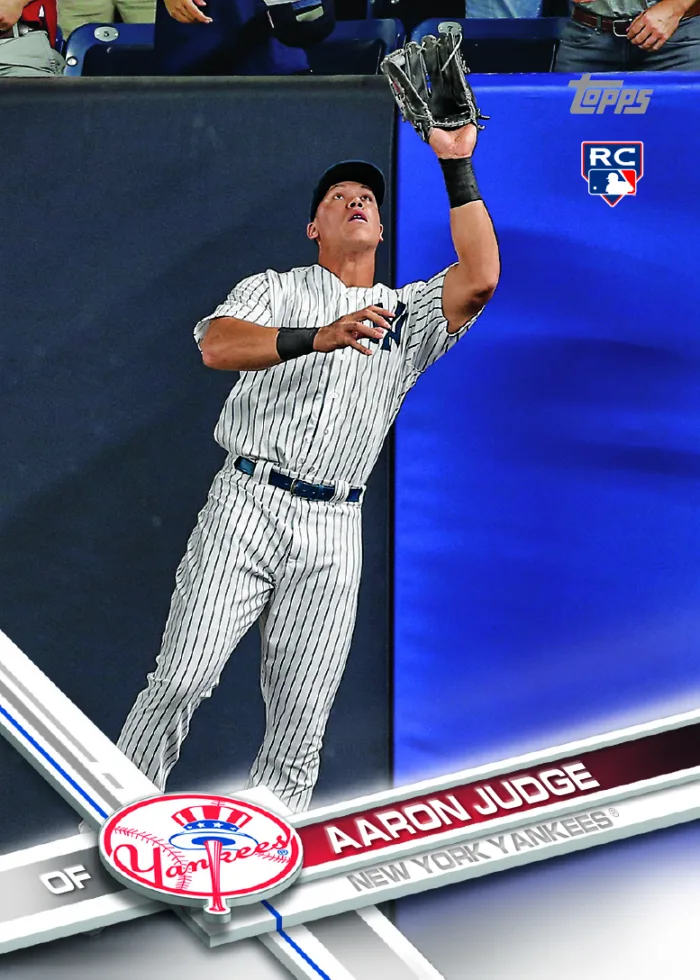
2017 Topps Series 1 Baseball Aaron Judge RC #287
Historic rookie seasons have a way of transforming The Hobby, and few did it faster than Aaron Judge in 2017. After barely holding onto a roster spot in spring training, Judge opened the season on a tear and quickly became baseball’s biggest attraction, redefining expectations for rookie sluggers. His rise turned the card into an instant modern classic, and his continued achievements, including multiple MVP awards and the American League home run record, have only fueled demand. To commemorate Topps’ 75th anniversary, a graded original 2017 Topps Aaron Judge rookie card will be available via redemption in 2026 Topps Series 1 Baseball.
- Find this Iconic Topps Buyback in 2026 Topps Series 1 Baseball
- Find the 2017 Judge on Fanatics Collect
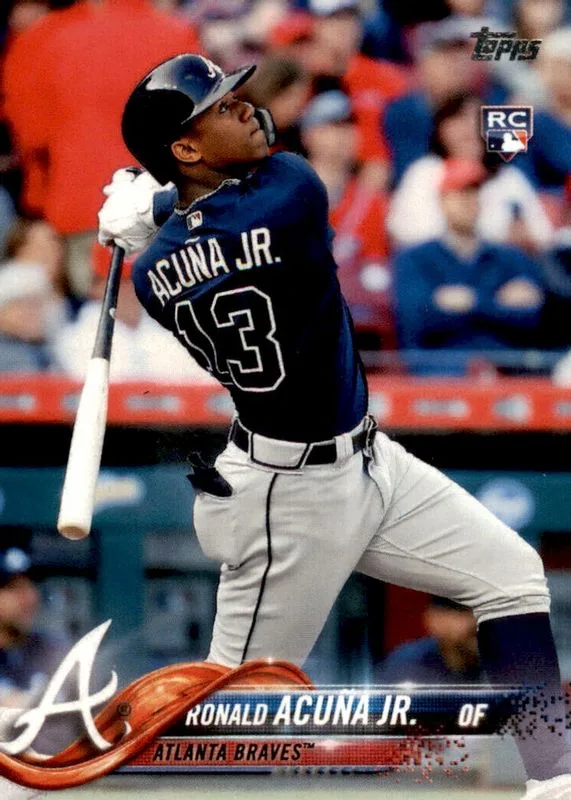
2018 Topps Series 2 Baseball Ronald Acuña RC #698 Bat Down SP
Ronald Acuña Jr.’s most iconic flagship rookie emerged in 2018 as an unannounced short print tucked into Series 2 packs, instantly becoming one of the defining modern chase cards. Produced in far smaller quantities than standard base cards, the variation was a deliberate late addition that rewarded a handful of lucky collectors while fueling widespread pursuit. Its status has only grown as Acuña’s career reached elite territory, highlighted by an NL MVP award and a historic 40 home run, 70 stolen base season. The card’s mystique, scarcity, and connection to Acuña’s Major League debut moment helped ignite pack-breaking excitement and cemented its place as one of the most sought-after modern rookie cards in The Hobby.
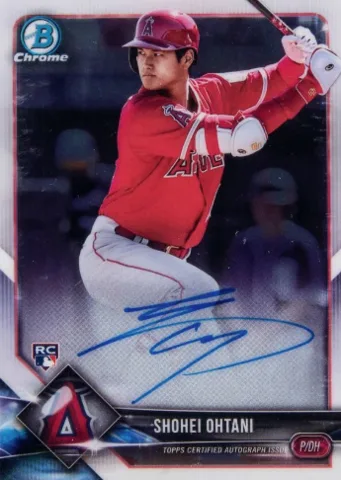
2018 Bowman Chrome Baseball Shohei Ohtani Bowman Chrome Rookie Auto #BCRA-SO
Shohei Ohtani’s arrival in North America was marked by the release of his first MLB-licensed, on-card autograph. This card quickly became one of the most important modern collectibles in The Hobby. Introduced as Ohtani began redefining what was possible as a two-way superstar, the autograph captures the start of a career often compared to the game’s all-time greats. Demand has been driven by its early place in his collecting timeline, the prestige of a Bowman Chrome autograph, and the presence of scarce low-numbered parallels, including ultra-rare versions signed in Kanji. With hard-signed autographs and both batting and pitching image variations, the card stands as a defining collectible tied directly to the beginning of Ohtani’s historic Major League impact.
The 2020s
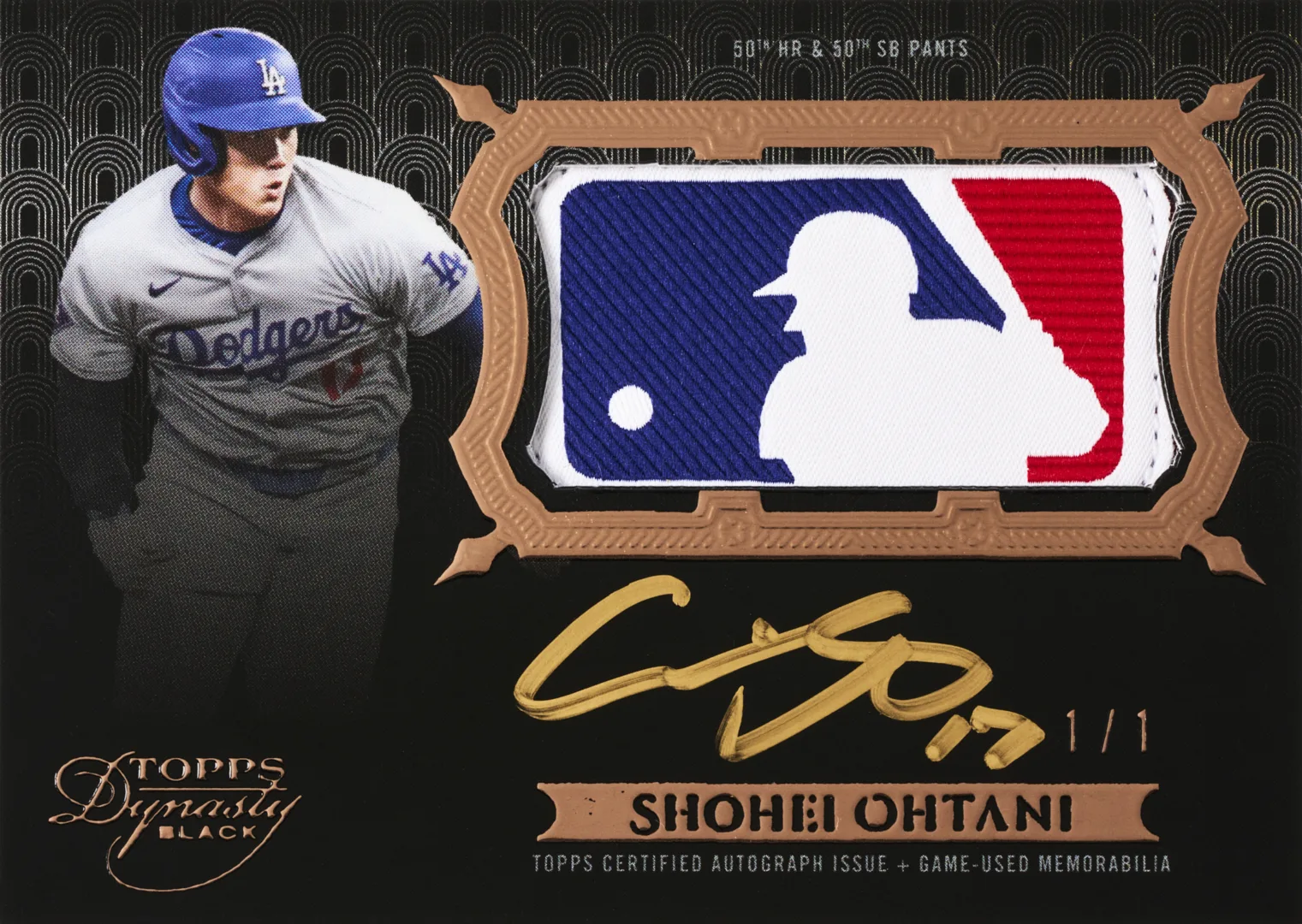
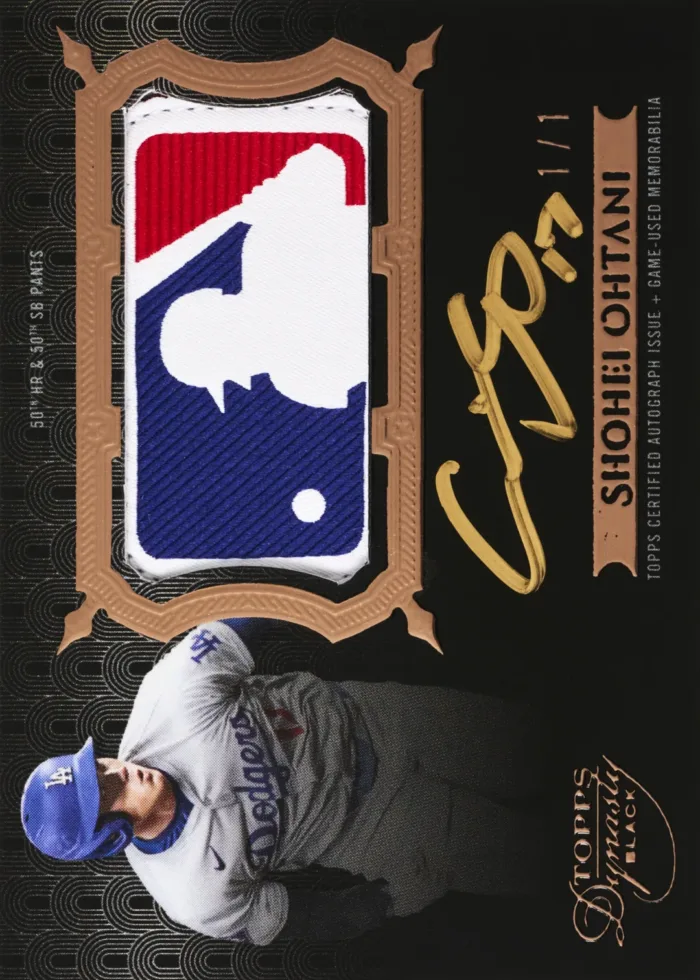
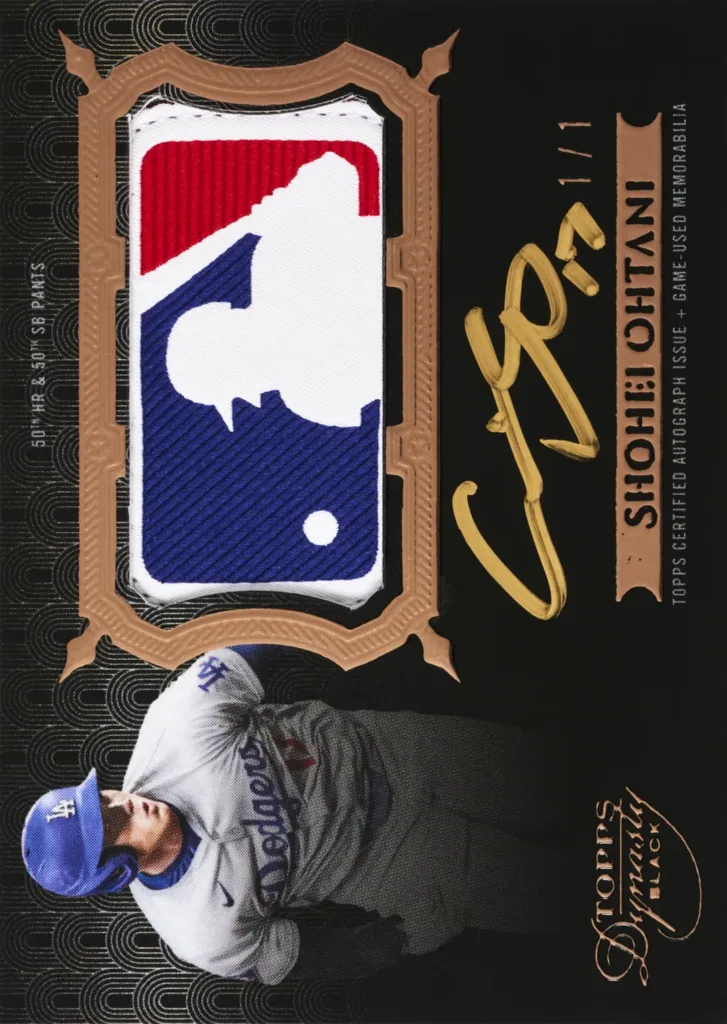
2024 Topps 50/50: Shohei Ohtani Dynasty Black Autographed Relic Card #SOD1
Shohei Ohtani’s historic 50 home run, 50 stolen base season in 2024 was commemorated with an ultra-premium release from Topps Dynasty Black, creating one of the most coveted modern collectibles in The Hobby. Designed to memorialize a singular, record-setting achievement, the card features extremely limited production and, in its most desirable forms, autograph relics containing game-worn material tied directly to the milestone moment. With Black parallels numbered as low as ten and select one-of-one creations, scarcity plays a central role in its appeal, underscored by headline-making sales that reached seven figures. As the debut release for the Dynasty Black line, the card set a new standard for how baseball’s most extraordinary accomplishments are preserved on cardboard, aligning Ohtani’s global star power with one of the most significant feats the sport has ever seen.
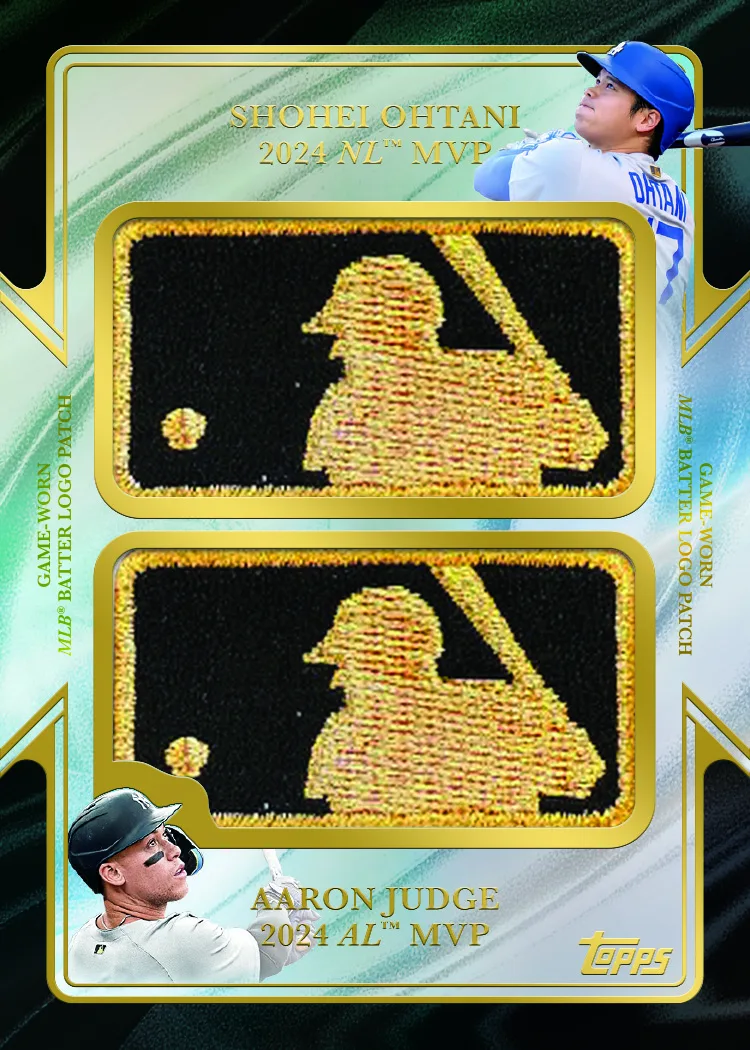
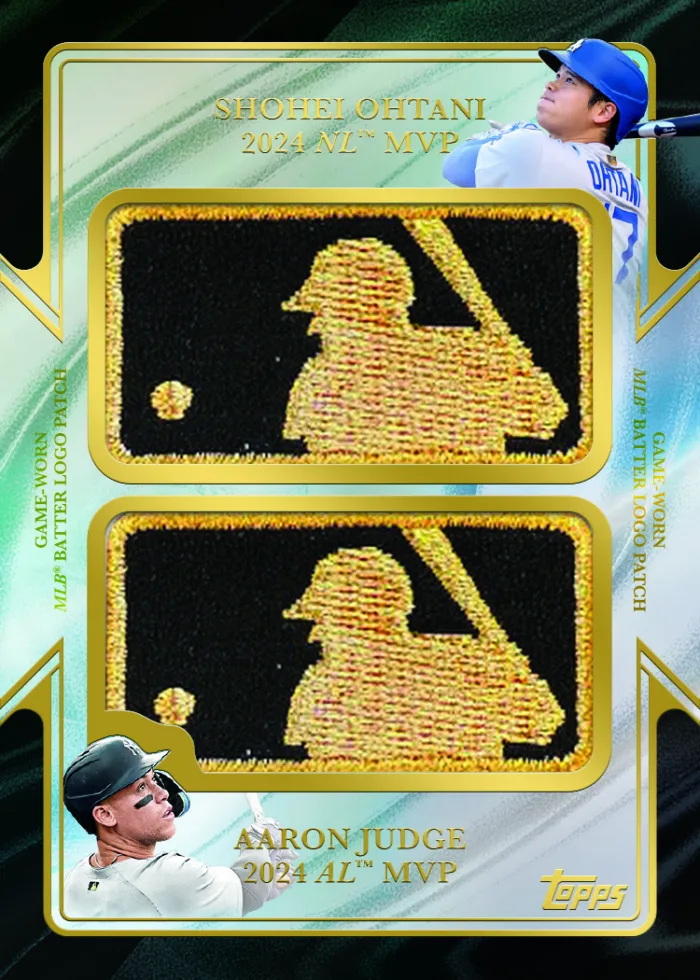
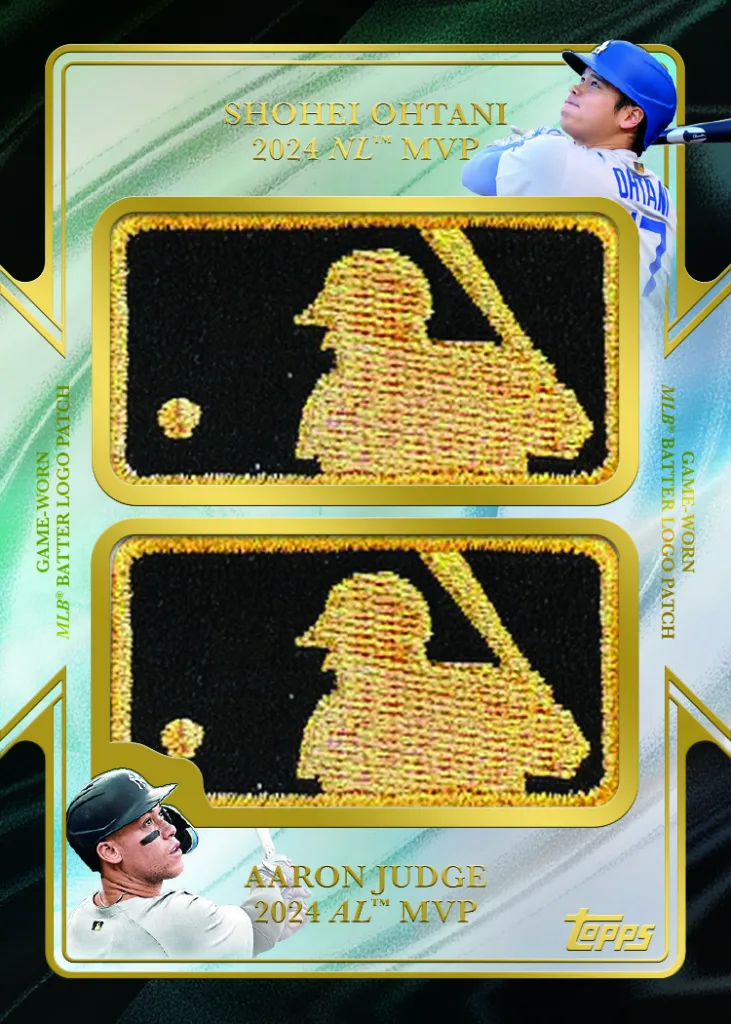
2025 Topps Chrome Baseball Shohei Ohtani/Aaron Judge MLB Gold Logoman MVP Dual Auto #GLD-OJ
Two of the game’s biggest stars were united on a single card when Topps brought together Shohei Ohtani and Aaron Judge for a one-of-one dual autographed Logoman release celebrating their 2024 MVP seasons. The card captures a rare moment in baseball history, pairing the National League and American League MVPs at the height of their powers after simultaneous, back-to-back award-winning performances. Each autograph is accompanied by a game-worn Gold MLB Logoman patch, authenticated and traceable to specific games, adding a layer of verifiable history to an already elite collectible. With only one signed version in existence and intense demand driven by both players’ global profiles, the card became the most anticipated chase in 2025 Topps Chrome and one of the most talked-about modern creations in The Hobby.
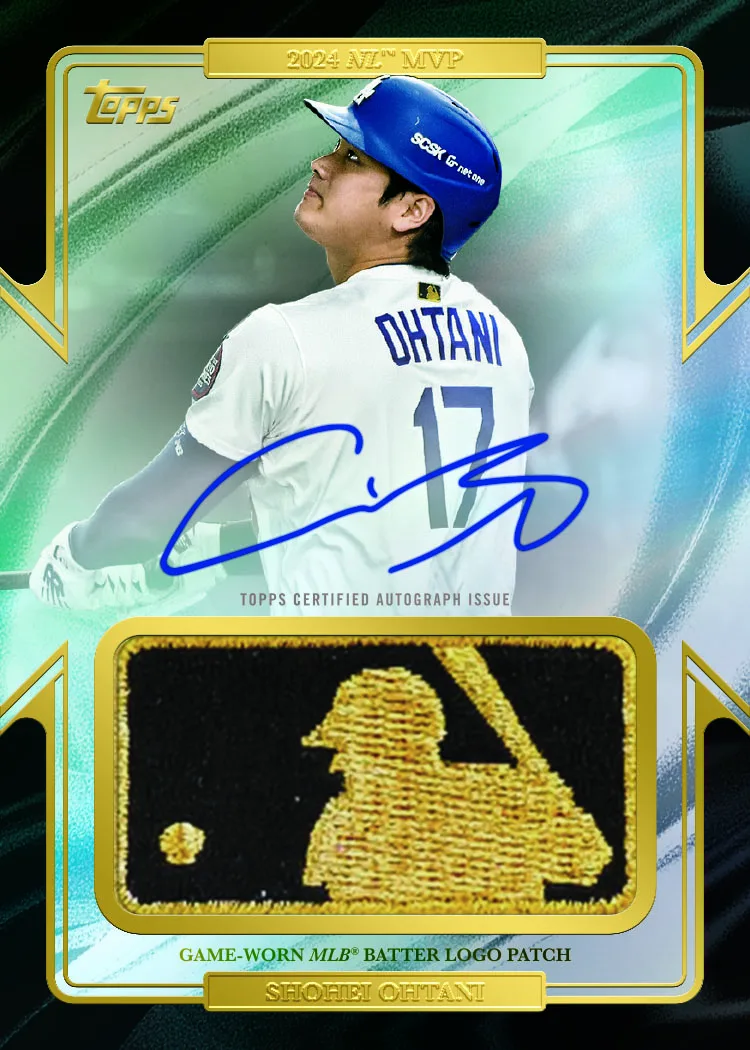
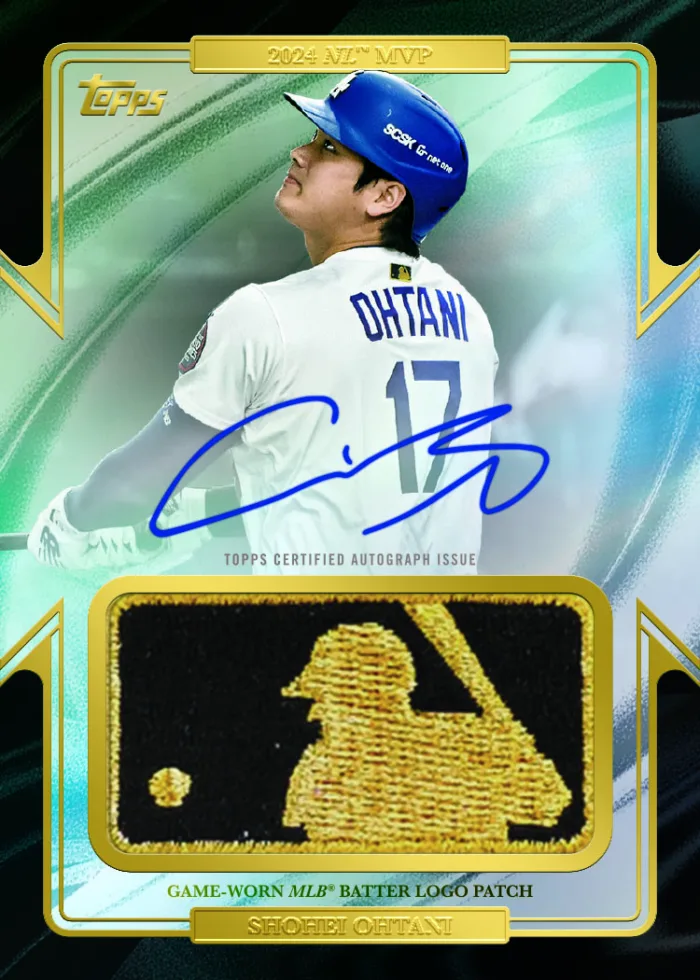
2025 Topps Chrome Baseball Shohei Ohtani MLB Gold Logoman MVP Auto #GOLDA-SO
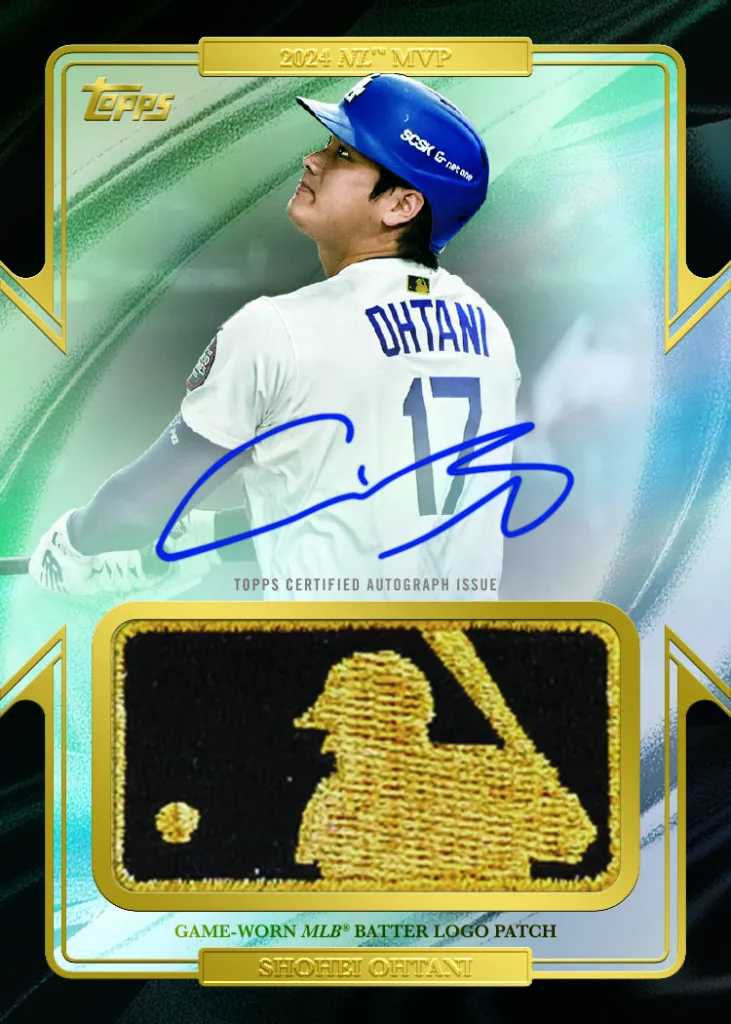
Shohei Ohtani reached a new collecting milestone with a one-of-one Gold Logoman autographed card that paired extreme rarity with verifiable, game-worn history from his 2025 season. Featuring a gold MLB logo patch taken from a uniform worn on April 29, 2025, the night Ohtani hit his seventh home run of the year, the card ties directly to a documented moment on the field. Created to honor his 2024 National League MVP award and issued during a season that included his unprecedented 50 home run, 50 stolen base achievement, the card captured global attention when it sold for $3 million at auction, setting a new record for an Ohtani card and the modern Hobby. With its singular existence, authenticated memorabilia, and connection to a generational talent, the card stands as one of the most significant modern baseball collectibles ever produced.
More Topps Baseball
-
Bowman Baseball Product History
-
1996 Topps Chrome Football: The Start of a Hobby Tradition
-
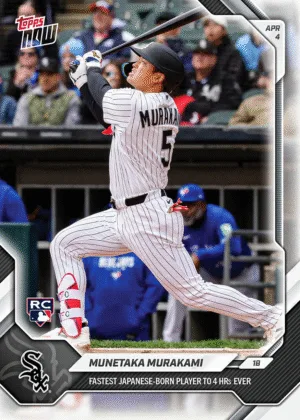
Vote on the 2026 MLB Topps NOW Player of the Week: Mar. 30 – Apr. 5
-
Bowman Red RC Redemption Returns Soon
-
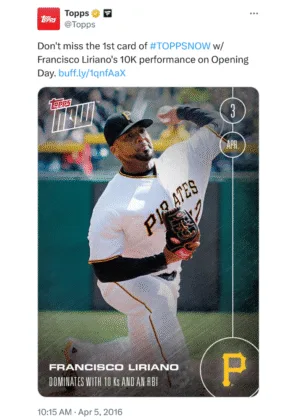
Topps NOW® Brand History | 10-Year Anniversary
-

TOPPS NOW® Photogs Tell All | 10-Year Anniversary Celebration
-
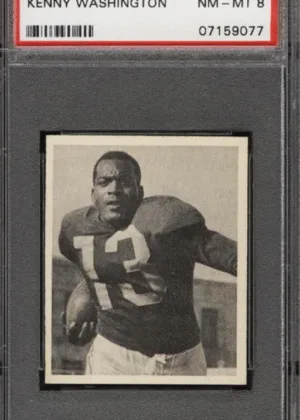
How 1948 Bowman Football Paved the Path for NFL Cards
-
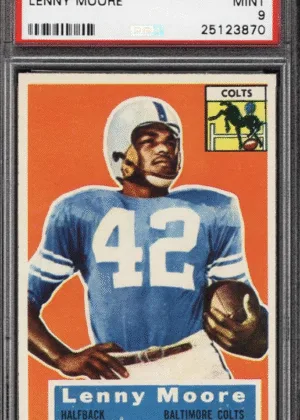
1956 Topps Football | The Start of a Hobby Tradition
-
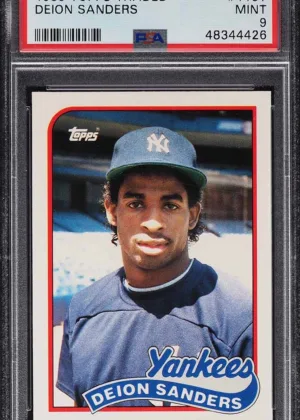
Office Hours | Sports Switchers
-
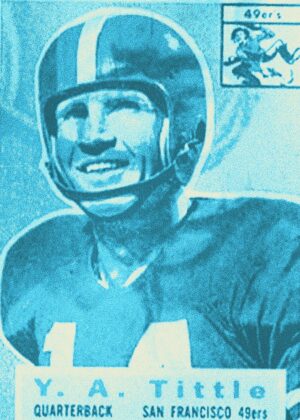
Football and The Hobby
-
Topps Changes the Game with MLB The Show 26
-
Women’s History Month Spotlight: Content Creators in The Hobby
-
Topps NOW Celebrates MLB Opening Weekend 2026
-
Topps Transcendent Collection Baseball Product History
-
2025 Topps Transcendent Collection Baseball Collector’s Guide
-
Topps Chrome® Black Baseball Product History
-
2026 MLB Opening Day Meets Topps Series 1 Baseball
-
Topps Collector Kit Is Built for Your First Rip
-
Topps NOW Celebrates Venezuela’s Historic World Baseball Classic Victory


