
Collector Eric Mandelkern on Prospecting with Bowman
The release of 2026 Bowman Baseball is a big moment for The Hobby. The first prospect-focused release of the season, it sets the tone for the year-long chase of baseball’s future stars. Headlined by iconic 1st Bowman cards of the sport’s brightest young talent, the set is a perfect place to start a prospecting journey.
As we get closer to release day, Topps RIPPED sat down with high-end prospector Eric Mandelkern (@kernscards on Instagram) to learn about the art and joy of prospecting, how he builds his chase, and his advice for collectors just starting their own prospecting journey.
Bowman Baseball prospecting focuses on collecting early cards of young players before they reach the majors, including iconic 1st Bowman offerings. The annual release helps identify talent early and often hosts major collection centerpieces, making Bowman a cornerstone product for collectors targeting future MLB stars.
Bowman Baseball: The Master’s Degree of Card Collecting
“Bowman is not the 101 of card collecting,” Eric Mandelkern told RIPPED. “Let’s call it the master’s degree.” For him, fandom was the initial spark, which led to a lifelong deep-dive into The Hobby.
“I’m a big Mets fan, and I’ve always had a love for the farm system,” Mandelkern explained. “Watching these prospects, through their early career, ultimately coming up to the big leagues. I started collecting baseball and somebody told me to look into Bowman.”
For Mandelkern, like most collectors, there was a learning curve. “I made some mistakes, for sure. I mean at first I didn’t really understand the difference between Bowman, Bowman Sterling, Bowman Chrome, Bowman Draft. But eventually, I found my way. I started buying different parallels, autographs.”
Mandelkern focused first on what players he liked, but he also paid attention to fans and collectors outside his niche. “Sometimes I’d get prospects I’d sort of jump on the train with, or I heard people mention,” he said. Starting with more accessible singles, he learned on the fly, eventually scaling up to higher-end Bowman cards.
“As I became more knowledgeable in Bowman, I started targeting the really scarce cards,” he explained.
That began with Oranges /25, Reds /5, and Superfractor 1-of-1 cards. “I started moving toward the top end because I didn’t like playing the comp game, and it felt like I had more control,” Mandelkern said.
Today, after years of work and fine-tuning his process, he prefers to go all-in on a small number of prospects he really loves and getting as many of the top-tier cards as possible.
The Alchemy of Prospecting
When it comes to this style of collecting, Mandelkern feels as much like a scout as he does a collector. He said that the elements of choosing who to chase are a combination of what he believes to be the on-field upside of the player, and his status in The Hobby — both in the present and projected into the future.
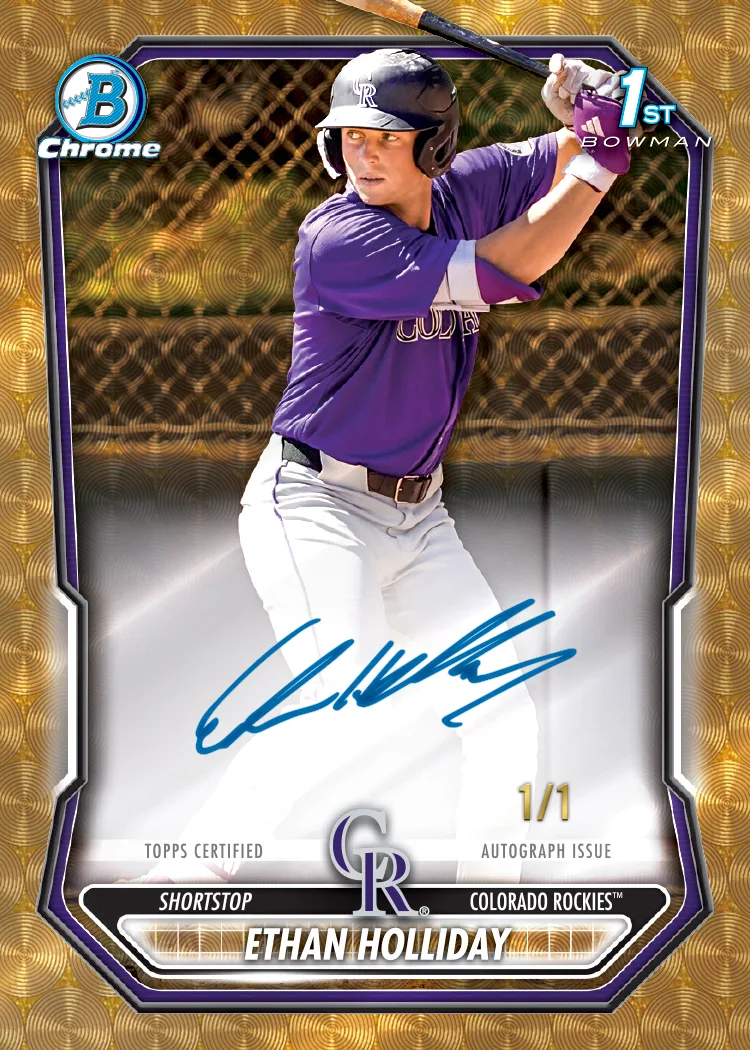
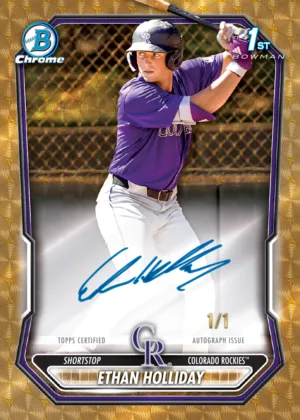
To be sure, there are truly elite prospects who are going to drive the chase every season, whether it’s Paul Skenes or Jasson Dominguez, or in the case of this season, top prospects like Ethan Holliday or Edward Florentino. But for Mandelkern, it’s also about digging deeper.
“I might wait on guys like that, and go in if I end up liking them. But the key, for me, is not following what everyone is doing. I try to target on upside and projection set against their current status.”
Trusting the Process
For those getting deeper into prospecting, Mandelkern emphasizes one thing over all others: “Knowledge and information is the most important part. Do your research.” For him, that spans the baseball world, from stats to analytics, scouting reports, and other sources of intel. “I have some resources that really help, I’ll go to scouts, current players. I try to get an inside scoop.”
Prospect ranking lists like MLB Pipeline’s Top 100 are frequently used by prospectors to get a sense of player potential, but these often show players who are already being chased at a high level. “Typically, I look for players either on the outskirts of the top 100, at the very bottom end, or preferably not even on the top 100,” Mandelkern said.
Another avenue Mandelkern recommends is finding podcasts to expand your knowledge base. “I pretty much only listen to baseball scouting podcasts,” he explained. In fact, the collector has ventured into podcasting himself with The Sports Card CEO Podcast.
Scouting reports and intel are of great use, not just when projecting a player’s potential, but also when trying to gauge what impact the athlete could have on The Hobby. “For example, a scout says based on upside, there’s a catcher that looks great, but maybe he has no power, just a great hit tool,” Mandelkern explained. “That might not play as well in The Hobby.”
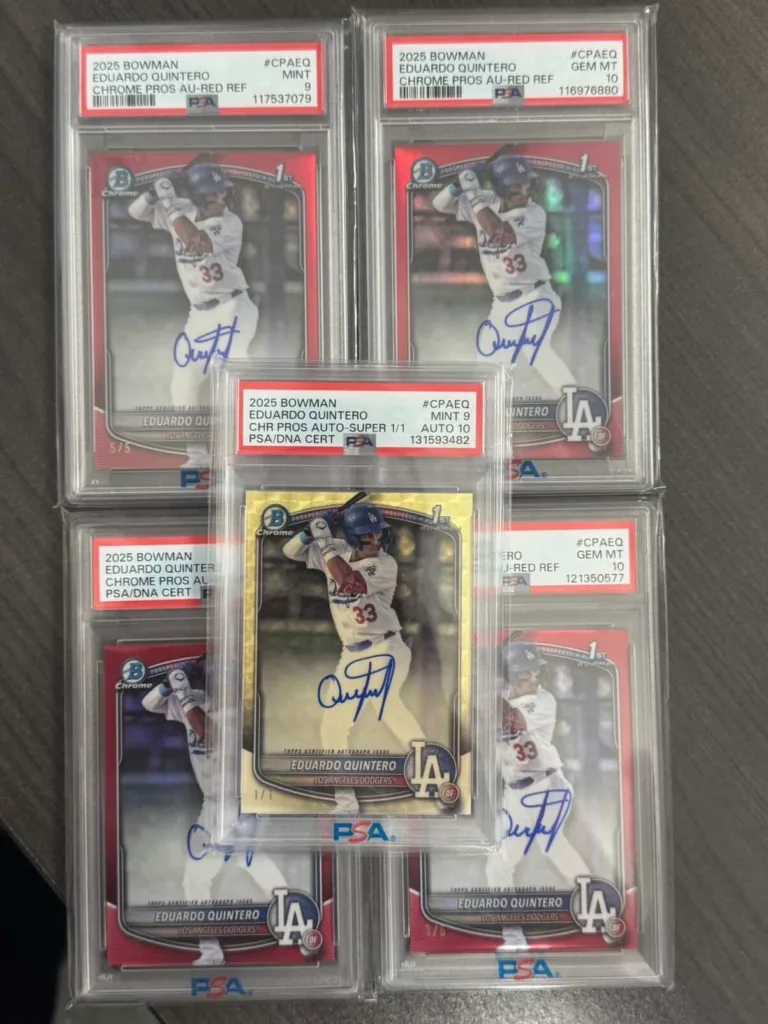
Another element of Mandelkern’s process when looking for prospects to chase is to identify teams who have a track record of developing young players into big league stars. “I’m drawn to prospects from organizations with great development programs,” he said, “teams like the Brewers and the Dodgers.”
When it comes to Milwaukee, Mandelkern sensed an opportunity after doing his research. “Obviously Jesús Made was a huge chase in Bowman, everyone was after him,” he said. “But I was buying everything I could of Luis Peña. Everybody in the organization was saying that the gap between the two players was small.”
Finding intel from solid organizations can lead to some great hits. “I look for those second or third tier guys in these organizations,” Mandelkern said, “because if they have upside and do develop well, they’ll shoot up the rankings.” Today, Peña is behind only Made on Milwaukee’s prospect rankings, and at writing, he was ranked No. 20 on MLB Pipeline’s top 100.
Targeting Players Early
Once you’re confident in your process, it can help you chase players early — ideally before they have breakout moments on the farm or in The Show. “My first in The Hobby, in 2023, was Jett Williams,” Mandelkern said. The Mets prospect wasn’t in the Top 100, but Mandelkern felt an emotional tie, along with significant upside. He scooped up everything he could.
Williams is still in the minors, now with the Brewers, but Mandelkern said he’s done very well with the shortstop’s cards as his career has developed. “It doesn’t need to be a superstar,” the collector explained. Jett Williams is currently #44 on the MLB Pipeline top 100.
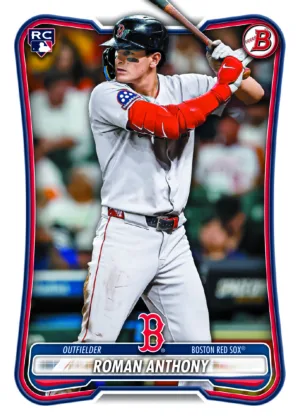
That’s not to say that Mandelkern’s collection lacks for star power. A glance at his Instagram page (@kernscards) reveals a who’s-who of top young talent. From breakthrough stars like Junior Caminero and Jackson Chourio, to phenoms on the rise like Konnor Griffin and Roman Anthony, Mandelkern has put together a collection that’s the envy of many prospectors throughout The Hobby.
While prospecting and projecting is his main focus, he still finds himself collecting players just because he loves them. “Frank Thomas was my favorite player growing up, and now that I can, I will grab high-end cards of his where I can,” Mandelkern said. “I still collect things that are nostalgic for me, or even just if I like the card. Stuff that will stay in my PC forever.”
Advice From a Top Prospector
For Mandelkern, curiosity is always a strong starting point in the world of prospecting. “Research, for sure, but also ask questions,” he said when asked what advice he’d give newer prospectors. “Find people collecting what you would like to collect and learn.” Most often, he says, people in his sector of The Hobby love being asked questions about cards, releases, player potential, scouting reports, and so on.
“It’s a mutually beneficial relationship,” Mandelkern he explained. “People will ask me as well, advice on cards, value, players. We help each other out like that.”
For those getting started in prospecting, Mandelkern believes that if you do the work and find players before they break big, it can be an accessible entry point for collecting. To start with, he recommends collecting Bowman base autos of prospects you love and those whose potential you believe in.
At the end of the day, though, his advice is simple: “Collect what you like. You know what I mean? Forget money. If you bought the card, if it stayed in your collection, would you be happy with it?”
2026 Bowman Baseball FAQ
- What is Bowman Baseball prospecting?
- Prospecting is the practice of collecting early-career cards — especially 1st Bowman cards — of players before they become MLB stars.
- Why are 1st Bowman cards important?
- 1st Bowman cards represent a player’s first official Bowman release and are often among the most valuable long-term cards if the player succeeds.
- How do collectors choose which prospects to chase?
- Collectors evaluate player performance, scouting reports, team development systems, and long-term upside rather than just current hype.
- What is the best advice for new card prospectors?
- Start with affordable cards, research players thoroughly, and collect prospects you believe in rather than following trends.
Key Facts
- Product Focus: 2026 Bowman Baseball kicks off the prospecting season
- Core Concept: Built around 1st Bowman cards of top MLB prospects
- Collector Strategy: Target upside, scouting intel, and long-term projection
- Prospecting Approach: Emphasizes identifying talent early
- Hobby Insight: Combines analytics, scouting, and personal preference in collecting
More Bowman Baseball
-

2026 Bowman Baseball | Biggest Pulls So Far
-
Collect the Top Bowman Baseball Prospects of All Time
-
Chasing Bowman Baseball: Prospecting Tips from an Expert Collector
-
2026 Bowman Baseball Anime Kanji Variation Behind the Design
-
2026 Bowman Baseball Chrome Prospect Packfractor: Behind the Design
-
2026 Bowman Baseball Collector’s Guide
-
2026 Bowman Baseball Top Prospects to Collect


