
A Brief History of the Iconic Topps Release
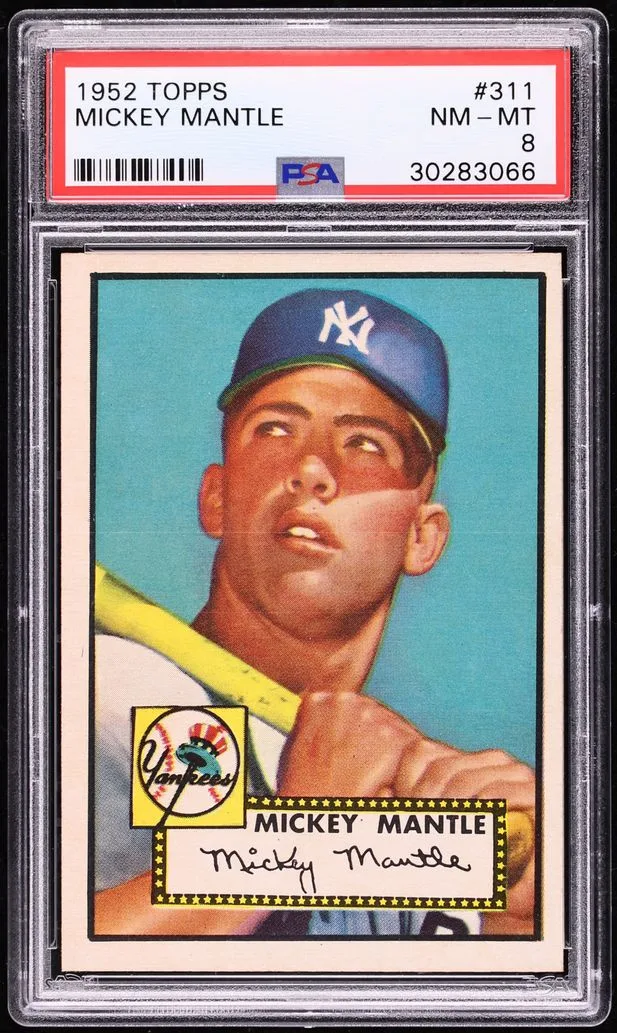
As Topps continues its year-long celebration of the 75th Anniversary of Topps Baseball, RIPPED is taking a look back at the set that, in many ways, started it all. 1952 Topps Baseball, which features the holy grail of modern sports card collecting, the ’52 Mantle, was a blend of product innovation, a leap forward in design, and a moment meeting the market.
It was the ushering in of a golden age, the nostalgia for which would help take us from the phenomenon baseball cards became in the ’50s to The Hobby we know and love today.
1952 Topps Baseball is widely regarded as the set that helped define the modern baseball card hobby. Known for its larger card size, colorful design, player stats on the back, and the iconic Mickey Mantle card, the release transformed baseball cards from simple gum inserts into lasting collectibles with historic significance.
The chase for a graded 1952 Topps Baseball Mickey Mantle card in 2026 Topps Series 1 Baseball quickly became one of the biggest stories in The Hobby. And while the sheer value of a ’52 Mantle is a story itself, the joy in the chase is about more than that. It gets to the heart of The Hobby — the power of an image and an icon, the strength of nostalgia and memory, and the gravity of a card, and set, that still matters so much, three quarters of a century later.
Through interviews with Topps Senior Director of Product Marketing Jeff Heckman, author Dave Jamieson (@jamieson on Bluesky), writer Jason Schwartz (@heavyjstudios on Bluesky) from Collecting on SI, and Glenn Berger, son of one of the true protagonists of this story, Topps RIPPED took a trip down memory lane to get a sense of how 1952 Topps Baseball happened, why it matters, and how it still resonates today.
Topps Baseball: How it all Began
The man who helped launch Topps into the world of trading cards, Sy Berger, was one of the most influential personalities in the history of The Hobby. Dave Jamieson, author of Mint Condition: How Baseball Cards Became an American Obsession, recalled an interview with Berger on the beginning of what would become a Hobby legacy.
“He had been charged with developing a set to take on Bowman, which had been putting out decent cards for a few years,” Jamieson said. “Topps saw a real opportunity.”
At first, it wasn’t just about the cards. “Topps was trying to sell more bubble gum,” Topps Senior Director of Product Marketing Jeff Heckman explained. “So they thought, ‘Hey, we’ll offer cards to get kids to buy more bubble gum.’ Up to that point, cards had been used mostly in tobacco products.”
Berger’s son Glenn remembers that early era well. “At the office in Brooklyn, you could smell the bubble gum from the factory,” he told RIPPED. “The offices had these glass partitions, and you could smell the gum coming up from the production floor.”
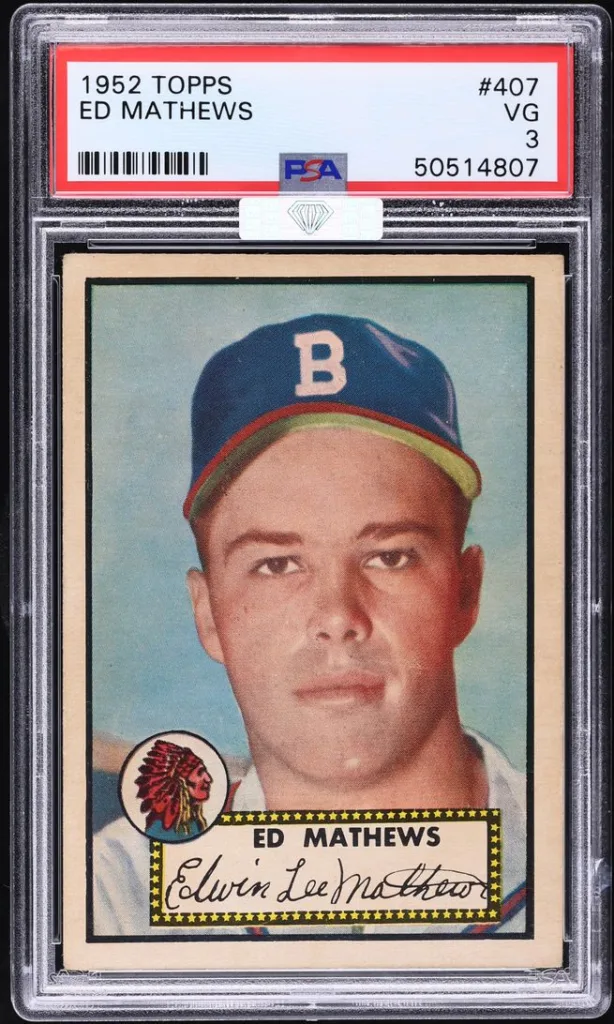
In those Topps offices, Hobby history was born. “My father was very creative, very modest in some ways, but also a storyteller,” Glenn Berger explained. “Jay Shorin gave him six months to develop and prove a concept. And that concept, I think, was putting statistics on the back of baseball cards.”
To make it happen, Sy teamed up with Topps artist Woody Gelman. “It was a great partnership that helped make the set what it was,” Jamieson told RIPPED.
Berger’s vision and Gelman’s artistry was exactly the alchemy needed to make Hobby history.
1952 Topps: The Making of the Modern Baseball Card
As explained by Dave Jamieson, part of the ’52 Topps story is about business, and Topps pushing hard to secure rights and establish themselves in the market to compete with Bowman. But that’s only one side of it.
“It really is an artistic story, through Gelman and Berger,” Jamieson said. “They did really novel things with the design. Their card set the table for a golden age.”
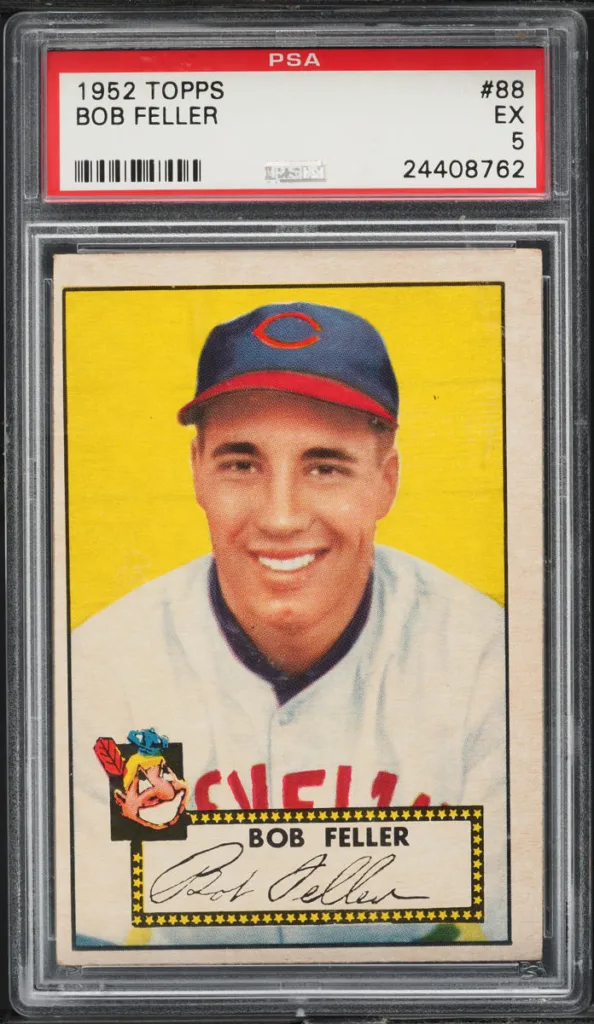
The innovation started simply, with the dimensions of the cards themselves being a primary point of focus. “Tobacco cards were tiny,” Heckman explained. “Mini cards you could stick into the back of a pack of cigarettes. Today, it’s just accepted that the modern baseball card is two-and-a-half by three-and-a-half inches. But that size had never been used before the 1952 set.”
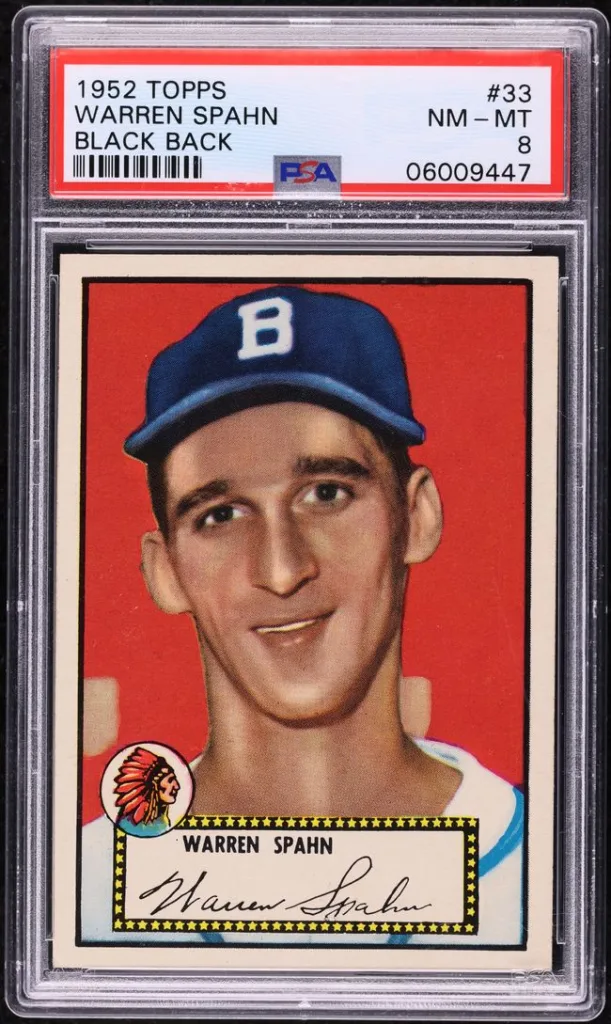
“They were substantially bigger, and that was intentional,” Jamieson explained. “They were something you could fling and flip a lot better than earlier cards. They felt more substantial.”
The size of the cards helped to mark a shift in focus. While the gum was the established product for Topps, the cards quickly drew a lot of attention.
“There was always this chicken-and-egg thing with the cards and the gum,” Jamieson said. “You almost wondered which they were really trying to sell. The size helped make the cards the thing.”
Innovation, Front and Back
Jason Schwartz, writer for Collecting on SI, touched on why 1952 Topps Baseball was able to separate itself from the crowd. “Kids noticed the differences between Topps and Bowman right away,” he said.
“Bowman cards were tiny, had bios but no stats on the back, and in 1952 had player signatures rather than typed names. All of a sudden, here’s Topps with cards nearly double the size, actual photographs (with color added), player names prominently displayed, and actual stats. It was like 10 years of innovation had happened in the blink of an eye.”
The combined effect spoke for itself, and baseball fans quickly took notice.
“Another flourish was the space for the autograph on the front,” Jamieson added. “The team logo, too. That’s another thing we now take for granted, but it wasn’t common then.”
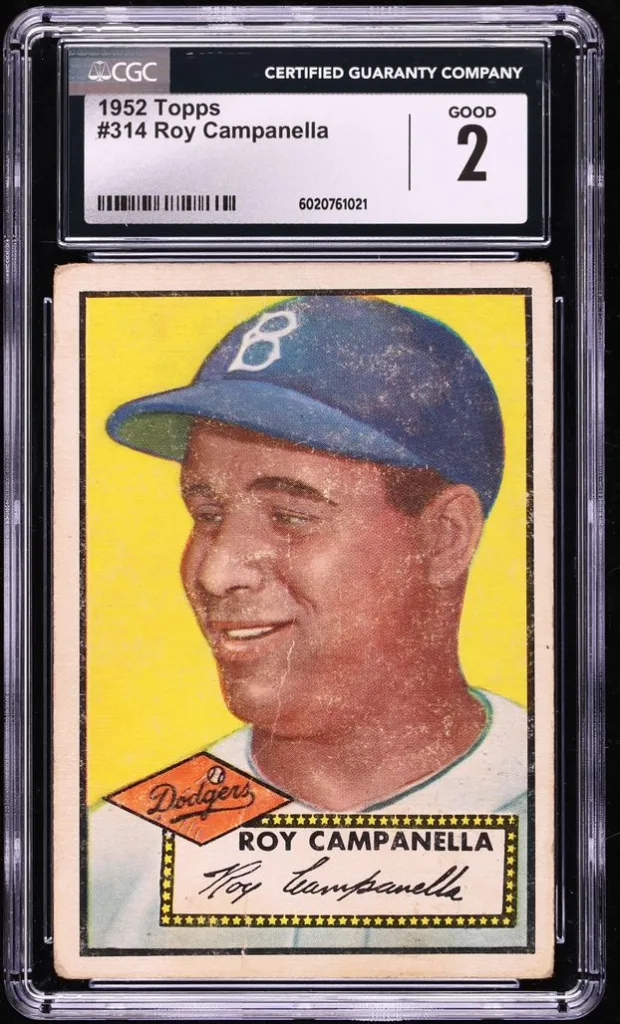
The quality photographs popped out of the hand, and they were mission-critical in creating some of the most enduring card images in the history of The Hobby. “That was really Woody’s design sense,” Jamieson said. “They’re just really good-looking cards.”
While the size and style caught the eye, the stats and story on the card back captured the imaginations of young collectors everywhere, bringing them into the sport in a way never seen before. It’s important to remember how little even a diehard baseball fan would see and know about players around the country at the time.
The game was changing in other ways in the early ’50s. The All-Star Game was televised for the first time, and in 1951, the first coast-to-coast MLB telecasts started, delivering Bobby Thomson’s “Shot Heard ‘Round the World” to fans across the country. Putting the story stats of these players right on the cards helped to bring the sport to life in a whole new way.
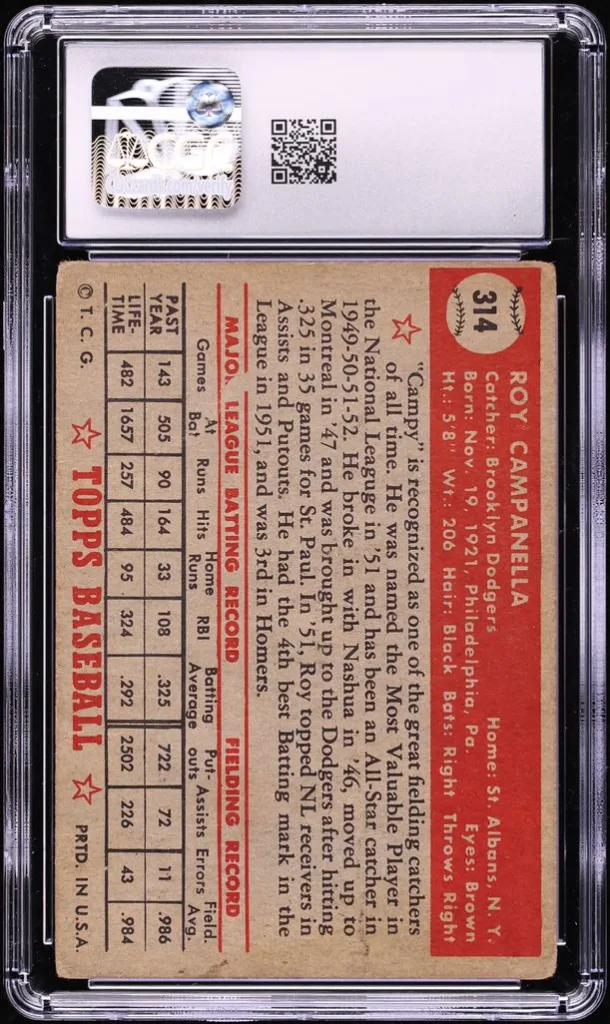
“Most kids had never even seen most of these players play,” Schwartz explained. “If a kid in Philly heard from his cousin in Cleveland that Early Wynn was better than Robin Roberts, how would he know? Well, now he could look at the stats and decide for himself!”
Glenn Berger remembers his father pouring over the stats, putting in long hours to get everything just right. “Dad would sit at the dining room table after dinner with these long yellow legal pads, calculating batting averages,” he said. “There were no services at the time, so he would write out the numbers with a fountain pen. I always imagined that what he was doing was working out the batting averages that would go on the cards.”
A Baseball Card Set Built for Kids
While the cards hardly started out as collectibles, Jamieson noted, “They were a phenomenon in the ’50s.” And at heart, they were for kids. “They were meant to be put in bike spokes, scaled against the wall,” Glenn Berger said. “You played with them, you traded them.”
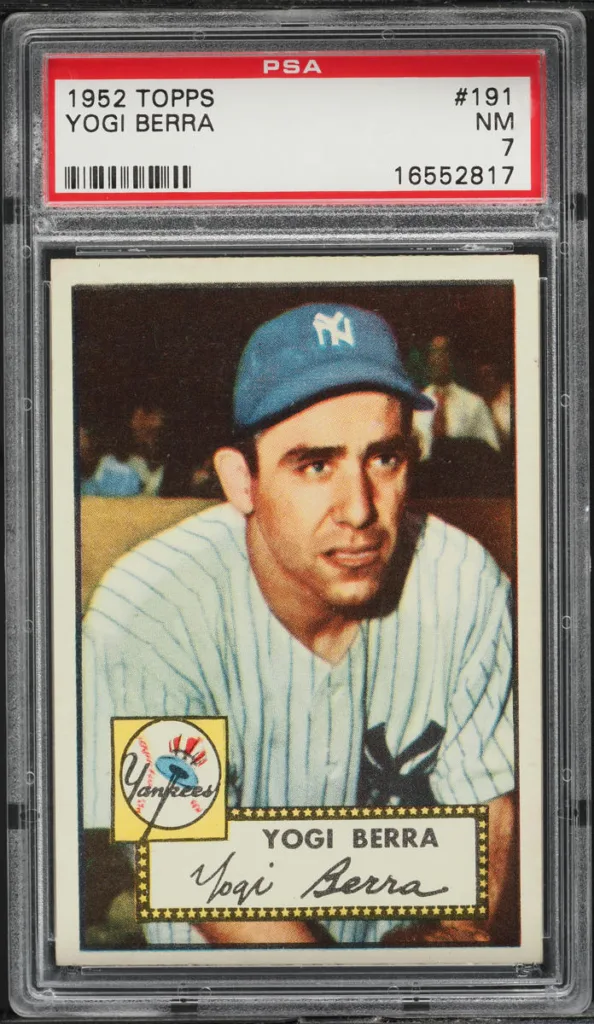
While the Golden Age was built on this play, in a way, it also paved the way for long-term collectability. After all, if most of the cards were opened and flipped in playgrounds across the land, finding them decades later in good condition would not be the easiest feat. Without this period, where the cards were primarily just for fun, the foundation of joy and nostalgia that built the modern Hobby may never have come.
Even the visionary Sy Berger didn’t see it coming. “If he had,” Glenn Berger said, “he’d have put those Mantles away.”
From Ephemera to Collectible
While baseball cards were a hit in the ’50s, it wouldn’t be until decades later that they really emerged as a focus for long-term collecting. “It began as its own fringe world,” Jamieson said. “There were people with vans driving around the country, looking through classified ads, trying to get old cards out of people’s attics.
“Cards were not thought of as something you held onto. People were happy to get a couple bucks to have someone take them off their hands. A small secondary market emerged in the ’70s. These, I think, were the seeds of what became the insane market of the 1980s.”
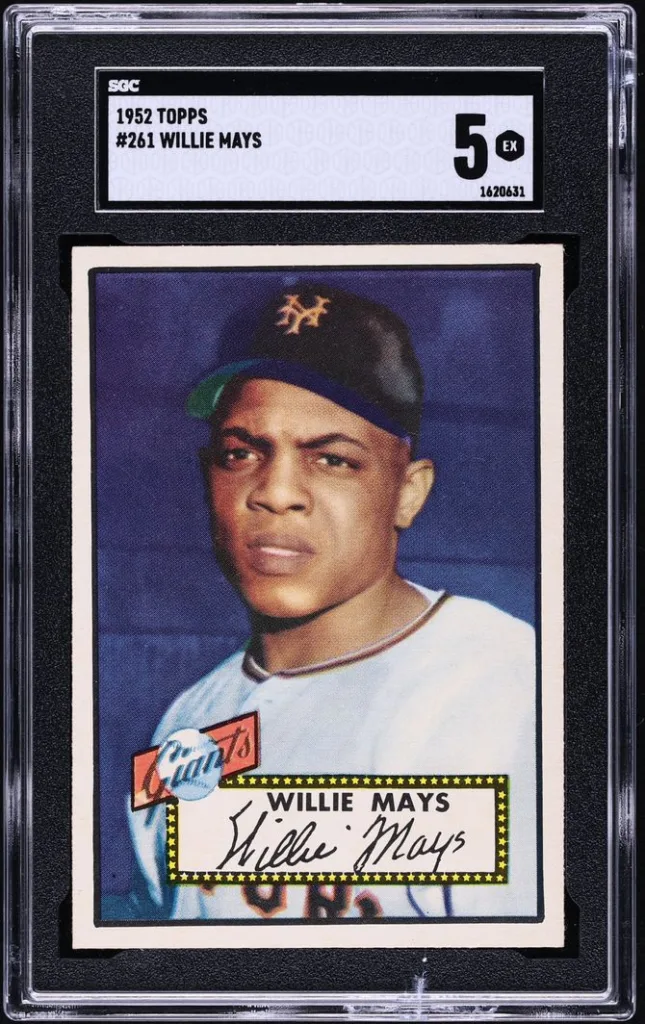
“A lot of it was nostalgia,” Heckman explained. “Kids who collected cards in the 1950s and ’60s were adults by the 1980s. They had money. They started looking for the cards they had as kids. But many of those cards had been thrown away. That made the surviving ones more valuable.”
Through the ’80s, card shops became more common. Collectors started treating cards as an investment. “People started buying Mantle cards for hundreds of dollars,” Heckman said, “which seemed crazy at the time.”
The 1952 Mickey Mantle: Myth & More
While there’s plenty more to the 1952 Topps Baseball set, there’s no doubting that the Mickey Mantle leads the way. “Whether it’s the 1952 Topps set that makes the Mantle so iconic or the Mantle that makes the set so is hard to say at this point,” Schwartz remarked. “Either way, the set and the Mantle are joined at the hip.”
The set itself was rapidly changing the market in terms of design, but Mantle became a champion of sorts to carry that vision forward to fans. “For collectors of the 1950s, Mantle held mythological status, and he still does,” Schwartz continued. “Most vintage collectors would acknowledge that Willie Mays was better, that Jackie Robinson was a more significant figure, and that Mantle’s rookie card came the year before. Still, nobody’s ever said that logic alone governs The Hobby.”
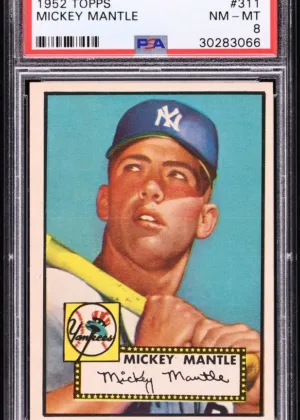
As a baseball card, Mantle’s is a platonic ideal. The image is stunning in its simplicity: his gaze, the larger-than-life player poised with his bat resting perfectly on his shoulder. It’s ingrained in the very fabric of The Hobby, capturing the moment that defined 1952 Topps Baseball, and an era that so many remember so fondly.
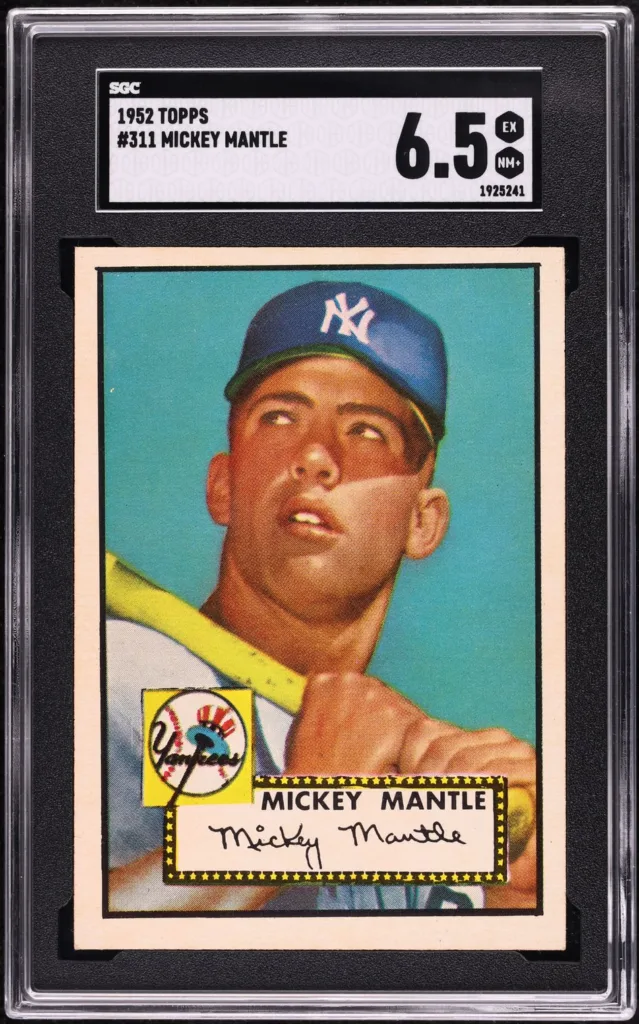
As a collectible, the card is something of a myth. “The first few series sold incredibly well,” Heckman explained, “but you don’t get to Mantle until later. He’s card #311.” At writing, there are only three recorded PSA 10 versions of the card, six PSA 9’s, and 35 PSA 8’s.
The scarcity of the card has a legend all its own. “When Topps released future sets, stores still had unsold 1952 cards,” Heckman explained. “They didn’t want more inventory. Topps ended up taking many of the unsold cases back.” As the story goes, after unsuccessful attempts to move them elsewhere, Berger paid a barge to take them out on the water and dump them. “Possibly the East River or out toward the Atlantic,” Heckman said. “No one knows exactly where.”
The truth of that story has been debated through the years, but Glenn Berger stands by it: “My dad told me — even though it’s been a controversial subject — that he hired a barge and hauled them out to the Atlantic Ocean.”
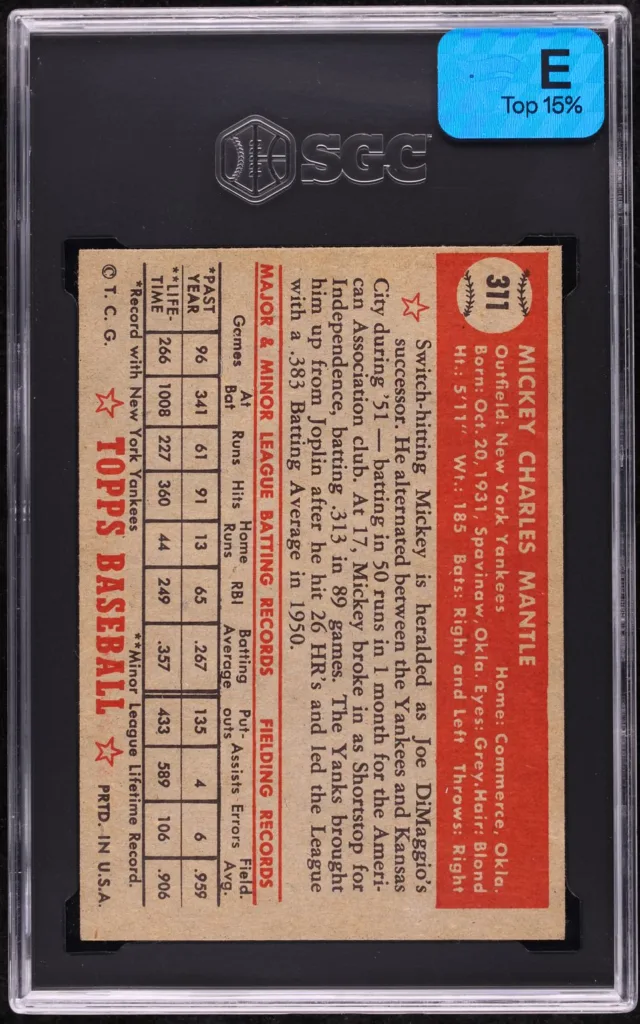
The 1952 Mantle’s place in The Hobby makes it a great example of the incredible growth of card collecting. In 1979, a Charlotte Observer article stated that the Mantle was valued at just $100. That number had already risen by 1986, when Alan “Mr. Mint” Rosen stumbled upon the biggest card find in modern history — 65 complete runs of every 1952 high-number card, including Mantle and Willie Mays. In 1991, Rosen sold one of the Mantles for $50,000 to collector Anthony Giordano.
Over the years, that price continued to rise. A PSA 9 broke $250,000 in 2006. The first million-dollar sale of a 1952 Mantle came in 2016. The all-time record is $12.6 million for the very same card sold to Giordano back in 1991.
Beyond the Mantle
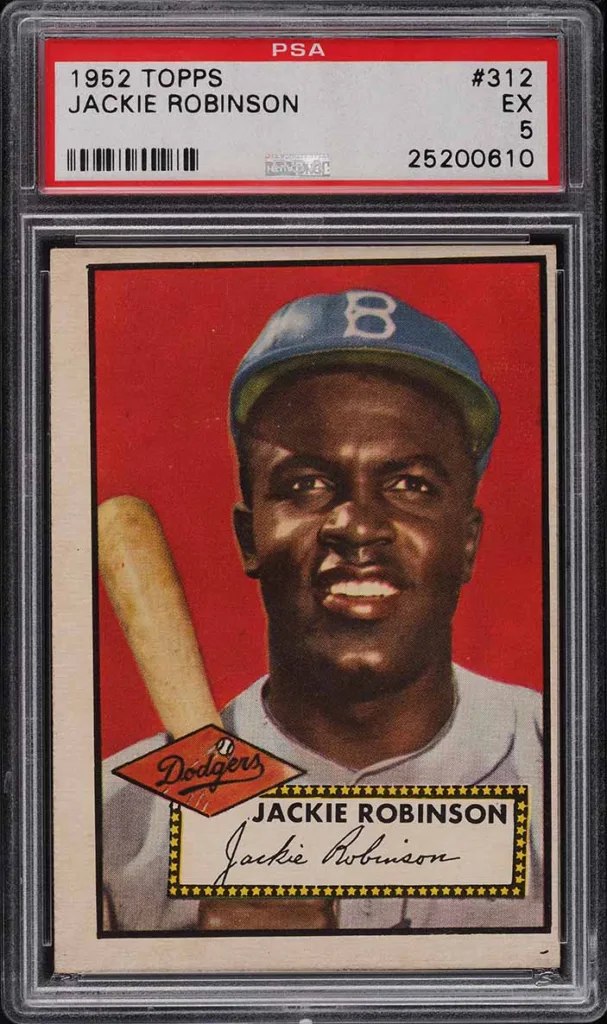
When it comes to the top of the checklist, Mantle is joined by another pair of iconic grail cards: #261 Willie Mays and #312 Jackie Robinson. While the Robinson card is an icon all its own, there’s an extra boost from the fact that the card directly follows Mantle’s in the set. A miscut version of the Robinson, an SGC 1, sold for $72,500 in 2022, as the error resulted in a sliver of a 1952 Mantle being attached.
The top sale of Robinson’s 1952 Topps Baseball card is $960,000. Mays’ comes in at $478,000.
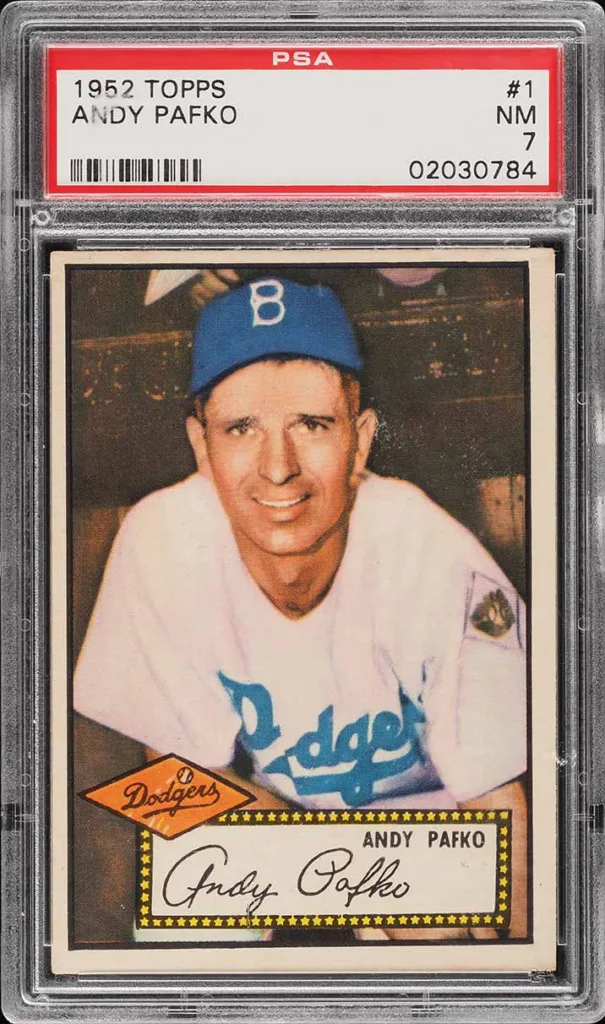
The leadoff card of 1952 Topps Baseball was an Andy Pafko. A five-time All-Star and 1957 World Series Champion, Pafko’s card is of note not only because it leads the set, but because of the difficulty of finding it in great condition. PSA reports a top grade of 8, with a population of only three.
One black-back version of the card is graded at 10, and only six received a grade of 8. “Kids used rubber bands to hold their cards together,” Heckman explained, “and the #1 card always ended up on the outside. So the Pafko card often got damaged.”
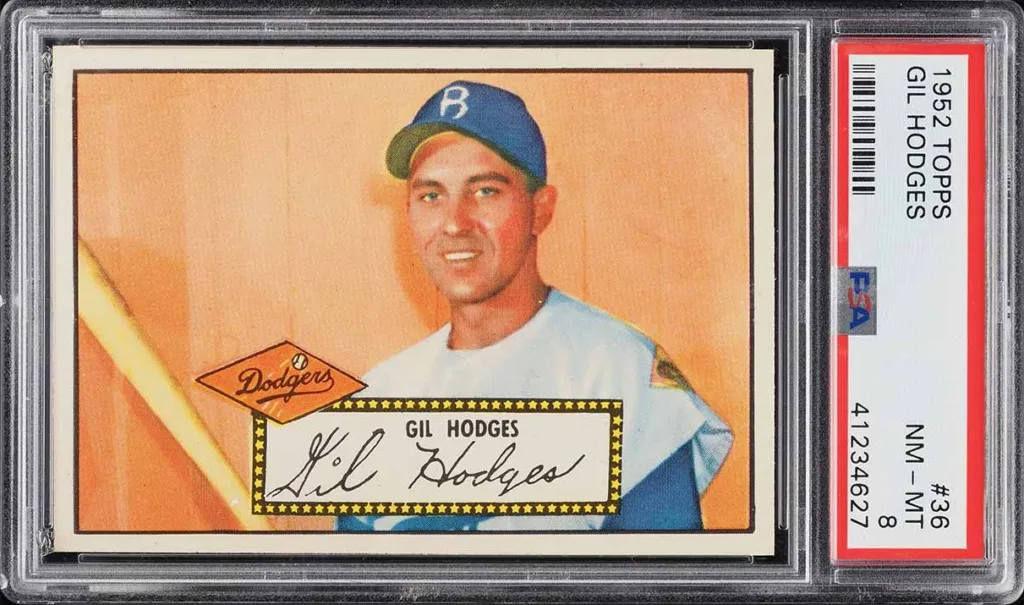
The remarkable design and presentation of 1952 Topps Baseball, combined with its hallowed place in The Hobby, means that most collectors will have their own favorites among the set. For Jason Schwartz, that honor goes to Gus Zernial and Gil Hodges.
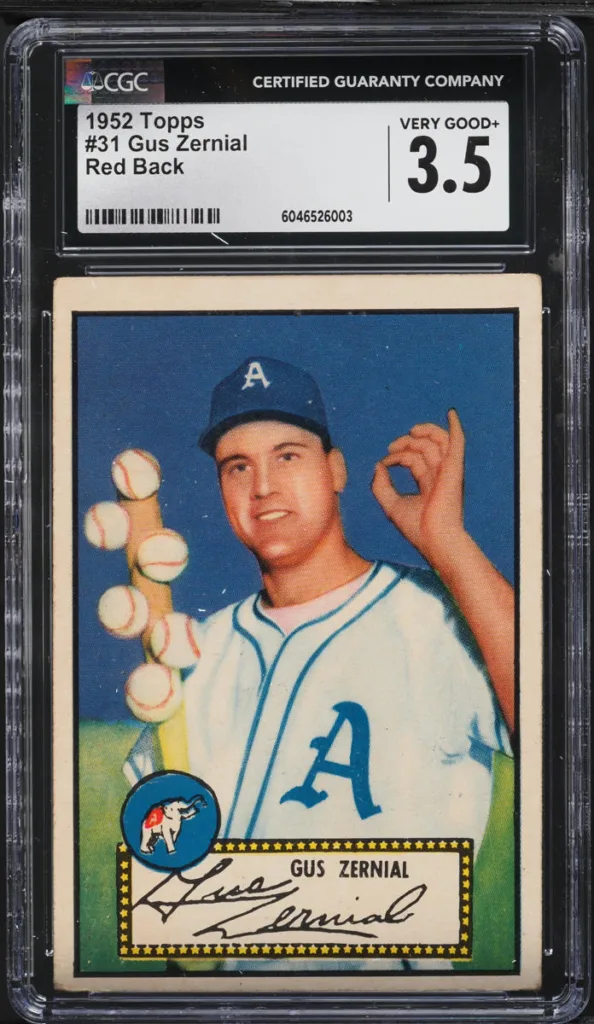
“I’m particularly fond of cards with a story,” Schwartz said. “Zernial’s holding a bat with six baseballs stuck to it. When I first saw the card, I had no idea why. It’s because Zernial had set a record with six home runs over the span of three games.
“As for the Hodges, I think it’s the perfect baseball card. I could stare at it all day, and sometimes I do. Even forgetting the card’s subject is a Hall of Famer, the dreamy orange creamsicle background alone has an almost magical property to it.”
A Legacy Like No Other
Today, 1952 Topps Baseball remains the definitional, foundational set of the modern Hobby. “Owning a card from the 1952 Topps set, regardless of player, condition, or book value, has become a mini-grail item for just about any vintage baseball card collector,” Schwartz said. “These cards are the near-holy relics of baseball card history, not to mention tangible connections to one of the most exciting eras in the history of the game.”
For Jamieson, the set evokes a whole era: “Mantle, Mays, all of it. Combined with the look of the set and how nice the cards are, it’s this magic cocktail. I grew up in North Jersey as a Yankees fan. Don Mattingly was my favorite player. But I had a Mickey Mantle poster on my wall because my dad was a lifelong Mickey Mantle fan.”
In a sense, the enduring love for 1952 Topps Baseball is what The Hobby is all about. It’s a tradition, a legacy, the passing of a torch. “For those of us who grew up in the ’80s and ’90s and after,” Jamieson said, “there’s an element of our parents passing down this sense of a golden age of baseball.”
1952 Topps Baseball FAQs
- What makes 1952 Topps Baseball so important?
- 1952 Topps Baseball is important because it helped establish the blueprint for the modern baseball card. The set introduced a larger card format, stronger visual design, team logos, player stats, and storytelling on the back, making cards feel more substantial and collectible.
- Why is the 1952 Topps Mickey Mantle card so famous?
- The 1952 Topps Mickey Mantle card became famous because of its striking image, Mantle’s legendary status, and the scarcity of surviving high-grade copies. Over time, it evolved into one of the most recognizable and valuable cards in The Hobby.
- Was the 1952 Mickey Mantle actually his rookie card?
- No. Mickey Mantle’s true rookie card is generally considered to be from 1951. Even so, the 1952 Topps Mantle is the card most collectors associate with him and with the golden age of baseball cards.
- Why are high-grade 1952 Topps cards so hard to find?
- Many 1952 Topps cards were originally handled by kids, played with, traded, stored in rubber-banded stacks, or discarded. Later-series cards were also reportedly dumped after unsold inventory remained, which reduced surviving supply and made clean copies much rarer.
Key Facts
- Set: 1952 Topps Baseball
- Why it Matters: Often viewed as the foundation of the modern baseball card
- Most Iconic Card: #311 Mickey Mantle
- Design Breakthrough: Larger format, vivid artwork, team logos, facsimile autographs, and full stats on the back
- Historical Importance: Helped Topps challenge Bowman and define the post-war card market
- Collector Appeal: Combines vintage design, baseball history, scarcity, and Hobby mythology
- Other Key Cards: Jackie Robinson, Willie Mays, Andy Pafko, Roy Campanella, Yogi Berra
- Enduring Legacy: One of the most influential and collectible sets in sports card history
More Topps Baseball
-
The Set That Built The Hobby | The Story of 1952 Topps Baseball
-
Topps Chrome® Cactus Jack Basketball Product History
-
New Collector Takes Home 2025 Topps Finest Football Tom Brady SuperFractor
-
How the Milwaukee Brewers City Connect Air Max 1 Captured Culture and Hobby Hype
-
2026 Topps Finest Baseball First Day Issue Explainer
-
What 2026 Topps Finest Baseball Box Is Best for You?
-
A Month in The Hobby: June 2026


