
Pulling a Bubblegum Bombshell
In 1959, Topps was enjoying the spoils of its victory in the battle for baseball card supremacy. But that didn’t mean the company was resting on its laurels.
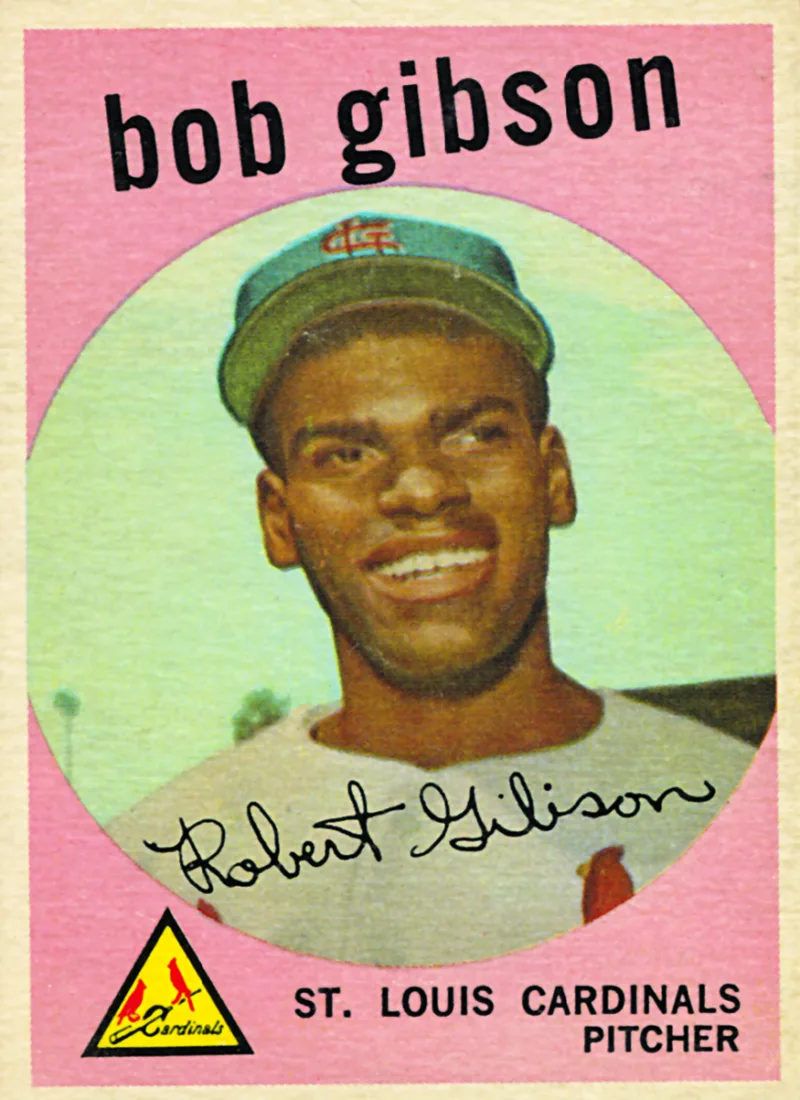
Its set that year would be the largest ever offered, with 572 cards. The design was more vibrant than the relatively staid 1958 set, with alternating head-and-body shots or full-body poses within a circular vignette, all backed by solid, bright colors. Player names were written in lower-case, boldfaced text. The front incorporated a team logo, team name, and facsimile player autograph. It featured subsets devoted to “Baseball Thrills,” All-Stars, cards featuring multiple players, player/coaches, and rookie stars. But the biggest rookie card in the set is actually a base card.
Bob Gibson joins The Topps 75 with his 1959 Topps Baseball rookie card (#514). A favorite amongst collectors for his pitching prowess, Gibson’s RC is available in a graded version via redemption in 2026 Topps Series 1 Baseball.
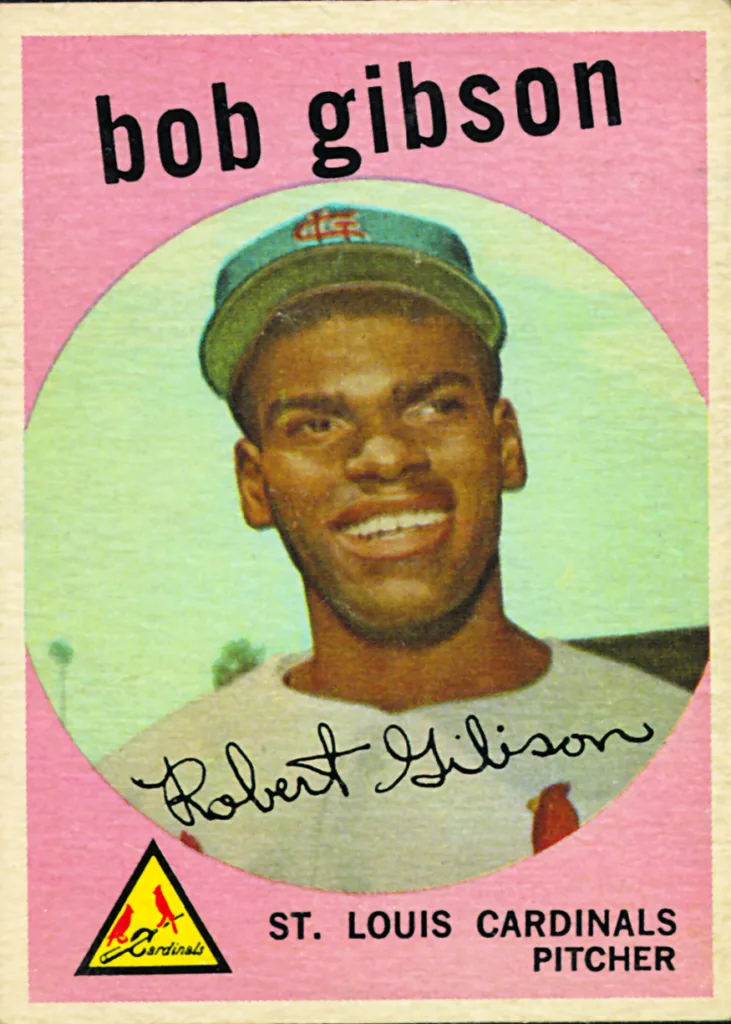
Bob Gibson was one of the top pitching prospects in baseball entering the 1959 season. He had yet to pitch in the big leagues. His biographical information includes his recent exploits in the MiLB as well as his background in basketball as a member of the Harlem Globetrotters. His background is a bubblegumpink color, fitting given that the cards still sold that Topps product. The Gibson photo shows him smiling in a very friendly manner — ironic given that he would soon become, by all accounts, the game’s most feared competitor.
Issued in the last series that year, the 1959 Topps Baseball Gibson card No. 514 was selected by a panel of experts as one of the top 75 cards in the brand’s history. To commemorate the 75 years of Topps Baseball, an original, graded copy will be available via redemption as part of the 2026 Topps Series 1 set.
The 1959 set maintained the 2.5” x 3.5” size that remains the modern standard, introduced by Topps in 1957. Card backs have biographical information, career stats, and totals. The actual years were listed, as Topps was no longer concerned about excess inventory that had to be sold long after the last year’s stats on the card (1958 in this case). Player-specific cartoons on the backs featured red and green.
To say the set was a hit with consumers would be an understatement. In 1959, Topps card sales were $14.5 million, or more than 15 times what they were just four years earlier in the last year of the battle with Bowman.
Bob Gibson’s Competitiveness Meets Supernatural Talent
In 1959, Bob Gibson showed his determination by pitching at least nine innings in four of his starts, including one shutout. In 2025, there were only 21 games across MLB where a pitcher threw at least nine innings. No one had more than one.
Gibson’s best game that year was his complete-game victory at Chicago on September 12. The emerging fireballer fanned 10 in the process, his first career double-digit strikeout game.
Within a decade, Gibson was acknowledged as not just the best pitcher in baseball but one of the best ever to straddle the rubber. “Hoot’s the best there is,” his catcher Tim McCarver said in 1968. “He intimidates hitters. Overpowers them.”
While Gibson’s rising fastball was his primary weapon, his slider is considered one of the best in baseball history. Between 1964 and 1968, Gibson hurled eight straight complete games in the World Series, allowing 13 earned runs (1.60 ERA). His full-season ERA in the 1968 season was a microscopic 1.12, still the modern record. Gibson threw 13 shutouts, had 29 complete games that year, and was never removed from the mound for a reliever the entire season. He won not only the Cy Young Award but also the NL MVP.
A 1959 Gibson in mid-grade PSA 4 condition sells for about $800. But well-centered ones are so difficult to find that they can attract up to 70% premiums for the grade. The estimated value of one of the three PSA 10s that have been graded is $384,000, according to Card Ladder, which tracks sales and card populations.
The Iconic Topps Buyback FAQs
- What is The Topps 75?
- It’s a special series at Topps RIPPED celebrating 75 of the greatest baseball cards from Topps’ 75 years of releases.
- When did Topps first release baseball cards?
- The first Topps Baseball cards came out in 1951, known as the Topps Red Backs and Blue Backs sets, while the first full Topps Baseball set was released in 1952.
- Are there special cards celebrating 75 years of Topps Baseball?
- Yes, 2026 Topps Series 1 Baseball cards feature special badging to commemorate 75 years of Topps Baseball and other special events.
- Why is Bob Gibson’s Topps rookie card in The Topps 75?
- Gibson’s incredible career as a pitcher has made him a star of The Hobby since his big league debut, and the historical significance of the 1959 Topps Baseball set only makes his rookie card more sought after by collectors.
Key Facts
- The Topps 75: Expert-voted list of the 75 greatest Topps Baseball cards ever, celebrating 75 years of Topps Baseball
- Player: Bob Gibson
- Card: 1959 Topps Baseball #514
More Topps Baseball
-
Vote on the 2026 MLB Topps NOW Player of the Week: Mar. 30 – Apr. 5
-
Bowman Red RC Redemption Returns Soon
-
Topps NOW® Brand History | 10-Year Anniversary
-

TOPPS NOW® Photogs Tell All | 10-Year Anniversary Celebration
-
How 1948 Bowman Football Paved the Path for NFL Cards
-
1956 Topps Football | The Start of a Hobby Tradition
-
Office Hours | Sports Switchers
-
Football and The Hobby
-
Topps Changes the Game with MLB The Show 26
-
Women’s History Month Spotlight: Content Creators in The Hobby
-
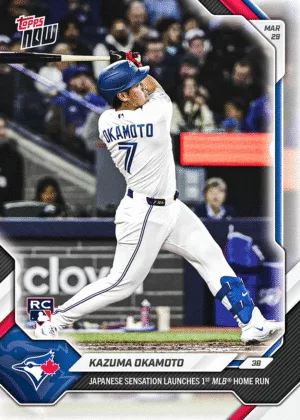
Topps NOW Celebrates MLB Opening Weekend 2026
-
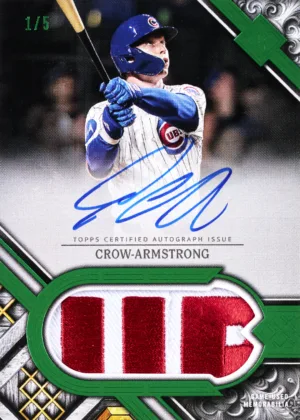
Topps Transcendent Collection Baseball Product History
-
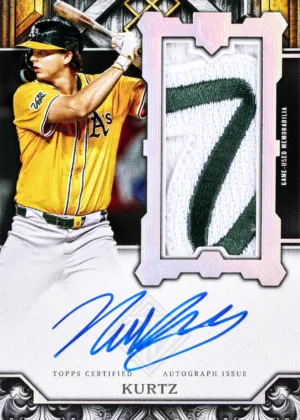
2025 Topps Transcendent Collection Baseball Collector’s Guide
-
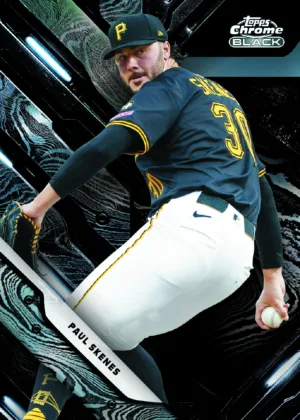
Topps Chrome® Black Baseball Product History
-
2026 MLB Opening Day Meets Topps Series 1 Baseball


