
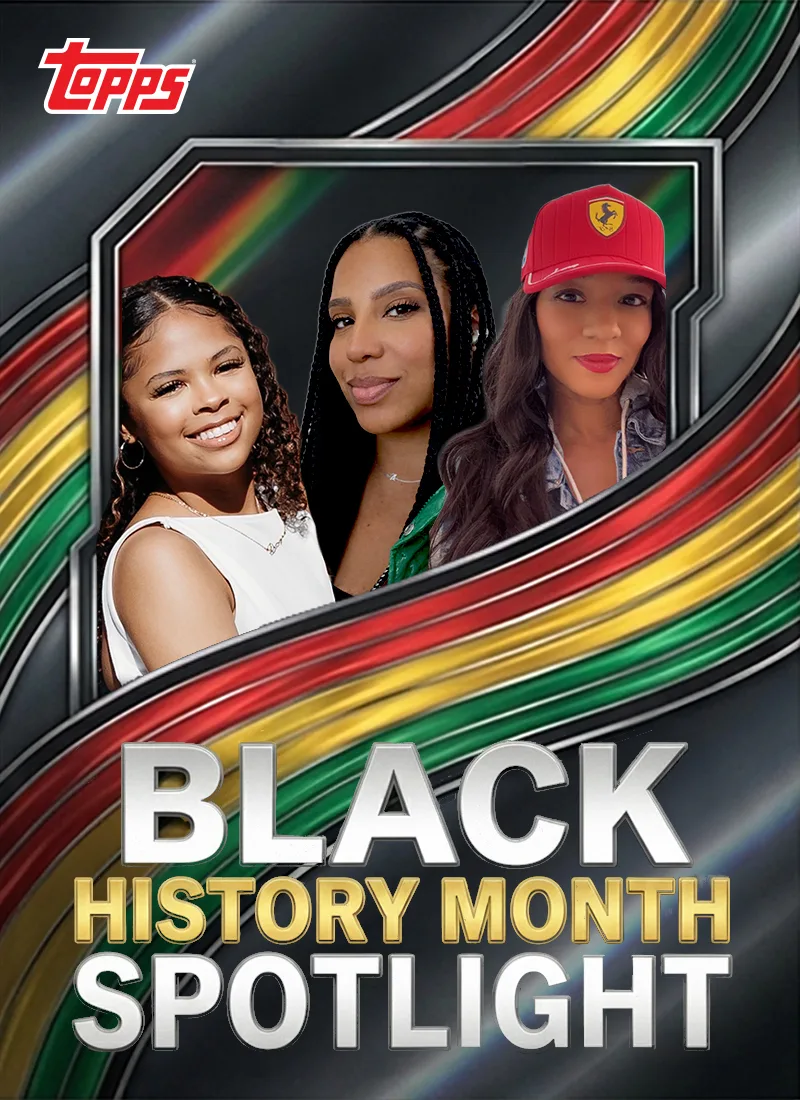
Explore How Three Black Women Pave the Way in The Hobby
The Hobby has always been about more than cards. Long before Chrome parallels, livestream breaks, and convention floors packed wall to wall with collectors, it was about access and ownership. It was about who understood the product, who understood the margins, who built the rooms, and who felt welcome walking into them.
Every era of The Hobby has been shaped by the people willing to learn it deeply and invest in it fully. Today, another evolution is underway. Black women are not simply entering the space. They are expanding it, structuring it, educating within it, and scaling it in ways that are quietly transforming the culture from the inside out.
Black women are reshaping the trading card Hobby through ownership, community building, and education. Leaders like Joyce Jade (Culture Collision), Mya Leahy (Bryan Sports Cards), and Tonya Hampton (Formula One and youth initiatives) are expanding access, building infrastructure, and creating new pathways for collectors and young entrepreneurs.
Prizm Gawdess, aka Joyce Jade, Mya Leahy, and Tonya Hampton represent three distinct but interconnected lanes within the modern Hobby ecosystem. Jade is building infrastructure at scale through Culture Collision, one of the largest card shows in the country. Leahy is leading a brick-and-mortar card shop at just 18 years old while running breaks and creating content for a new generation of collectors. Hampton is using Formula One cards as a bridge between culture, alternative assets, motorsport, and STEM education for young people who may have never seen themselves reflected in those spaces before.
Their journeys began differently, but their impact converges in the same place. Each one represents what it looks like not just to participate in The Hobby, but to shape its future.
Joyce Jade: Hobby Ownership at Scale
Joyce Jade understood the power of ownership long before she ever entered the trading card world.
“I became an entrepreneur at 19 years old,” she says. “I’ve always had a leadership mindset and a builder’s heart. I understood early that ownership creates freedom.” That foundation shaped how she approached every opportunity, including her introduction to The Hobby through her husband, Raphael Mosley, widely known as Prizm Gawd.
“He taught me the foundation of cards, product knowledge, market cycles, and overall, how the Hobby moves,” Jade explains. But she did not approach cards as a spectator; she approached them as an operator. “I combined what I learned about cards with what I already knew about entrepreneurship, branding, marketing, and execution.”
That combination became Culture Collision.
The growth of Culture Collision did not come from hype alone. It came from reinvestment, structure, and discipline.
“Growth didn’t happen overnight,” Jade says. “It happened through consistency, reinvestment, risk, and long hours behind the scenes.” Operating at scale as a Black woman in a male-dominated industry came with challenges early on. Jade understood that credibility would not be assumed — it would have to be demonstrated consistently.
“One of the biggest challenges is perception,” she says. Her response was operational excellence: contracts; floor plans; vendor management; sponsorship fulfillment; marketing strategy; budget oversight. “I let the performance speak,” Jade says. She made sure she understood pricing, margins, and market movement because, as she puts it, “When you understand the numbers, you move differently.”
That intentionality shaped the atmosphere of Culture Collision. The show feels elevated without being exclusive — energetic without being chaotic. “Inclusivity for me isn’t a marketing phrase,” Jade says. “It’s about making sure the environment feels accessible without lowering the standard.” For her, Black ownership at scale carries responsibility beyond revenue. “It means responsibility and legacy. It shows that we are not limited to participation. We can build infrastructure and platforms. We can build experiences that shape the culture.”
When young Black women attend Culture Collision and see her leading at that level, she hopes they internalize something lasting. “I hope it communicates possibilities,” Jade says. “That they don’t have to shrink or wait for permission.”
Looking ahead, her vision is strategic. She wants more Black women learning the business side of The Hobby — distribution, grading, margins, event production — and striking out on their own.
“The real power comes from ownership. From building platforms and controlling rooms. We’re just getting started.”
Mya Leahy: Community and Credibility
If Joyce Jade is building rooms at scale, Mya Leahy is strengthening the culture inside smaller ones. Her journey into The Hobby began during the pandemic when her father started breaking on Instagram. “I’d watch him open packs all the time,” she says. “That quickly pulled me in.”
Watching turned into collecting, and collecting turned into a shared passion. After four years of breaking, her father opened Bryan Sports Cards, named after her grandfather.
“It’s been really special to watch a family passion turn into a business and a community,” Leahy says. At just 18 years old, she now manages the shop, runs live breaks, handles customer relationships, and creates content showcasing new product releases that collectors invest serious money into. Stepping into leadership that early forced rapid growth. “Managing a shop, running breaks, and creating content has pushed me to grow quickly, communicate confidently, and handle pressure.”
Being a woman of color in a male-dominated industry added another layer of challenge.
“I’ve certainly encountered moments where my knowledge or presence has been questioned,” she says. Rather than retreat, she doubled down on preparation. “I’ve learned how to assert my place through consistency, professionalism, and results, letting my work and dedication speak for itself.”
Leahy felt early on that she had to carve her own lane. “Being in a space where I didn’t always see people who looked like me pushed me to focus on learning everything I could. I built confidence and credibility by being consistent, showing up prepared, and staying true to who I am.”
Her most memorable moments include pulling a Patrick Mahomes and Joe Montana dual autograph in a competitive serial number break and winning a golden ticket at the National that eventually turned into a LeBron James 2020 Kobe Bryant Tribute Pink numbered to /49. But for Leahy, the most meaningful part of her role is not the headline pulls. It’s the relationships built daily across the counter.
“My favorite part of working in The Hobby is the opportunity to build lasting relationships and connect with people on a daily basis,” she says. “These shared experiences foster a strong sense of community that extends beyond transactions.” Visibility, she believes, quietly shifts confidence. “Seeing someone who looks like you in the space helps make it feel more welcoming and attainable. If my visibility helps even one person feel more confident stepping into The Hobby, then I know I’m doing something right.”
Looking ahead, Leahy sees growth through inclusion. She believes The Hobby can continue expanding by elevating diverse voices and supporting collectors from different backgrounds and interests. In her view, the future is about sustaining community while welcoming new participants into it with authenticity and respect.
Tonya Hampton: Culture, Cards, and the Full Circle Moment
Tonya Hampton’s entry into The Hobby began not with stats or box breaks, but with art. During the pandemic, she discovered Project 2020 while listening to Ben Baller’s podcast. “I started collecting the Project 2020 cards because they were amazing pieces of work,” she says. One card in particular stood out — the Mike Trout piece designed by Ben Baller and Blake Jamieson. Listening to him discuss cards as alternative assets reframed how she viewed the entire space.
“I knew about stocks,” she says. “I knew about memorabilia. But I didn’t understand how trading cards could be linked to alternative assets.”
Then a friend sent her a Pierre Gasly Topps NOW card, and she realized Topps had secured the Formula One license. She began collecting F1 immediately.
“My favorite driver, the best driver of all time across all motorsport besides Willy T. Ribbs, is Sir Lewis Hamilton.” Her defining moment came when she opened a birthday gift from her sister — a sealed box of Topps Chrome Formula One that had sat unopened for months.
“When I opened it, I pulled a 38 out of 58 Sir Lewis Hamilton.”
She posted the video. Her following grew. Invitations followed. But the meaning of the pull extended far beyond notoriety. “The significance of that card is Jackie Robinson level,” she says. She references Mercedes changing its iconic silver car to black during 2020 in solidarity with a painful chapter in American history. “Sir Lewis Hamilton being in that black uniform signifies who he is as a person and how he stood up in a very difficult time. To change that car to black signified how a major company stood behind a Black man.”
That card, she says, “will be passed on to my boys.”
Her relationship with Ben Baller eventually came full circle. After following his podcast for seven years and joining his Instagram Lives, she met him during Super Bowl weekend in Los Angeles.
“That was seven years in the making,” she says. He gifted her a signed Ben Baller and Blake Jamieson Mike Trout Project 2020 card. “I have the one I purchased on my own. But now he gave me one signed by him.” That moment reflected what The Hobby can look like when culture, mentorship, and access intersect.
Tonya’s mission expanded beyond collecting into youth engagement through Driven By Us, where she implemented trading card modules for children from underrepresented backgrounds. In classrooms filled with fourth graders negotiating trades across the room, she saw how cards could build entrepreneurial thinking and confidence.
“That room got so loud,” she says. “There was a little boy who waved at me and pulled his card out of his pocket and showed me.” For Tonya, the future of The Hobby depends on that pipeline. “If we don’t introduce young people to this, where does that leave The Hobby?”
The Future They See
Ask Joyce Jade about the future, and she speaks in terms of ownership and scale. She sees more Black women learning distribution, grading, margins, and event production. She sees more platforms being built and more rooms being controlled intentionally.
Ask Mya Leahy, and she speaks in terms of community and representation. She sees a Hobby where diverse voices are normalized, where young collectors walk into shops and feel seen, and where authenticity drives growth.
Ask Tonya Hampton, and she speaks in terms of youth access and cultural expansion. She sees trading cards as gateways into finance, motorsport, and STEM. She sees more children discovering confidence through collecting and more families viewing The Hobby as both passion and possibility.
Ownership. Community. Education.
As Black History Month reminds us, the story of The Hobby has always been intertwined with questions of access, visibility, and ownership. The women highlighted here are part of that ongoing evolution. And as the calendar turns toward Women’s History Month, their work stands as both continuation and catalyst.
Black Women in The Hobby Collector FAQs
- What role are Black women playing in the trading card Hobby?
- Black women are increasingly leading at multiple levels of the trading card Hobby — from owning large-scale card shows and operating retail shops to educating young collectors and expanding access to alternative asset conversations.
- Who is Joyce Jade in the card industry?
- Joyce Jade is the co-founder of Culture Collision, one of the largest card shows in the country. She focuses on infrastructure, sponsorship strategy, vendor management, and scaling live-event platforms within The Hobby.
- How did Mya Leahy get into trading cards?
- Mya began collecting during the pandemic by watching her father break boxes on Instagram. She now manages Bryan Sports Cards at 18, runs live breaks, and creates content around new product releases.
- Why is Formula One important in modern card collecting?
- Formula One cards, especially Topps Chrome F1, connect motorsport fans to the trading card Hobby while also introducing conversations around global athletes, alternative assets, and limited parallels.
- What does ownership mean in the trading card industry?
- Ownership goes beyond collecting. It includes controlling distribution, running events, managing margins, operating shops, and building platforms that influence culture and access within The Hobby.
Key Facts
- Culture Collision is one of the largest card shows in the U.S.
- Bryan Sports Cards is operated by 18-year-old Mya Leahy and her father
- Topps Chrome Formula One introduced new collectors to F1 card investing
- Driven By Us integrates trading cards into youth education modules
- Ownership, community, and education are shaping The Hobby’s next phase
More Topps Black History Month
-
Black History Month Spotlight: Educating The Hobby
-
Black History Month Spotlight: Fanatics Collectibles Production Coordinator Lindsey Bethel
-
The History of Black Athletes in Topps
-
Black History Month Spotlight: Director, Social Media at Fanatics Sportsbook Emery Barnes
-
Black History Month Spotlight: Representation in Content Creation
-
Topps Baseball at 75: The Legacy of Black Celebrities in Allen & Ginter
-
Black History Month Spotlight: Topps Events Marketing Manager Carley Fort


