
Recognizing Black Excellence on Wax
In 1952, a pack of Topps Baseball cards cost a few cents and came with a stick of gum. What it also carried, whether or not anyone realized it at the time, was a snapshot of a changing America.
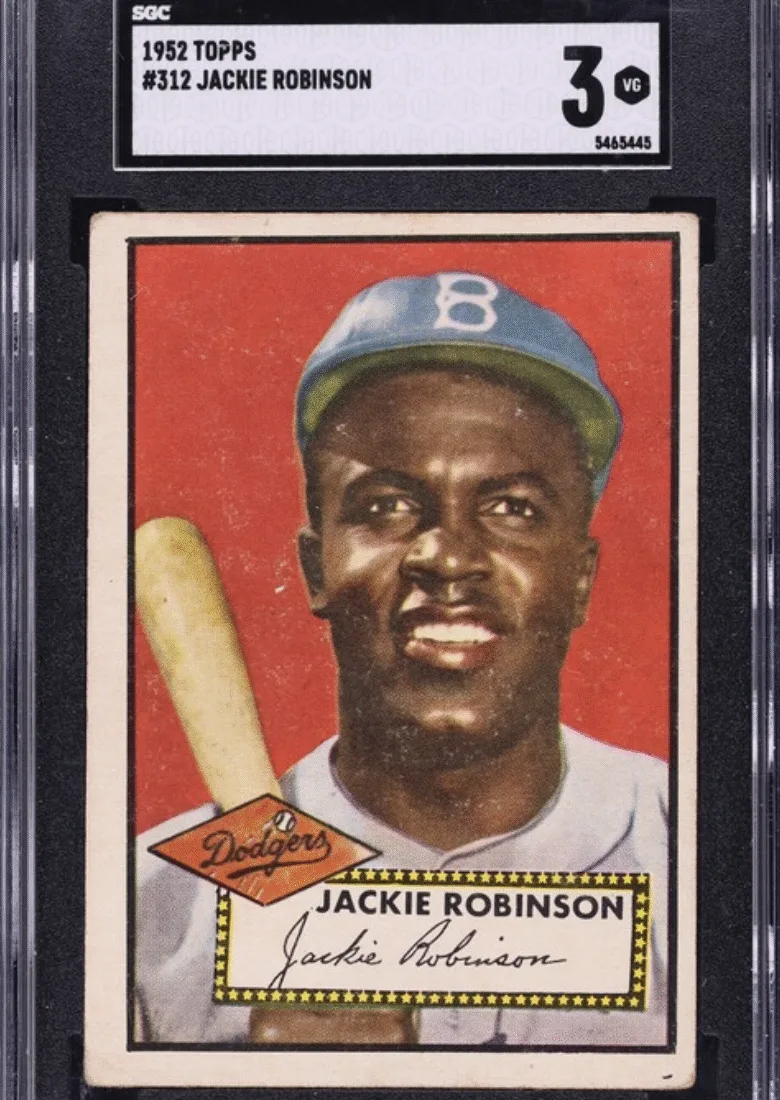
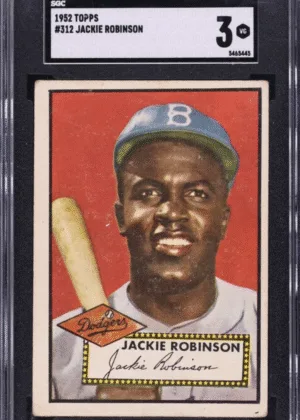
The 1952 Topps Baseball set is remembered for its bold portraits and for giving The Hobby one of its most iconic cards in the 1952 Mickey Mantle. But look beyond Mantle and you see something just as historic. Jackie Robinson appears in the set. So does Roy Campanella. Willie Mays is there in his first Topps card. Larry Doby, Monte Irvin, Minnie Miñoso, Sam Jethroe, Joe Black, Luke Easter, Hank Thompson, Sam Jones, George Crowe, and Harry Simpson are all part of the checklist.
Baseball had integrated only five years earlier, with Robinson shattering the color barrier in 1947. Campanella was building an MVP resume with the Brooklyn Dodgers. Willie Mays was beginning a career that would redefine five-tool greatness. These players were not fringe additions to the sport, but central figures in its excellence and evolution.
By placing them in that release, Topps did more than print statistics and portraits. It documented a new reality. Black stars were not temporary headlines or special features. They were foundational to the game and to The Hobby’s most important early era.
That visibility mattered then, and as Topps celebrates its 75th year, it is clear that it still matters now.
From the 1952 Topps Jackie Robinson to modern Topps Chrome cards of LeBron James and Lewis Hamilton, Topps has preserved Black excellence across sports for 75 years. These cards are more than collectibles — they are visual archives documenting integration, dominance, cultural impact, and generational greatness.
Cards as Visual History
For 75 years, Topps has done more than produce collectibles. It has built a visual archive of sport.
The front of a card is a freeze-frame of cultural memory. The bat held high; the follow through; the midair catch; the confetti falling after a championship. It captures posture, style, and presence. It tells you what greatness looked like in that year.
The back of a card is where the story deepens. It lists the statistics, yes, but also the milestones. Rookie of the Year. MVP. World Champion. It often includes a short narrative, distilling a career into a few sentences. For Black athletes who broke barriers and redefined excellence, that paragraph carries enormous weight. It preserves achievements that once faced resistance, doubt, or outright hostility.
Representation in cards is not symbolic. It is archival. It is permanent.
Baseball: From Integration to Generational Greatness
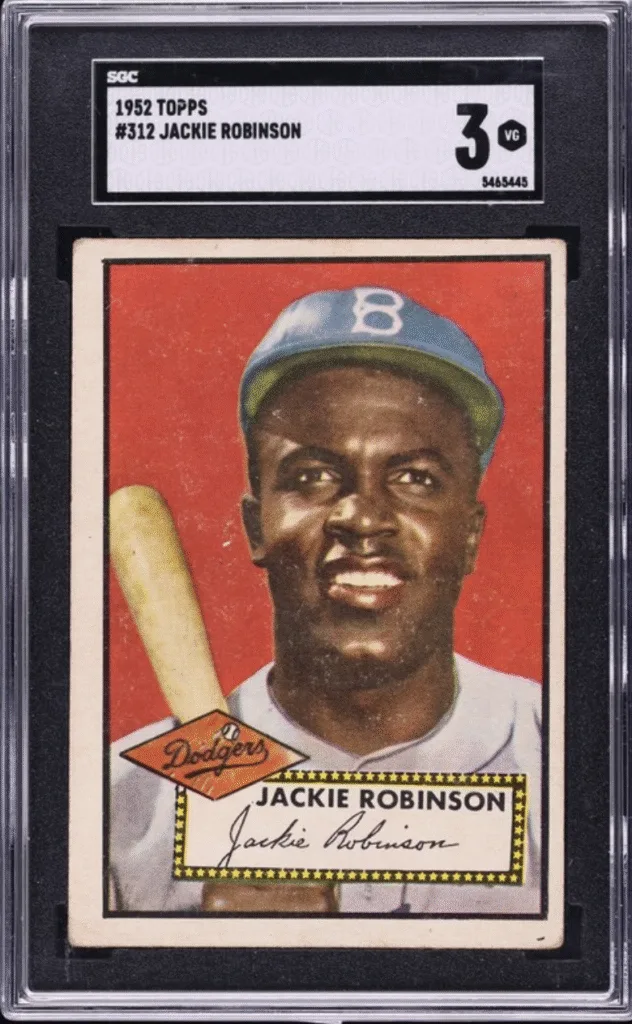
The 1952 Topps Jackie Robinson is not just a key vintage card. It is one of the most important cultural artifacts in The Hobby. High-grade copies have approached seven figures at auction, reflecting how collectors value the intersection of athletic greatness and social impact. Robinson’s card represents the normalization of integration within the visual language of baseball.
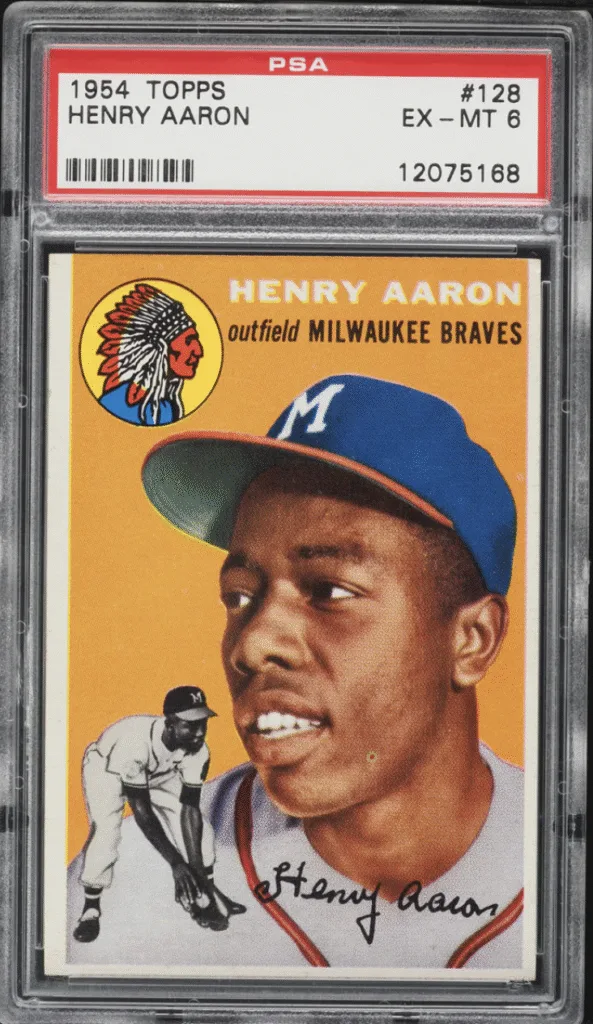
The 1954 Topps Hank Aaron rookie card marks the beginning of one of the most consequential careers in sports history. Aaron’s pursuit of Babe Ruth’s home run record came with hate mail and threats, yet he persevered. His rookie card now stands as both a foundational collectible and a testament to resilience.
By the late 1950s and 1960s, Topps continued documenting Black dominance on the field. The 1959 Topps Bob Gibson rookie card introduced a pitcher whose intensity and command would reshape the mound. The 1969 Topps Reggie Jackson rookie preserved the arrival of a postseason legend. The 1980 Topps Rickey Henderson rookie marked the start of a career that would make him baseball’s all-time stolen base leader.
In 1989, the Topps Traded Ken Griffey Jr. rookie card ushered in a new era. Griffey’s swing became iconic, his presence magnetic. His card remains one of the most recognized pieces of the late 1980s and early 1990s Hobby boom.
Bo Jackson’s 1987 Topps baseball rookie card tells a different kind of story. It captures a two-sport star whose cultural presence extended beyond box scores, illustrating athletic range rarely seen at the professional level.
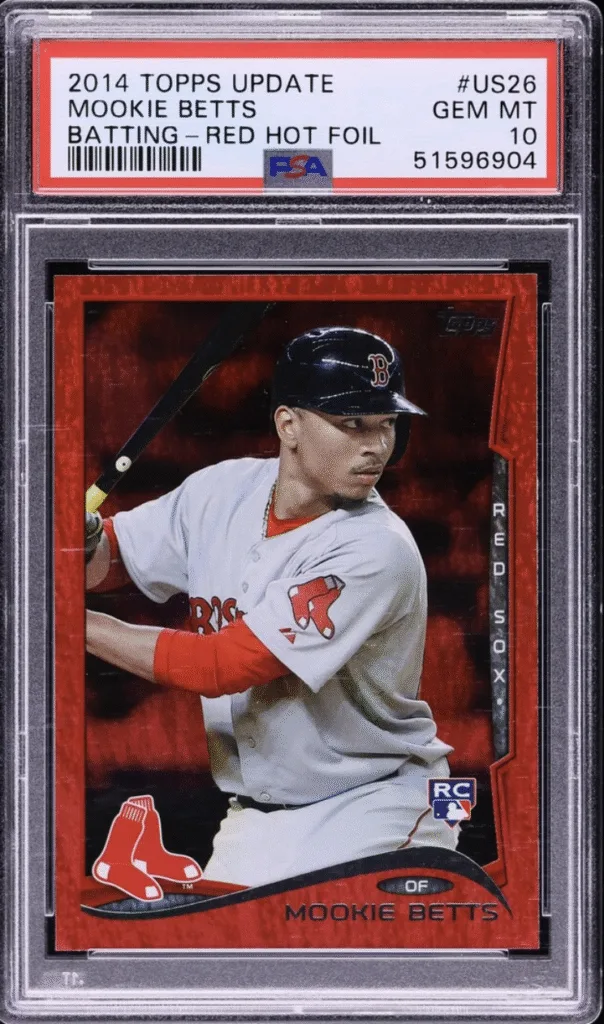
Fast-forward to the modern game and the 2014 Topps Update Mookie Betts rookie card. Betts’ career includes MVP honors, Gold Gloves, and multiple championships. His early Topps issues now serve as anchor pieces for collectors documenting this era. The continuity is clear. From Robinson to Betts, Topps has preserved the evolution of Black excellence in baseball.
Basketball: First Appearances and Cultural Icons
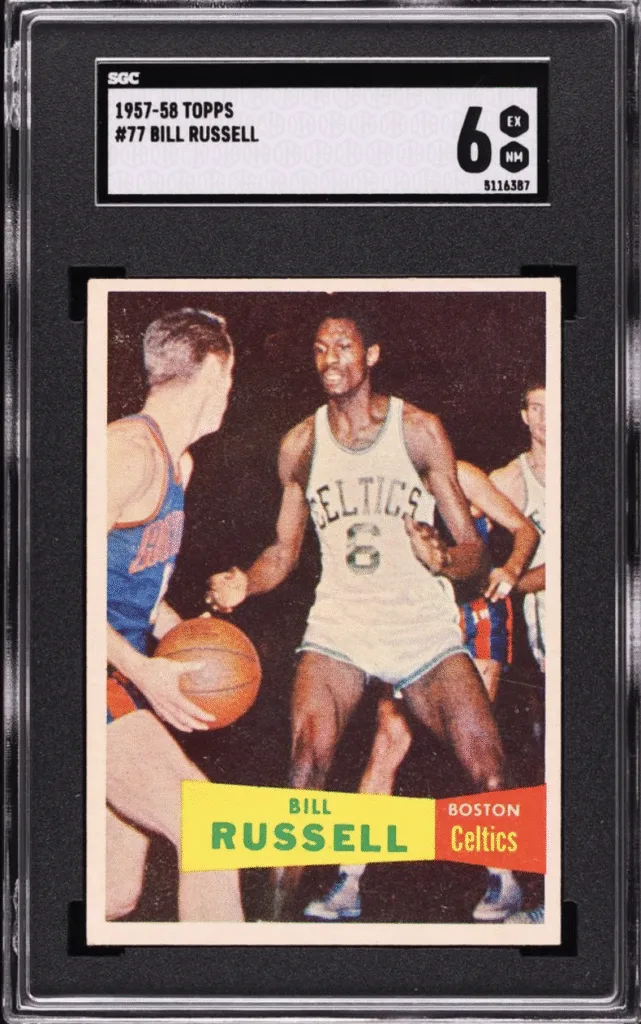
Topps’ basketball story begins with the 1957-58 Topps Basketball set, the company’s first NBA release. That checklist included Nat “Sweetwater” Clifton and, most significantly, Bill Russell’s rookie card. Russell’s legacy is much greater than his eleven championships. He was a civil rights advocate and a leader whose influence stretched far beyond the hardwood. His rookie card has sold for more than $600,000, reflecting its stature within The Hobby.
In 1969-70 Topps Basketball, Lew Alcindor’s tallboy rookie card introduced a player who would later become Kareem Abdul-Jabbar. Kareem’s dominance, longevity, and intellectual leadership made him one of the most influential athletes in sports history. The card remains one of the most visually distinct and historically important basketball issues ever produced.
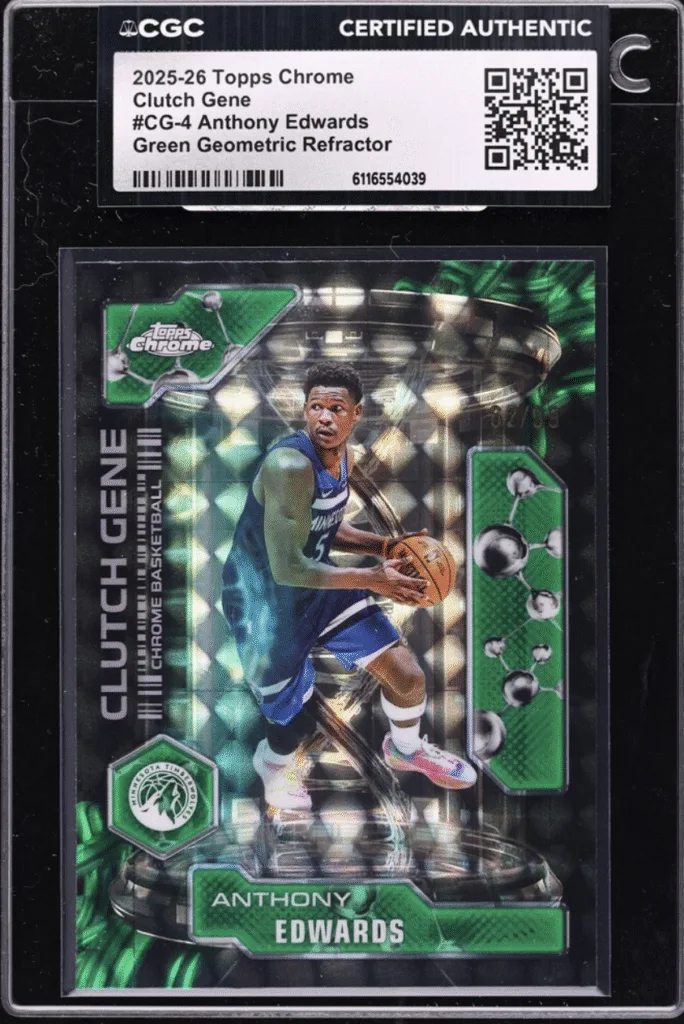
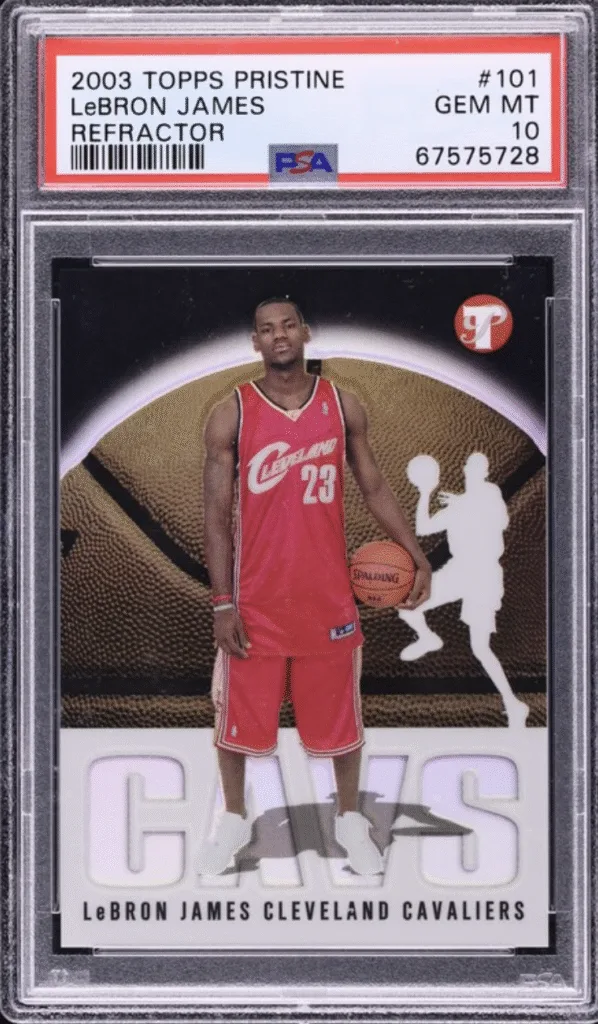
The Topps Chrome era elevated modern basketball storytelling. Kobe Bryant’s 1996-97 Topps Chrome rookie card, particularly the Refractor version, became one of the most coveted modern basketball cards, with a pristine example selling for $1.795 million. LeBron James’ 2003-04 Topps Chrome rookie card carries similar weight, representing the arrival of a generational player whose influence spans championships and community impact. Kevin Durant’s 2007-08 Topps Chrome rookie and Stephen Curry’s 2009-10 Topps Chrome rookie mark the evolution of the sport into its pace and space era.
These cards represent beginnings. They show youth and potential. The backs chart ascension. Together, they become visual biographies.
Formula 1: Excellence at Global Speed
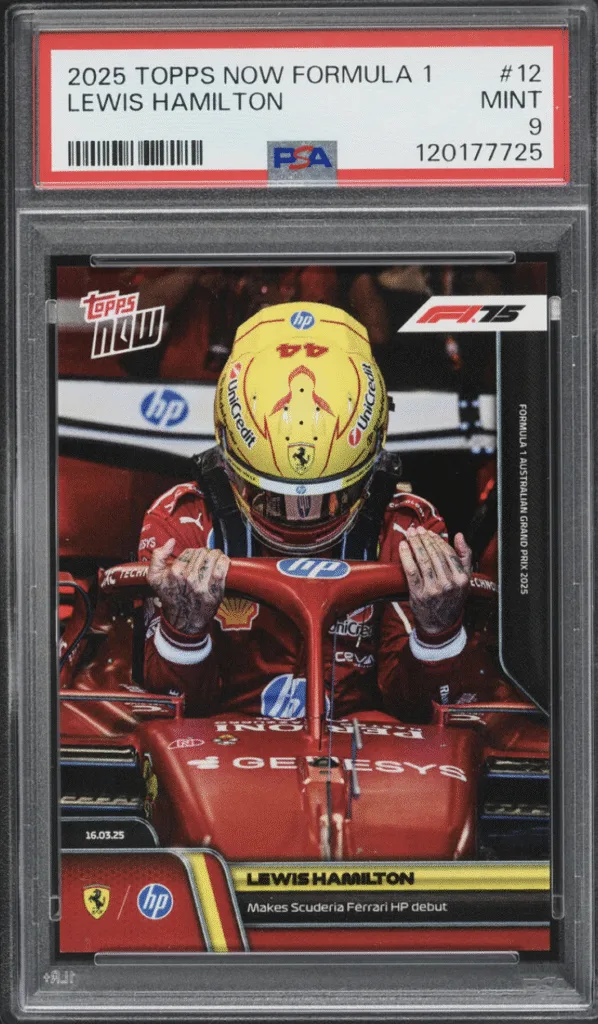
Topps Chrome Formula 1 introduced premium racing cards to a worldwide audience. At its center stands Lewis Hamilton, one of the most decorated drivers in F1 history. Hamilton’s Topps Chrome cards chronicle world championships, record-tying victories, and a career that has pushed diversity within motorsport.
A 2020 Topps Chrome Lewis Hamilton Superfractor 1/1 sold for $900,000, underscoring both the growth of F1 cards and the recognition of his place in global sports history. Hamilton’s inclusion in Topps products reinforces that representation is not limited to American leagues. It is international and evolving.
Black Women in the Record
A full account of Black excellence in sports must include the Black women whose achievements have reshaped global athletics.
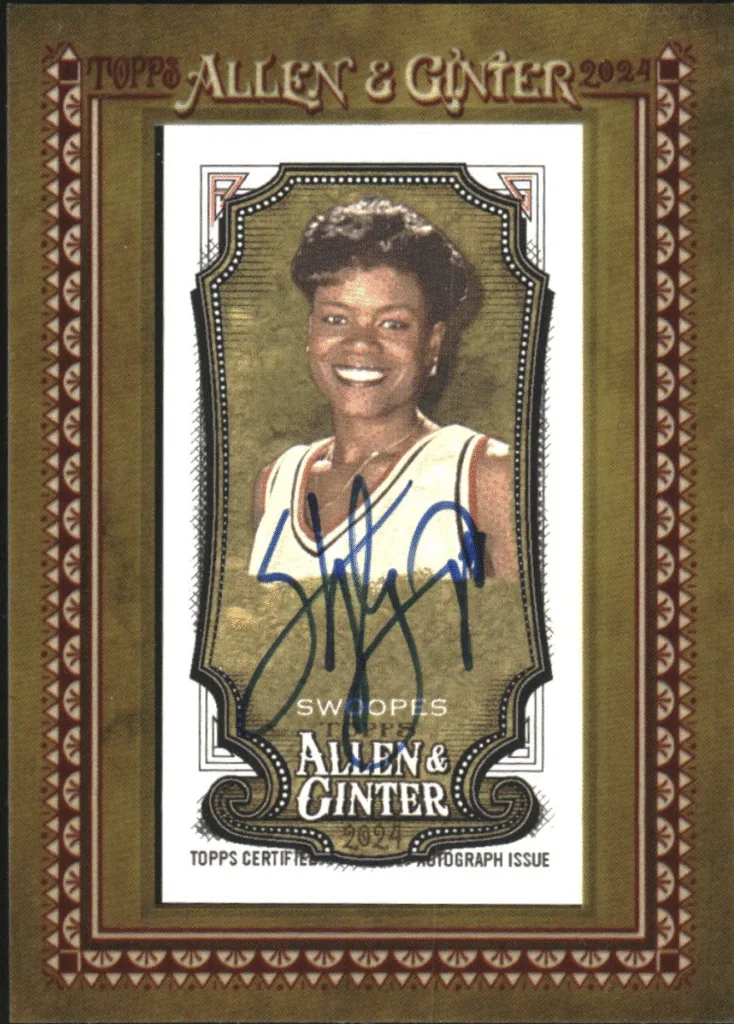
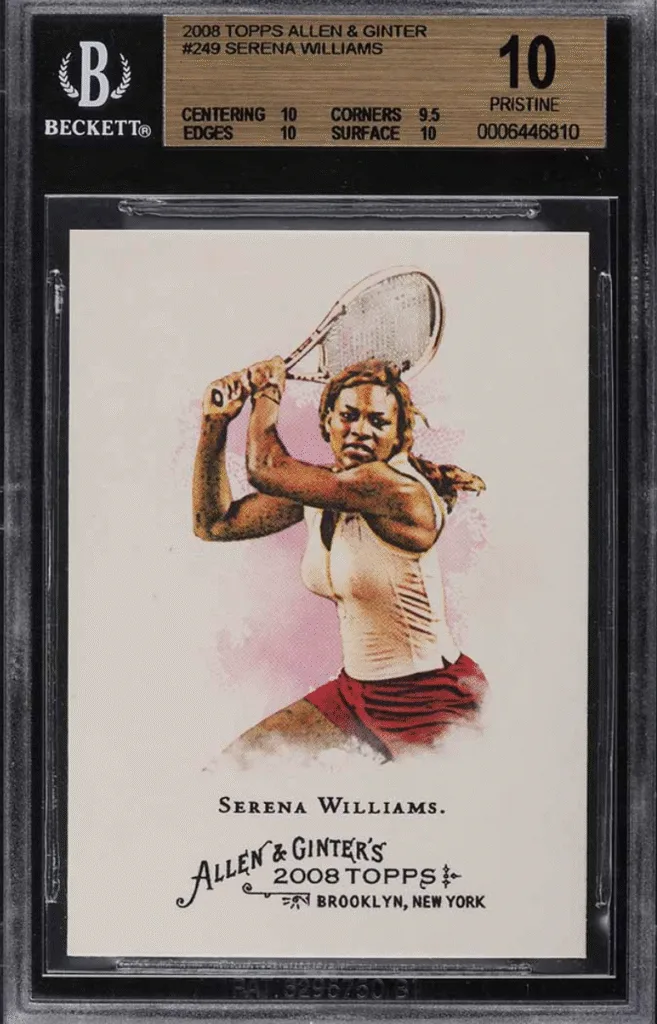
Serena Williams’ presence in 2008 Topps Allen and Ginter, including on-card autograph versions, ensures that one of the most dominant athletes in history is preserved within The Hobby’s physical archive. Her Grand Slam victories, longevity, and cultural leadership are recorded not just in highlight reels but in tangible form.
Through tennis releases and multi sport products, Topps has contributed to expanding visibility for Black female athletes, ensuring that their milestones are documented alongside their male counterparts.
The Social Impact of Being Printed
Black athletes have often carried the burden of representation while simultaneously redefining their sports. Jackie Robinson challenged segregation. Hank Aaron endured racism in pursuit of history. Bill Russell marched for civil rights. Kareem Abdul-Jabbar, and LeBron James used their platforms to advocate for justice. Lewis Hamilton has championed diversity in a global sport.
Topps cards anchor the athletic side of these broader narratives. They preserve the measurable accomplishments that underpin social impact. They ensure that future generations can trace the journey not just through documentaries, but through physical artifacts.
The Record, Front and Back, for 75 Years
As Topps Baseball celebrates 75 years, the legacy is inseparable from the athletes it has documented.
Each card is a chapter. Together, they form a 75-year visual archive of Black excellence across sports. The Hobby does more than follow the game; it preserves it. And for three quarters of a century, Topps has ensured that the record of Black greatness is printed clearly, permanently, and proudly, front and back.
Topps Black History Month FAQs
- Why is the 1952 Topps Jackie Robinson card so important?
- It represents the normalization of integration in baseball’s visual record. Printed just five years after Robinson broke the color barrier, the card documents both athletic greatness and cultural transformation within one of The Hobby’s foundational sets.
- Why are rookie cards significant in documenting history?
- Rookie cards mark an athlete’s first mainstream appearance in a product line. They capture potential at the starting point of greatness and often become foundational collectibles within a player’s market.
- Are Topps cards considered historical artifacts?
- Yes. Beyond collectibles, they serve as printed records of statistics, milestones, and cultural shifts, preserving athletic achievements across generations.
- How did Topps document integration in baseball?
- Topps documented baseball’s integration by including Black stars like Jackie Robinson, Roy Campanella, and Willie Mays in Flagship sets such as 1952 Topps Baseball. Their presence in mainstream releases permanently recorded the sport’s changing landscape within The Hobby’s visual archive.
- How does representation in trading cards impact The Hobby?
- Inclusion in Flagship releases ensures athletes are permanently documented within the sport’s visual archive, shaping how future generations understand history and greatness.
Key Facts
- 1952 Topps Baseball included Jackie Robinson, Roy Campanella, and Willie Mays.
- 1957–58 Topps Basketball features Bill Russell’s rookie card.
- 1996–97 Topps Chrome Kobe Bryant Refractor sold for $1.795M.
- 2020 Topps Chrome Lewis Hamilton Superfractor 1/1 sold for $900K.
More Topps Black History Month
-
Black History Month Spotlight: Educating The Hobby
-
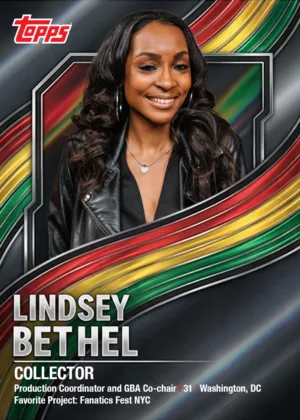
Black History Month Spotlight: Fanatics Collectibles Production Coordinator Lindsey Bethel
-
The History of Black Athletes in Topps
-
Black History Month Spotlight: Director, Social Media at Fanatics Sportsbook Emery Barnes
-
Black History Month Spotlight: Representation in Content Creation
-
Topps Baseball at 75: The Legacy of Black Celebrities in Allen & Ginter
-
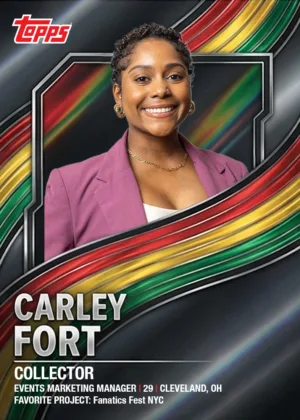
Black History Month Spotlight: Topps Events Marketing Manager Carley Fort


